

Every Child Develops Differently… But Parents Notice the Little Things
One of the most beautiful things about being a parent is that we notice tiny changes in our children.
We know the smile that’s just a little different.
We know when they suddenly stop doing something they used to enjoy.
We know when they aren’t reaching a milestone that children around them seem to reach naturally.
Sometimes we notice these things long before anyone else does.
Sometimes relatives say,
“Don’t worry.”
“Boys talk late.”
“Your uncle didn’t speak until he was four.”
“He’s just stubborn.”
And sometimes…
they’re right.
Children really do develop at different speeds.
But sometimes our instincts are trying to tell us something important.
One of the biggest lessons I’ve learned is this:
Never ignore your instincts—but don’t panic because of them either.
Instead…
Observe.
Learn.
Ask questions.
Seek professional guidance.
That balanced approach is what helped our family move forward.
What Were the First Signs We Noticed?
Every autistic child is different.
There isn’t one symptom that confirms autism.
Instead, professionals look at patterns of development, particularly in communication, social interaction, and behaviour.
Looking back at our own journey with Suhas, there wasn’t one dramatic moment where we suddenly thought,
“This is autism.”
Instead, there were many little moments.
Some didn’t seem important individually.
But together…
they started telling a story.
That’s exactly why this section exists.
Early Signs of Autism
One thing I want every parent reading this guide to remember is:
Seeing one of these signs does not automatically mean your child is autistic.
Many children who are not autistic may show one or two of these behaviours.
Autism is identified by looking at a combination of signs, how long they’ve been present, and how they affect daily life.
Let’s look at some of the common early signs.
Taking cues from your newborn as to whether they are willing to play is also key. “Babies have different states of alertness and in most alert states, play can be fun,” says O’Brien. “But a tired [or] hungry baby will fight play activities that they adored when they were more relaxed.” Paying attention to how your baby responds to the tone of your voice and how quickly or slowly you handle each toy will also help you determine how to play.
Communication Signs
Communication isn’t just about speaking.
Long before children say their first words, they communicate through eye contact, gestures, smiles, pointing, and responding to people around them.
Some early communication differences parents notice include:
- Delayed speech development
- Not responding consistently to their name
- Limited pointing to show interest
- Not waving “bye-bye”
- Less imitation of adults
- Limited use of gestures
- Repeating words without using them meaningfully (echolalia)
Some children may understand far more than they can express.
Others may communicate well using gestures but have delayed speech.
Every child is unique.
Social Interaction Signs
Parents often expect babies and toddlers to naturally enjoy interaction.
Autistic children may interact differently.
Some possible signs include:
- Limited eye contact
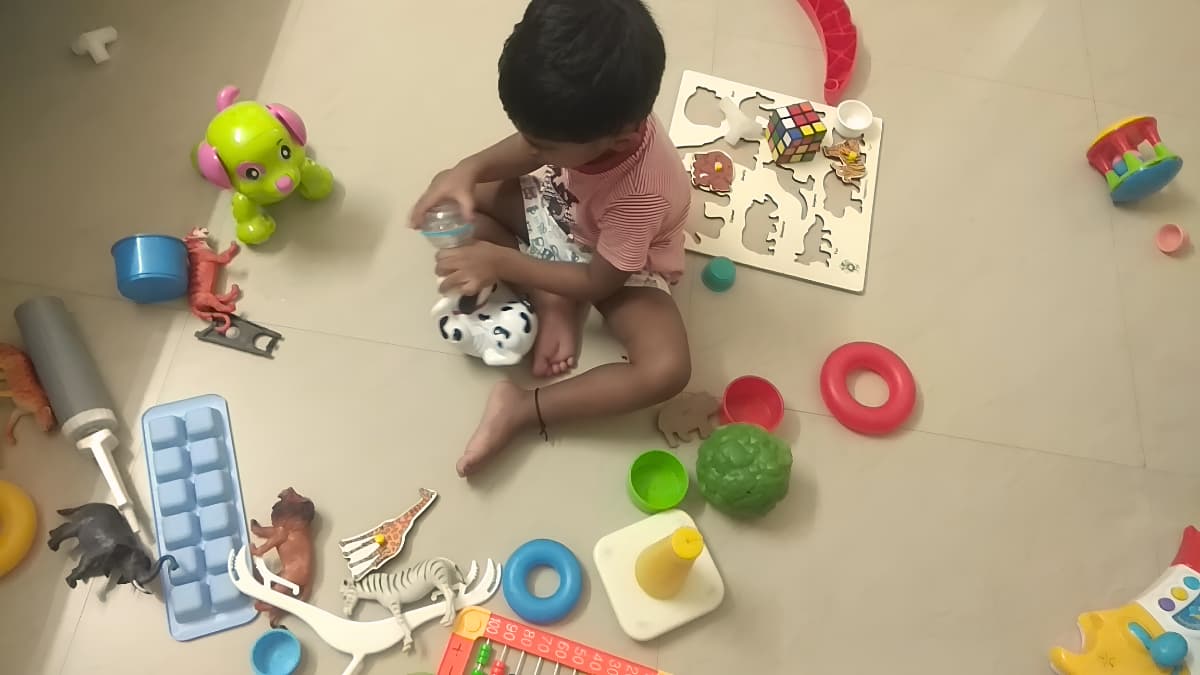
- Preferring to play alone most of the time
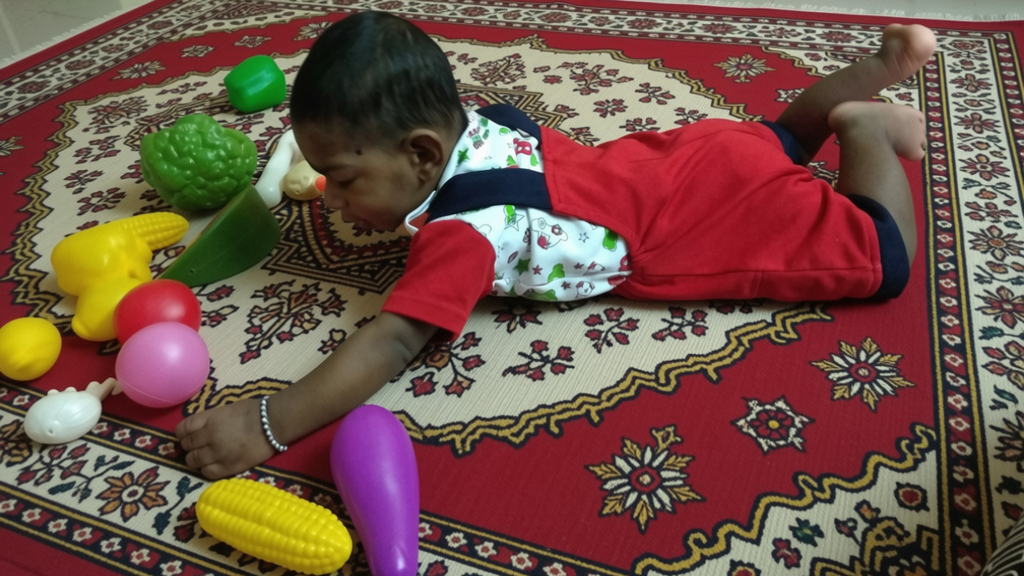
- Not bringing toys to share excitement
- Less interest in interactive games
- Difficulty understanding facial expressions
- Not noticing when someone enters the room
- Difficulty joining other children in play
This doesn’t mean autistic children don’t enjoy relationships.
Many absolutely do.
They may simply show it differently.
Behavioural Signs
Many behaviours that parents notice first are actually ways children regulate themselves or communicate.
Examples include:
- Hand flapping
- Rocking
- Spinning objects
- Lining up toys
- Repeating the same activity
- Becoming upset when routines change
- Strong interests in specific topics
These behaviours often have a purpose.
We’ll explore that much more in later sections.
Sensory Signs
This is one area many parents haven’t heard much about until autism enters the conversation.
Some children experience the world much more intensely.
Others may seem to seek strong sensory experiences.
Some common examples include:
- Covering ears during loud sounds
- Walking on tiptoes
- Constant jumping
- Spinning
- Looking closely at lights
- Smelling objects
- Chewing clothes or toys
- Strong reactions to clothing textures
- Refusing certain foods because of texture
- Fear of haircuts or nail cutting
When I first noticed some of these behaviours with Suhas, I honestly thought they were simply habits.
I didn’t realise they were his way of processing the world differently.
Learning about sensory processing completely changed how we responded as parents.
Instead of asking,
“How do we stop this?”
We started asking,
“Why is this happening?”
That single question changed everything.
Development Doesn’t Follow One Timeline
One of the biggest mistakes parents make is comparing their child with another child.
I’ve done it too.
But comparison often creates unnecessary anxiety.
Some children:
- walk early but speak late.
Some:
- speak early but struggle socially.
Some:
- communicate beautifully but have significant sensory challenges.
Development isn’t a race.
The important question isn’t,
“Is my child exactly like other children?”
It’s,
“Is my child continuing to develop, and do we need additional support?”
When Should Parents Seek an Evaluation?
If you consistently notice several developmental differences—not just one—it is worth discussing them with your child’s pediatrician or another qualified healthcare professional.
Early evaluation doesn’t automatically mean your child will receive an autism diagnosis.
Sometimes the outcome may be:
- Speech delay
- Developmental delay
- ADHD
- Hearing difficulties
- Language disorder
- Autism
- Or another developmental condition
The purpose of an evaluation is understanding—not labeling.
How Is Autism Diagnosed?
One of the biggest misconceptions is that autism can be diagnosed through a blood test or brain scan.
It cannot.
Autism is diagnosed through careful observation of a child’s development and behaviour over time.
Professionals consider areas such as:
- Communication
- Social interaction
- Play
- Behaviour
- Sensory responses
- Developmental history
Parents play an incredibly important role because they know their child better than anyone else.
You’ll often be asked questions like:
- When did your child start speaking?
- Do they respond to their name?
- How do they play?
- How do they communicate their needs?
- How do they react to change?
The more honest and detailed your answers are, the more helpful they are for the assessment.
Who Can Diagnose Autism in India?
Depending on where you live, assessments may involve one or more professionals, such as:
- Developmental pediatricians
- Child neurologists
- Child psychiatrists
- Clinical psychologists
- Multidisciplinary developmental teams
In many cases, speech-language pathologists and occupational therapists also contribute valuable information about a child’s strengths and support needs, although they may not make the formal diagnosis themselves.
If you are unsure where to start, your child’s pediatrician is often the best first point of contact for a referral.
Why Early Diagnosis Matters
One question parents often ask me is,
“Should I wait and see?”
Of course, every child develops differently.
But one thing that many experts agree on is this:
If support is needed, starting earlier generally gives children more opportunities to build communication, learning, and daily living skills.
Seeking an evaluation doesn’t commit you to anything.
It simply gives you more information.
And good decisions are always based on good information.
Understanding the Autism Spectrum
This is probably one of the most misunderstood ideas about autism.
People often imagine autism like this:
Mild ———————- Severe
But autism isn’t a straight line.
Imagine instead a group of sliders.
One child might have:
Communication ★★★☆☆
Sensory ★★★★★
Social Interaction ★★☆☆☆
Daily Living ★★★★☆
Another child might look completely different.
Communication ★★★★★
Sensory ★☆☆☆☆
Social Interaction ★★★★☆
Routine Flexibility ★☆☆☆☆
Both children are autistic.
Both have different support needs.
This is why comparing autistic children rarely makes sense.
Strengths Are Part of the Spectrum Too
When people hear the word autism, they often focus only on challenges.
But many autistic children also have remarkable strengths.
Some have incredible memories.
Some notice tiny details others miss.
Some are highly honest.
Some have deep interests that become lifelong skills.
Some think visually in ways that amaze the people around them.
Our role as parents isn’t only to support challenges.
It’s also to help those strengths grow.
Common Myths About Autism
Let’s clear up some myths I hear frequently.
Myth 1: Autism is caused by bad parenting.
No.
Research has consistently shown that parenting style does not cause autism.
Myth 2: Vaccines cause autism.
This claim has been extensively studied, and large, well-conducted research has not found evidence that routine childhood vaccines cause autism.
Protecting children from preventable diseases remains important.
Myth 3: Every autistic child is a genius.
Some autistic people have exceptional talents.
Many do not.
Autistic children are individuals with different strengths, interests, and support needs.
Myth 4: Children with autism don’t want friends.
Many autistic children absolutely enjoy relationships.
They may simply communicate and interact differently.
Myth 5: Autism can be cured.
Autism is not something to “cure.”
It is a lifelong neurodevelopmental difference.
Support focuses on helping children communicate, learn, participate, and live fulfilling lives—not changing who they are.
Myth 6: Therapy works exactly the same for every child.
One of the biggest lessons our family has learned is that there is no single therapy that works for every child in the same way.
Progress depends on many factors, including the child’s strengths, challenges, goals, family involvement, and the quality of support.
That’s why you’ll never see LeapAgo promise miracle results.
What This Looked Like in Our Home
When we first began noticing differences with Suhas, we didn’t have all the answers.
Some days we thought,
“Maybe he’s just developing at his own pace.”
Other days we wondered whether we were worrying too much.
Getting professional guidance didn’t suddenly solve everything.
But it gave us clarity.
Instead of guessing, we started understanding.
And understanding helped us make better decisions for him.
Looking back, I’m grateful that we chose to seek answers rather than continue wondering.
Looking Ahead
Now that we’ve talked about recognising the signs and understanding the diagnosis, the next question many parents ask is:
“How can I help my child communicate better?”
That’s exactly where we’re going next.
In the next part of this guide, we’ll explore communication, speech development, eye contact, echolalia, joint attention, and practical ways parents can support communication at home.
💙 A Note From One Parent to Another
If today’s section made you realise that your child shows some of these signs, please don’t let fear take over.
Take one step at a time.
Observe.
Ask questions.
Speak with qualified professionals.
And remember this:
An autism diagnosis doesn’t tell you everything about your child’s future.
It simply helps you understand how your child experiences the world today.
Understanding is not the end of the journey.
It’s the beginning of making more informed decisions for your child.
—
Sridhar K
Founder, LeapAgo
📖 What’s Included in This Guide
This guide is designed to be read in order. Each part builds on the previous one to help you understand autism and support your child with greater clarity.
○ Part 1 – What Is Autism?
Current Article
📍YOU ARE HERE
Part 2 – Early Signs of Autism
○ Part 3 – Communication and Speech
○ Part 4 – Sensory Processing and Behaviour
○ Part 5 – Understanding Therapies
○ Part 6 – Daily Life with Autism
○ Part 7 – Looking After Yourself as a Parent
○ Part 8 – Frequently Asked Questions
○ Part 9 – Autism Resources in India