

When parents search for early autism signs, we are usually not casually browsing.
There is often a child behind that search.
Maybe your child is not talking as much as you expected.
Maybe they do not respond every time you call their name.
Maybe they repeat the same activity again and again.
Perhaps they cover their ears around certain sounds, become very upset when a routine changes, or seem more interested in spinning a wheel than playing with the whole toy.
And then comes the question many of us eventually type into Google:
“Could this be autism?”
I understand that question because, as a parent, I know how quickly one small concern can turn into twenty questions.
But before we look at the 25 possible signs, there is something very important I want to say.
One Sign Does Not Mean Your Child Has Autism
A toddler lining up toys does not automatically mean autism.
A child with speech delay is not automatically autistic.
A child who avoids eye contact sometimes is not automatically autistic.
And a child who makes good eye contact, talks, hugs their parents or enjoys playing does not automatically rule out autism either.
Autism is identified by looking at a broader developmental pattern, particularly social communication and interaction together with restricted, repetitive or sensory-related patterns. Children without autism may show individual behaviours that also appear on autism checklists.
So when I say these are signs parents should “never ignore,” I do not mean:
“See one sign and assume autism.”
I mean:
“Notice recurring patterns, write them down, and discuss persistent developmental concerns with an appropriate professional.”
I am a parent sharing personal experiences and educational information, not a doctor or therapist. This article is not intended to diagnose any child or replace advice from a qualified healthcare or developmental professional.
For a broader overview, you can start with The Complete Autism Guide for Indian Parents
What Are Early Autism Signs?
Autism is a neurodevelopmental condition associated with differences in social interaction and communication, along with patterns of behaviour, interests, routines or sensory responses that may differ from typical development.
Characteristics can sometimes be noticed in early childhood, although many autistic people are identified later. Needs and abilities vary considerably from one autistic person to another.
It is often more useful to think about early signs in groups rather than treating each behaviour as a separate test.
We will look at five areas:
- Social connection
- Communication
- Play and interaction
- Repetitive behaviour and routines
- Sensory responses and regulation
Here is a comprehensive article on What Is Autism? A Simple Guide for Indian Parents
Social Communication and Connection
1. Your Child Often Does Not Respond to Their Name
One possible early observation is that a child does not consistently turn, look or otherwise respond when their name is called.
The CDC includes lack of response to name among developmental characteristics associated with autism, and NICE also identifies delayed or absent response to name as something professionals may consider.
But context matters.
A child may simply be deeply focused, tired or distracted.
If this happens frequently, especially alongside communication differences, mention it to your pediatrician. Hearing should also be considered when there are concerns about responses to spoken language.
2. Limited Use of Eye Contact for Social Communication
Some children use eye contact less frequently or differently.
The important part is not whether your child can physically look at you.
It is how eye gaze combines with communication.
For example, does your child look from a toy to your face as though saying:
“Look at this!”
Do they look toward you while sharing enjoyment?
Do they combine eye contact, gesture and sound to communicate?
And remember the reverse is also true: good eye contact does not rule out autism. NICE explicitly warns against excluding autism merely because a child makes eye contact, smiles or shows affection
3. Limited Social Smiling or Sharing of Enjoyment
Babies and toddlers often begin sharing enjoyment through smiles, expressions and attention.
Some autistic children may smile less responsively or may share excitement differently.
You might notice that your child enjoys an activity but rarely looks toward you to involve you in that enjoyment.
This is different from whether the child is generally happy.
The question is more about shared social connection.
4. Using Few Gestures
Communication begins long before full sentences.
Young children may:
- wave goodbye,
- lift their arms to be picked up,
- nod,
- shake their head,
- point,
- reach,
- or show objects.
The CDC includes limited gesture use among characteristics worth monitoring in early childhood.
Some children communicate in other ways, so gestures alone cannot diagnose autism.
5. Not Pointing to Share Something Interesting
There is a difference between pointing because a child wants something and pointing because they want you to experience something with them.
Imagine your child sees an aeroplane.
They might point toward it, look at you, then look back at the sky.
The message is almost:
“Dad, look at that!”
This shared attention is sometimes called joint attention.
Reduced pointing or showing objects simply to share interest can be one early developmental feature professionals consider.
6. Rarely Showing You Objects Just to Share Them
Your child may bring you a biscuit because they need help opening it.
But do they also bring something simply because they find it interesting?
A leaf.
A car.
A drawing.
A stone.
A favourite toy.
Sharing objects for enjoyment rather than only to obtain help is another part of social communication.
7. Difficulty With Back-and-Forth Interaction
Early conversation does not require words.
It can be:
You smile → baby smiles.
You make a sound → child responds.
You roll a ball → child rolls it back.
You make a silly face → child imitates you.
Some autistic children may participate less consistently in these back-and-forth exchanges.
Later, this can show up as difficulty maintaining a two-way conversation even when spoken language is strong.
Speech and Communication Signs
8. Speech or Language Developing More Slowly Than Expected
Speech delay is one of the most common reasons parents seek developmental advice.
Some autistic children speak later.
But this deserves a giant asterisk:
Speech delay alone does not mean autism.
Children can have isolated speech or language delays for many reasons.
When professionals evaluate possible autism, they consider how language is being used alongside social communication, gestures, play, repetitive behaviours and other aspects of development.
9. Loss of Words or Communication Skills Previously Used
This is different from being a late talker.
A child may previously have used words, gestures or social communication and then stop using some of those skills.
Regression deserves professional attention.
NICE includes regression or loss of speech among features that should prompt developmental consideration, and loss of previously acquired skills should not simply be watched indefinitely.
If you notice a clear loss of established language, social or motor skills, contact an appropriate healthcare professional promptly.
10. Repeating Words or Phrases Frequently
You may hear your child repeat:
“Do you want water?”
when what they mean is:
“I want water.”
Or they might repeat lines from cartoons, advertisements, songs or conversations.
This is often called echolalia.
Echolalia can occur in autistic children and may serve different functions, including communication or language learning. It should not automatically be treated as meaningless speech. NICE includes frequent repetition of set words or phrases among possible language characteristics.
11. Speech Sounds Unusually Flat, Sing-Song or Scripted
Some children may develop plenty of words yet sound noticeably different in how they use them.
Speech might be:
- unusually formal,
- very flat,
- highly repetitive,
- sing-song,
- or heavily based on memorised phrases.
This does not mean something is wrong with the child’s voice.
It can simply be one part of their communication profile.
12. Using Words Without Consistently Using Them to Communicate
Knowing words and communicating with words are not necessarily the same thing.
A child may:
- recite numbers,
- sing complete songs,
- name letters,
- repeat television dialogue,
yet struggle to say:
“Help me.”
“I am hurt.”
“I don’t want this.”
“I need the toilet.”
This distinction is enormously important.
As parents, sometimes we understandably count vocabulary.
Professionals also look at how communication functions in everyday life.
13. Using Another Person’s Hand Instead of Gesturing or Asking
Some children may take a parent’s hand and physically guide it toward an object they want.
For example, rather than pointing toward a closed box, the child may take your hand and place it on the lid.
NICE specifically notes that some children may use another person’s hand on an object while using fewer conventional gestures.
Again, one behaviour alone tells us very little.
The overall communication pattern matters.
Play and Social Interaction Signs
14. Limited Imitation
Young children often learn by copying.
You clap.
They clap.
You pretend to stir tea.
They try.
You make a funny sound.
They copy it.
Some children who later receive an autism diagnosis show less spontaneous imitation of other people’s actions.
Imitation is worth noticing because it plays a role in play, learning and social development.
15. Limited Pretend Play
Pretend play may include:
- pretending to feed a doll,
- making a toy car “drive,”
- using a block as a phone,
- pretending to cook,
- making an animal figure sleep.
Some autistic children engage in less varied spontaneous pretend play, although autistic children absolutely can pretend and play imaginatively.
NICE specifically cautions that reported pretend play does not rule out autism.
16. Preferring to Play Alone Most of the Time
Many toddlers enjoy independent play.
That is normal.
What may be more useful to observe is whether your child consistently shows little interest in joining, observing or interacting with other children, particularly as they grow older.
Some autistic children genuinely enjoy being around peers but have difficulty figuring out how to enter or maintain the interaction.
So “playing alone” should never be interpreted as “doesn’t like people.”
17. Difficulty Joining Other Children in Play
A child might stand near a group but not know how to enter the game.
They might take an object without understanding the social exchange around it.
Or they might insist other children play according to one particular rule.
These differences may become more noticeable when preschool or school begins because social expectations suddenly become much more complicated.
Repetition, Interests and Routine
18. Repetitive Body Movements
Some children repeatedly:
- flap their hands,
- rock,
- spin,
- pace,
- jump,
- flick their fingers,
- or move in another repeated way.
These movements are sometimes called stimming.
The CDC includes repeated movements such as hand flapping, rocking and spinning among characteristics associated with autism.
But repetitive movement is not automatically something that needs to be stopped.
A more useful question is:
What purpose might this movement be serving, and is it unsafe or interfering significantly with daily life?
19. Playing With Objects in the Same Way Repeatedly
Some children repeatedly:
- open and close doors,
- spin wheels,
- turn lights on and off,
- move a toy along the same route,
- or repeat exactly the same play sequence.
Repetition itself is not bad.
Young children often repeat activities while learning.
What becomes more informative is the intensity, persistence and broader developmental pattern.
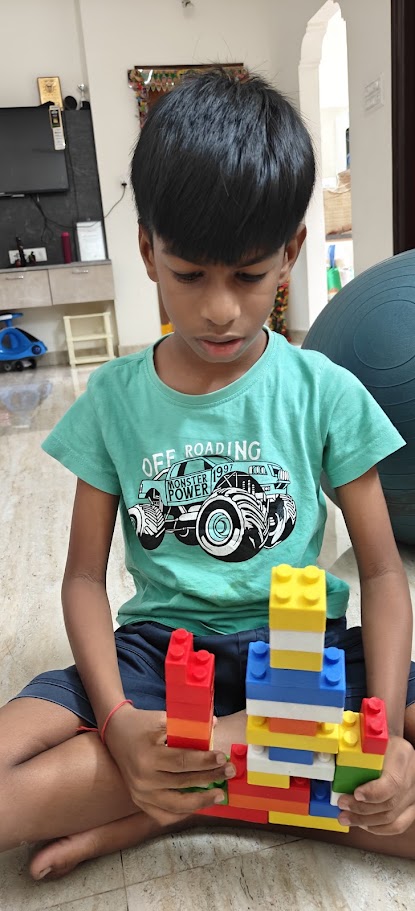
20. Lining Up or Arranging Objects and Becoming Upset if the Order Changes
This is probably one of the most photographed “autism signs” on the internet.
Yes, some autistic children line up toys or arrange objects repeatedly.
The CDC includes this as an example of restricted or repetitive behaviour.
But please remember:
A child lining up cars does not equal autism.
The more useful question is whether repetitive patterns occur alongside other social-communication and developmental differences.
21. Becoming Very Distressed by Small Changes
Imagine:
You usually drive one route to school.
Today you take another road.
Or the usual plate is unavailable.
Or bath happens before dinner instead of afterward.
Some children may become much more distressed by these changes than parents expect.
Autism can involve a strong preference for predictability and difficulty moving between activities or coping with unexpected changes. WHO specifically identifies difficulty with transitions among common characteristics.
Visual routines and advance warnings can sometimes make transitions easier, depending on the child.
Look for the details below:
How to Create a Visual Routine for a Child With Developmental Delay
22. Very Intense or Narrow Interests
Every child has favourite things.
Some autistic children, however, may become deeply focused on a particular subject, object or activity.
It might be:
- vehicles,
- numbers,
- fans,
- maps,
- particular characters,
- logos,
- calendars,
- machines,
- animals,
- or almost anything else.
Having a strong interest is not inherently negative.
Interests can be sources of joy, connection and learning.
What professionals look at is the overall pattern and intensity, not whether a child happens to love dinosaurs.
Sensory and Regulation Signs
23. Strong Reactions to Sounds, Lights, Touch or Textures
Some children may:
- cover their ears around mixers or hand dryers,
- become distressed in crowded spaces,
- dislike certain fabrics,
- avoid touching messy materials,
- struggle with haircuts,
- dislike bright environments,
- or react strongly to particular smells.
Autistic people can experience sensory input differently, including heightened or reduced reactions to sound, texture, smell, taste and other sensations.
Sensory differences can also occur outside autism. Get to know more about What Is Sensory Processing Disorder? Explained Simply.
24. Constantly Seeking Movement or Strong Sensory Input
Sensory differences do not always look like avoidance.
Some children seem to constantly seek input.
Sensory-seeking behaviour by itself is not specific to autism and can also occur in other developmental profiles or in children without an autism diagnosis.
You might see:
- jumping,
- climbing,
- crashing into cushions,
- spinning,
- rocking,
- touching objects repeatedly,
- chewing,
- or constantly moving.
This is an area that feels familiar to our family. With my son, movement and sensory-seeking behaviours have been something we have had to observe carefully rather than simply treating every instance of movement as “bad behaviour.”
That shift in thinking matters.
Sometimes behaviour is information.
25. Unusually Strong Reactions to Food Texture, Taste, Smell or Appearance
Some children accept only a narrow range of foods because of:
- texture,
- smell,
- temperature,
- appearance,
- colour,
- or how foods are combined.
NICE includes particularly strong responses to food taste, smell, texture or appearance among sensory characteristics that may occur alongside autism.
Selective eating does not automatically indicate autism.
And if eating becomes extremely restricted, affects growth, involves choking or swallowing concerns, or creates nutritional worries, that deserves appropriate professional attention rather than simply being labelled “autism behaviour.”
The 25 Signs at a Glance
Here is the entire list in one place.
- Inconsistent response to name
- Limited social eye contact
- Reduced social smiling or sharing enjoyment
- Using few gestures
- Limited pointing to share interest
- Rarely showing objects simply to share
- Difficulty with back-and-forth interaction
- Delayed speech or language
- Loss of previously used words or skills
- Frequent repetition of words or phrases
- Unusual speech rhythm or scripted language
- Knowing words but struggling to communicate needs
- Using another person’s hand to obtain something
- Limited spontaneous imitation
- Limited or less varied pretend play
- Strong preference for playing alone
- Difficulty joining peers in play
- Repetitive body movements
- Repetitive play patterns
- Lining up or arranging objects repeatedly
- Strong distress around changes
- Very intense or narrow interests
- Strong sensory reactions
- Sensory-seeking or constant movement
- Strong reactions to food textures, smells or appearance
None of these individually diagnoses autism.
That sentence deserves repeating.
Look for Patterns, Not a Score
I would discourage parents from doing this:
“My child has 8 out of 25, so it must be autism.”
This article is not a scoring system.
Autism assessment is not based on counting how many internet symptoms apply.
Professionals consider:
- developmental history,
- communication,
- interaction,
- repetitive and restricted patterns,
- sensory responses,
- functioning in different environments,
- observations from caregivers,
- and other possible explanations.
NICE specifically says lists of possible features should be used to recognise a developmental pattern and not as standalone diagnostic tools.
A small example from our home: Sometimes I notice that my son engages with toys or learning materials in his own repeated way. In this short video, he is playing with picture cards while another child is nearby. I am not sharing this as an example of “what autism looks like.” One play pattern by itself tells us very little. I share it because these ordinary moments can help us observe how our child explores, repeats, interacts and responds over time.
A Non-Diagnostic Parent Observation Checklist
If you are concerned, instead of repeatedly searching Google, try recording what you actually observe for a week or two.
Write down:
- What happened?
- Where did it happen?
- Who was present?
- What happened immediately beforehand?
- How did your child communicate?
- How long did it continue?
- What seemed to help?
- Does it happen at home, school and elsewhere?
- Is this a new pattern or something you have seen for months?
- Has your child lost any skill they previously used?
You might also record short examples for discussion with a professional when appropriate, while protecting your child’s privacy.
This gives a paediatrician or developmental professional far more useful information than:
“I saw a reel saying hand flapping means autism.”
What Helped Us as a Family
One thing I have learned is that observing the whole child is more useful than obsessing over one behaviour.
With my son, our concerns have involved more than one area over time: speech and communication, attention, movement and sensory seeking, fine-motor abilities, routines and participation in everyday activities.
Looking at those areas together has been much more useful than asking:
“Is this one particular behaviour autism?”
Visual routines have also helped us make parts of the day more predictable.
And when I speak to therapists or other professionals, concrete observations such as:
“He can do this for five minutes but becomes restless after that”
are more useful than simply saying:
“He is hyperactive.”
We are still learning.
That is part of the reason LeapAgo exists.
What Did Not Help Me
Comparing children did not help.
Neither did worrying about every behaviour individually.
And advice such as:
“Boys talk late. Just wait.”
can sometimes delay a useful conversation when a parent has broader developmental concerns.
On the other extreme, social media can convince us that every ordinary toddler behaviour is a warning sign.
Neither extreme is particularly helpful.
The middle path is much more practical:
notice → document → discuss → understand → support
When Should You Speak to a Professional?
You do not need to wait until you are certain something is autism.
In fact, that is not your job as a parent.
Speak with your child’s paediatrician or an appropriate developmental professional when you have persistent concerns about:
- communication,
- social interaction,
- learning,
- play,
- movement,
- behaviour,
- sensory responses,
- or everyday functioning.
The American Academy of Pediatrics recommends ongoing developmental surveillance and autism-specific screening at 18 and 24 months, with additional screening and evaluation whenever developmental concerns arise.
Screening is not diagnosis. It helps identify children who may benefit from more detailed evaluation.
A developmental evaluation may involve a paediatrician, developmental paediatrician, psychologist, speech-language professional, occupational therapist or other members of a multidisciplinary team depending on the child’s needs.
Do Not Wait on Regression
One situation deserves particular attention.
If your child loses skills they previously had, such as language, social communication or motor abilities, contact an appropriate healthcare professional rather than assuming it is simply a phase.
Regression can have different causes and should be assessed appropriately.
Frequently Asked Questions
Is speech delay the first sign of autism?
It can be one early concern, but speech delay alone does not establish autism. Professionals look at social communication, interaction, repetitive behaviours, sensory patterns and the child’s overall development.
My child talks a lot. Could they still be autistic?
Yes. Some autistic children develop a large vocabulary or speak early. Autism should not be ruled out simply because language milestones appear typical.
My child looks directly into my eyes. Does that rule out autism?
No. NICE specifically advises that good eye contact should not be used to rule out autism.
My toddler lines up toys. Should I worry?
Not because of that behaviour alone. Look at the broader developmental picture.
My child loves hugs. Can autistic children be affectionate?
Yes. Showing affection does not rule out autism. Every child’s preferences around physical affection are different.
Is hand flapping always autism?
No. Repetitive movements can occur for different reasons and in children who are not autistic. It becomes one piece of information when considered with the broader developmental pattern.
Can autism signs become clearer later?
Yes. Some developmental differences become more apparent as communication, social and school expectations increase. Autism is sometimes not recognised until later childhood or beyond.
Can autism and ADHD occur together?
Yes. WHO notes that ADHD can occur alongside autism.
Should I use an online autism test?
Online screening information can help you organise observations, but it cannot diagnose your child. Discuss concerns with an appropriate professional.
What should I do if my family tells me to “wait and see”?
You do not need to argue with anyone or diagnose your child yourself.
If you have persistent developmental concerns, take them to your paediatrician or an appropriate developmental professional. Asking for an evaluation does not mean deciding in advance that your child has autism.
A comprehensive list of the FAQs on Autism is here.
A Father-to-Parent Thought
When we notice something different about our child, there is a natural temptation to search for certainty.
We want someone to tell us:
Yes, this is autism.
or:
No, there is absolutely nothing to worry about.
Development rarely gives parents answers that neatly.
What we can do is become careful observers.
We can notice patterns without judging our children.
We can ask questions without panicking.
We can seek professional guidance without treating a diagnosis as a tragedy.
And when support is needed, we can focus less on making our child look like everyone else and more on helping them communicate, participate, stay safe, learn and become increasingly independent in ways that are meaningful for them.
That is a much more useful starting point.
Conclusion: Early Autism Signs Are Clues, Not a Diagnosis
These 25 early autism signs are not a checklist for deciding whether your child is autistic.
They are developmental observations worth understanding.
Your child may show one.
Several.
Many.
Or signs completely different from the examples discussed here.
Children develop differently, and autism itself is diverse.
If something continues to concern you, you do not need to wait until you can name it.
Observe.
Write it down.
Talk to an appropriate professional.
And take the next step based on your child’s actual needs, not fear and not somebody else’s timeline.
If you need more info on Autism resources in India check this out.