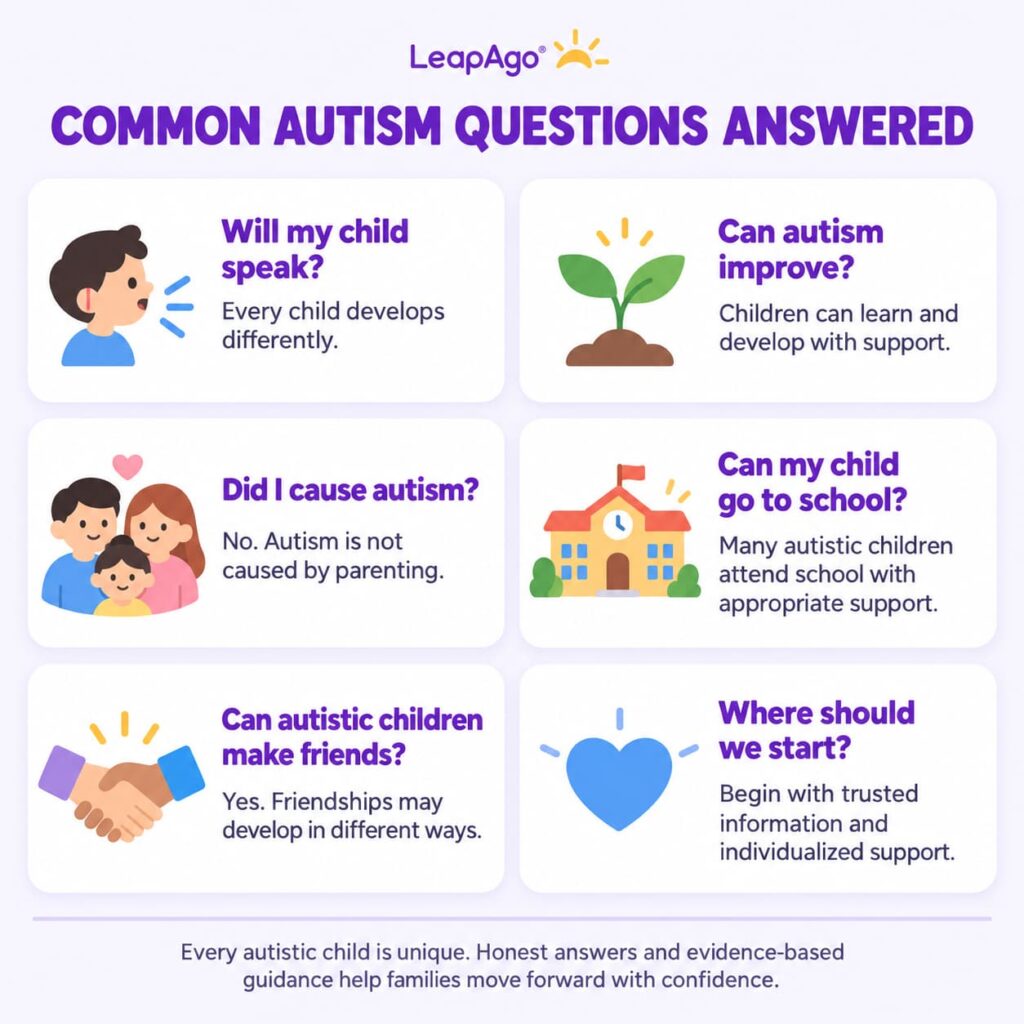
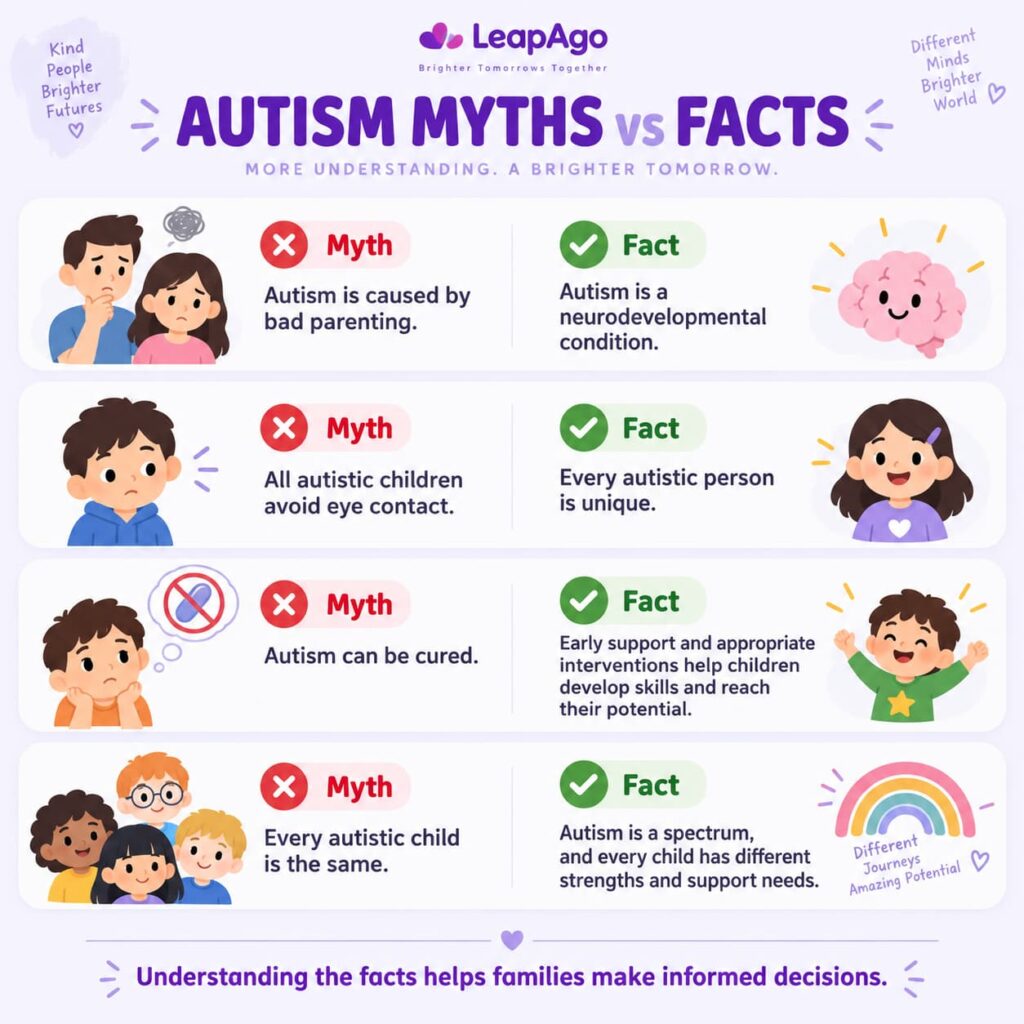
“When my son was first showing signs that something was different, I did what every parent does—I searched online.
The more I searched, the more confused I became.
One website scared me.
Another promised miracles.
A third was filled with medical words I couldn’t understand.
At that moment, I didn’t need another textbook.
I needed another parent.
Someone who had walked this road before me.
Someone who could simply say… ‘I understand.'”
That is exactly why I created LeapAgo.
If you’ve landed on this page, there’s a good chance you’re somewhere on a journey that none of us ever expected to take.
Maybe your child isn’t speaking yet.
Maybe someone mentioned the word autism during a doctor’s visit.
Maybe your child avoids eye contact, keeps jumping around the house, walks on tiptoes, covers their ears, or struggles with things that other children seem to do naturally.
Or maybe you’ve already received an autism diagnosis, and now you’re wondering…
“What happens next?”
First, I want you to know something from the bottom of my heart.
You’re not alone.
I’m not writing this guide as a doctor.
I’m not writing this as someone who has all the answers.
I’m writing this as a father.
A father who is still learning every single day.
A father who has celebrated small victories and cried during difficult days.
A father who still has questions.
This guide is my attempt to share everything I’ve learned so far—not just from books and research, but from living this journey with my own son, Suhas.
My hope is simple.
If this guide saves even one parent from feeling as lost as I once felt…
Then every hour spent writing it will have been worth it.
Every Child’s Path Is Different
A Letter from One Parent to Another
Dear Parent,
I don’t know your name.
I don’t know where you live.
I don’t know your child’s story.
But I know something about you.
You’re here because you care deeply about your child.
You wouldn’t be reading a guide this long unless your child meant everything to you.
If you’re anything like me, you’ve probably spent nights wondering…
“Did I miss something?”
“Will my child speak?”
“Will my child go to school?”
“Will people understand my child?”
“Am I doing enough?”
I’ve asked myself every one of those questions.
There were days when I felt hopeful.
There were days when I felt overwhelmed.
There were days when I celebrated something as simple as one new word, one extra minute of sitting calmly, or one peaceful bedtime.
And there were days when nothing seemed to work.
If you’re feeling that way today…
Please hear this.
You’re not failing.
You’re parenting a child whose brain experiences the world differently.
That requires patience.
Learning.
Adjusting.
Trying again.
And sometimes simply surviving the day.
One of the biggest lessons this journey has taught me is that progress rarely happens in giant leaps.
It happens quietly.
One new skill.
One new routine.
One successful outing.
One less meltdown.
One more smile.
Sometimes we don’t even notice the progress until we look back several months.
Our children are growing.
We’re growing too.
That’s why I don’t want LeapAgo to become another website filled with medical definitions.
I want it to become a place where parents feel understood.
Where we can learn together.
Where science and real-life parenting meet.
Because both matter.
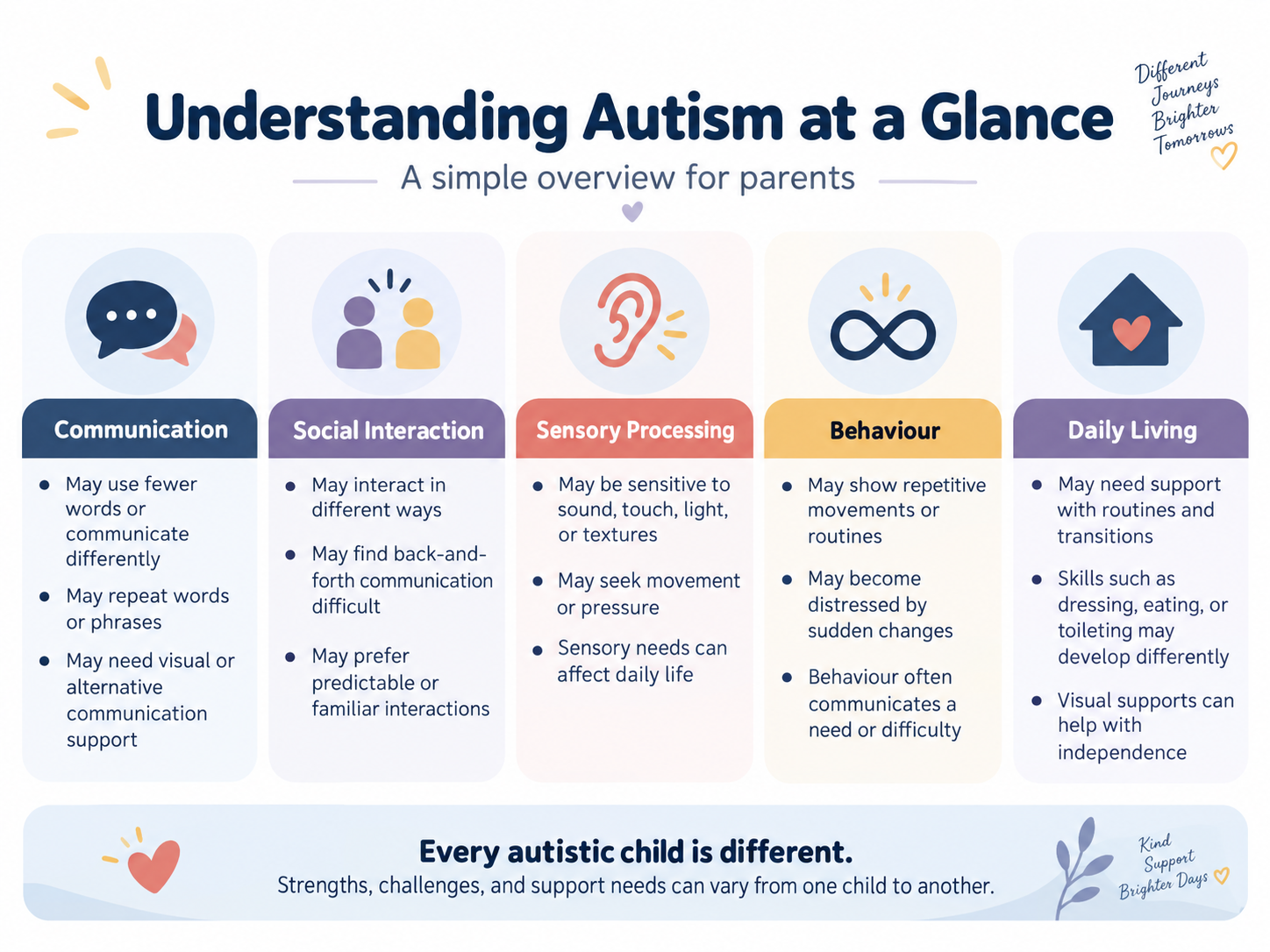
Every Autistic child is different
Why I Started LeapAgo
There are thousands of autism websites.
Many are excellent.
Many are written by researchers.
Many are written by therapists.
Many are written by organizations.
But I kept feeling something was missing.
I rarely found articles written by an Indian father who was living this reality every single day.
I wanted someone to explain things the way one parent explains them to another over a cup of coffee.
No complicated words.
No unnecessary fear.
Just honest conversations.
That became the vision for LeapAgo.
Every article on this website will follow one simple philosophy:
Real parenting experience supported by trusted research.
That means I’ll always tell you when I’m sharing something from our family’s journey.
And I’ll also explain what respected organizations and researchers have learned, so you can separate personal experience from established evidence.
I think parents deserve both.
📖 What’s Included in This Guide
This guide is designed to be read in order. Each part builds on the previous one to help you understand autism and support your child with greater clarity.
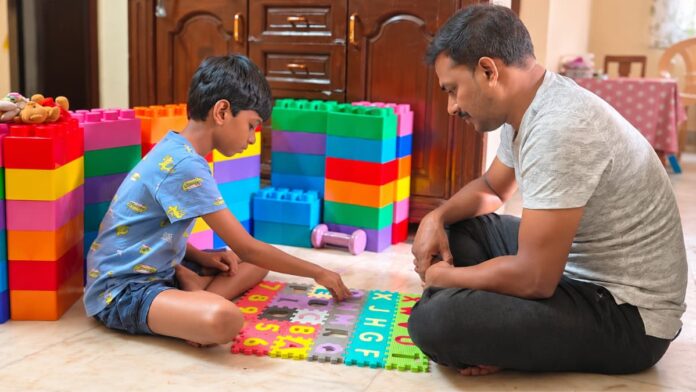
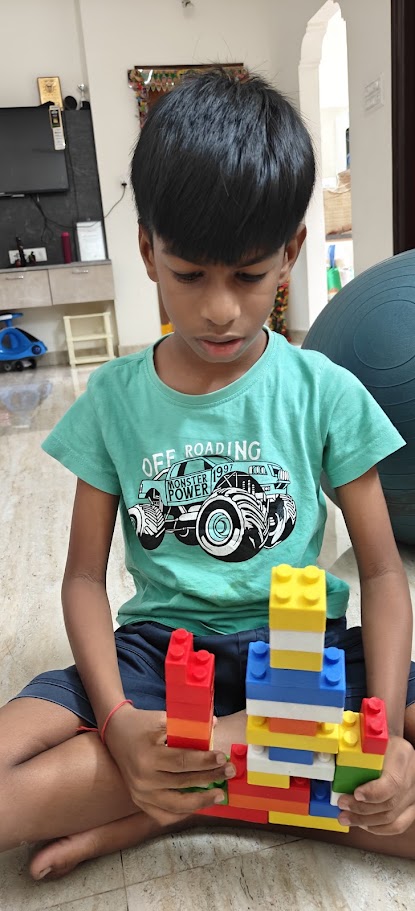
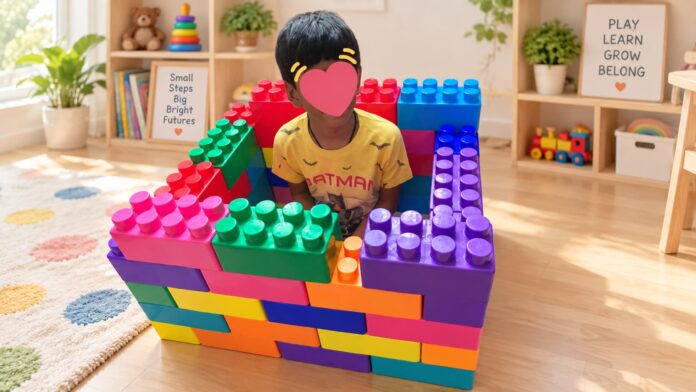
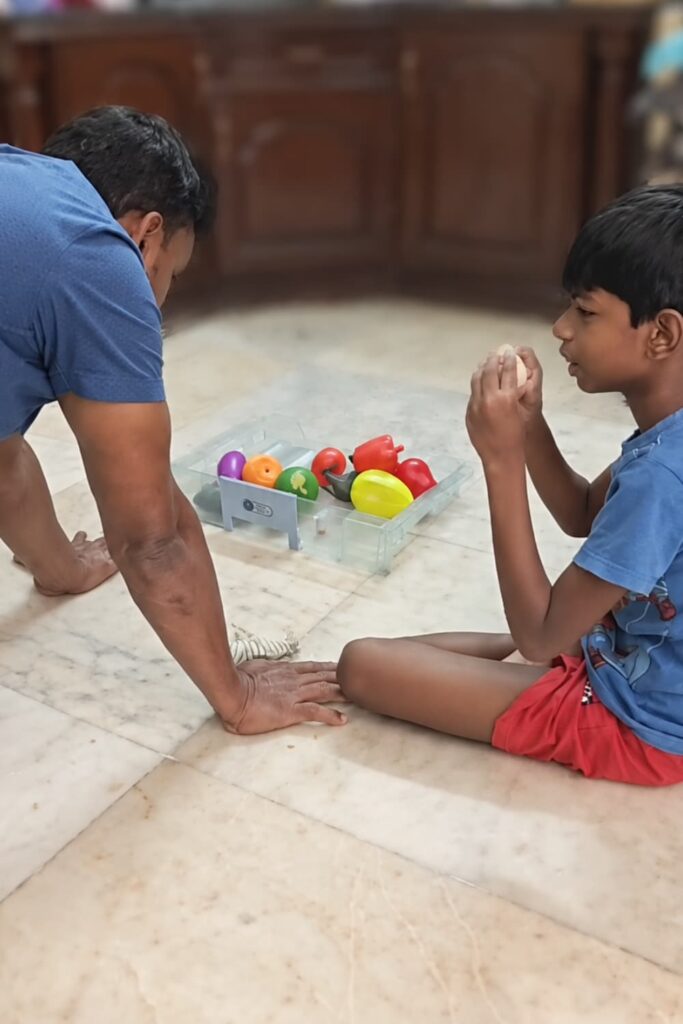
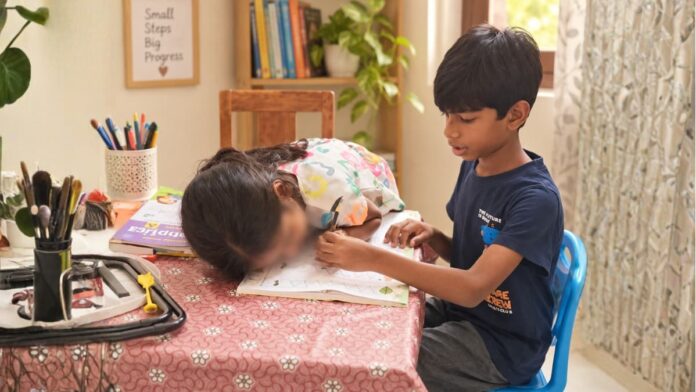
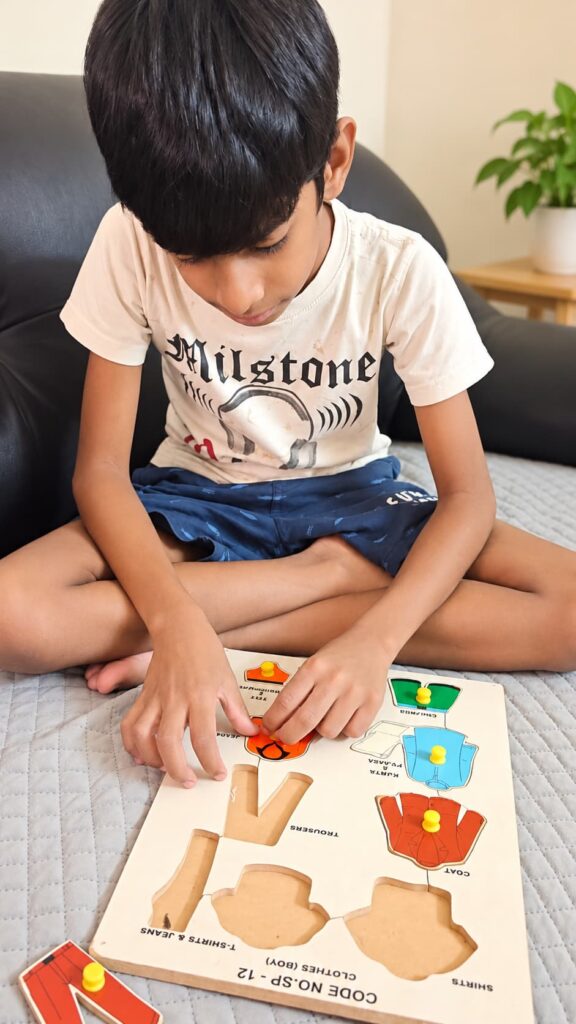
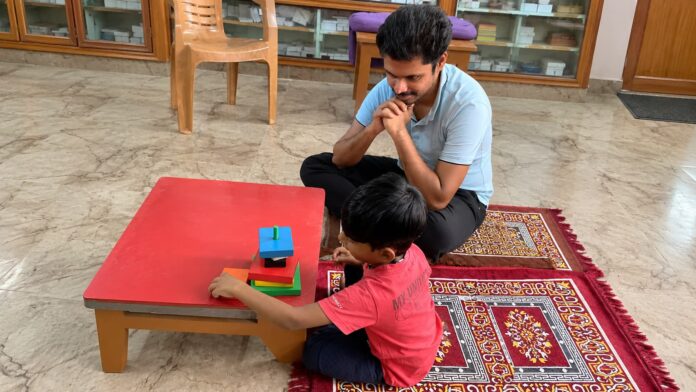
A parent spending focused, one-to-one time with a child during a learning activity at home.
When parents search for early autism signs, we are usually not casually browsing.
There is often a child behind that search.
Maybe your child is not talking as much as you expected.
Maybe they do not respond every time you call their name.
Maybe they repeat the same activity again and again.
Perhaps they cover their ears around certain sounds, become very upset when a routine changes, or seem more interested in spinning a wheel than playing with the whole toy.
And then comes the question many of us eventually type into Google:
“Could this be autism?”
I understand that question because, as a parent, I know how quickly one small concern can turn into twenty questions.
But before we look at the 25 possible signs, there is something very important I want to say.
One Sign Does Not Mean Your Child Has Autism
A toddler lining up toys does not automatically mean autism.
A child with speech delay is not automatically autistic.
A child who avoids eye contact sometimes is not automatically autistic.
And a child who makes good eye contact, talks, hugs their parents or enjoys playing does not automatically rule out autism either.
Autism is identified by looking at a broader developmental pattern, particularly social communication and interaction together with restricted, repetitive or sensory-related patterns. Children without autism may show individual behaviours that also appear on autism checklists.
So when I say these are signs parents should “never ignore,” I do not mean:
“See one sign and assume autism.”
I mean:
“Notice recurring patterns, write them down, and discuss persistent developmental concerns with an appropriate professional.”
I am a parent sharing personal experiences and educational information, not a doctor or therapist. This article is not intended to diagnose any child or replace advice from a qualified healthcare or developmental professional.
Autism is a neurodevelopmental condition associated with differences in social interaction and communication, along with patterns of behaviour, interests, routines or sensory responses that may differ from typical development.
Characteristics can sometimes be noticed in early childhood, although many autistic people are identified later. Needs and abilities vary considerably from one autistic person to another.
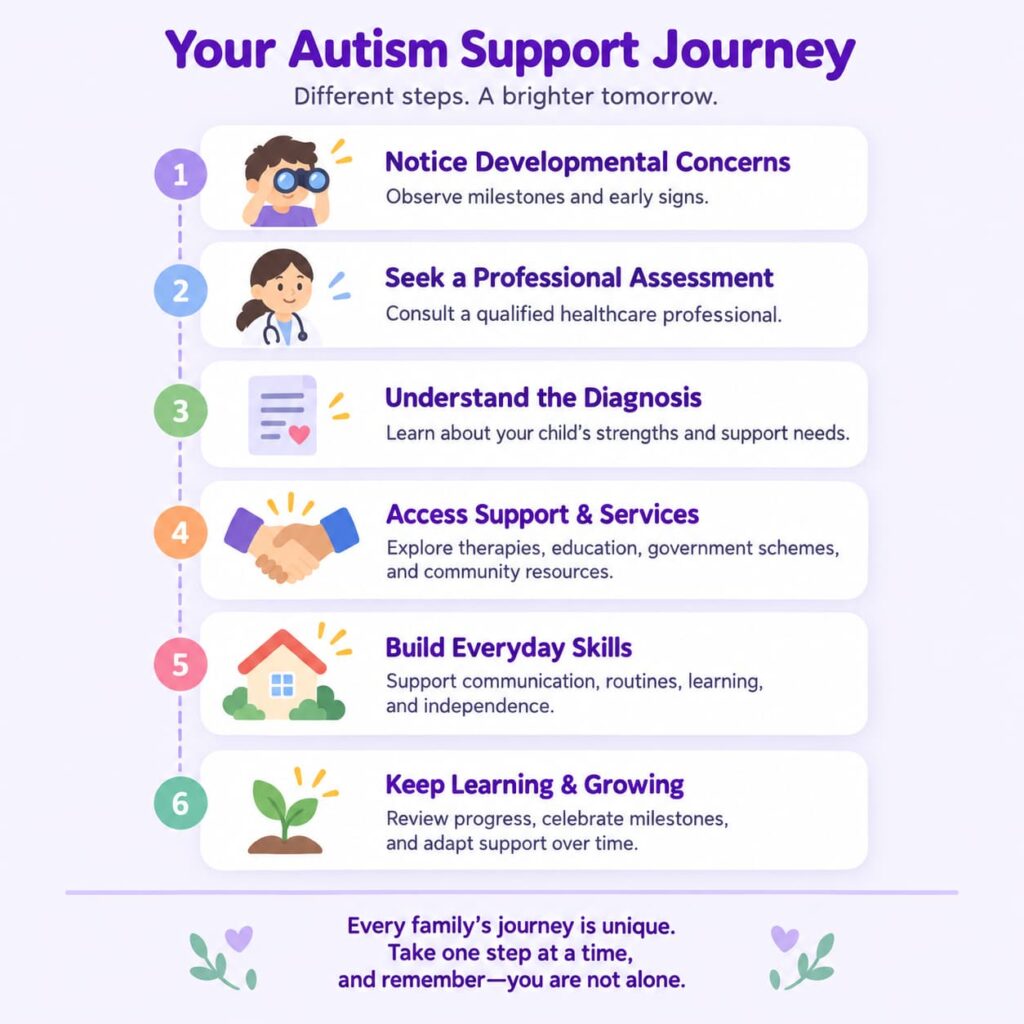
It is often more useful to think about early signs in groups rather than treating each behaviour as a separate test.
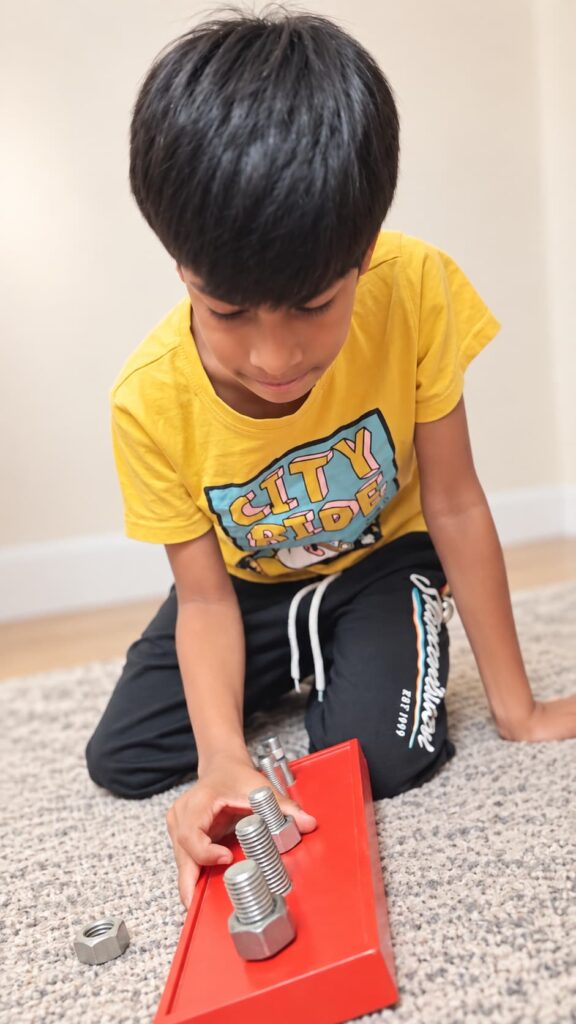
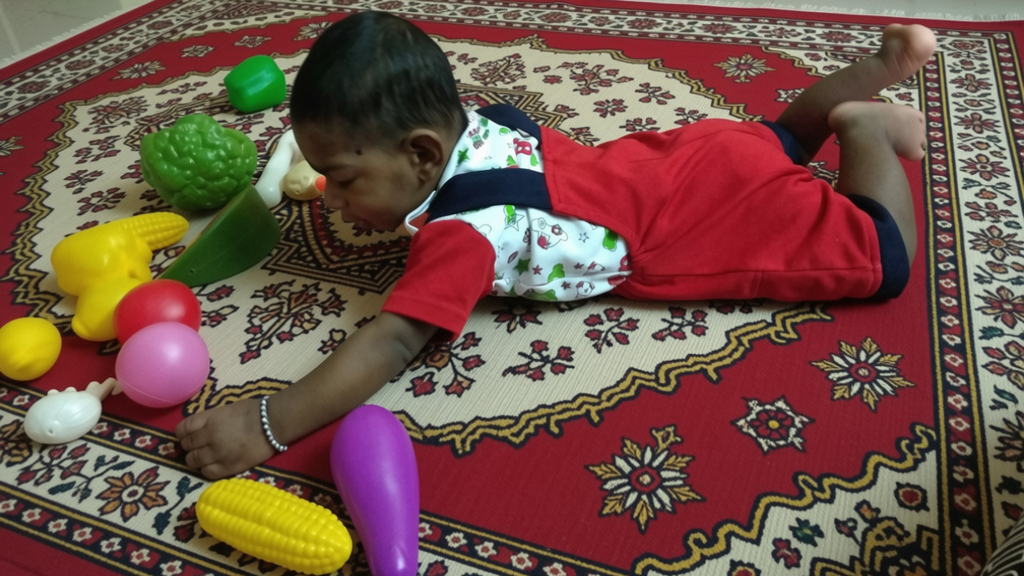
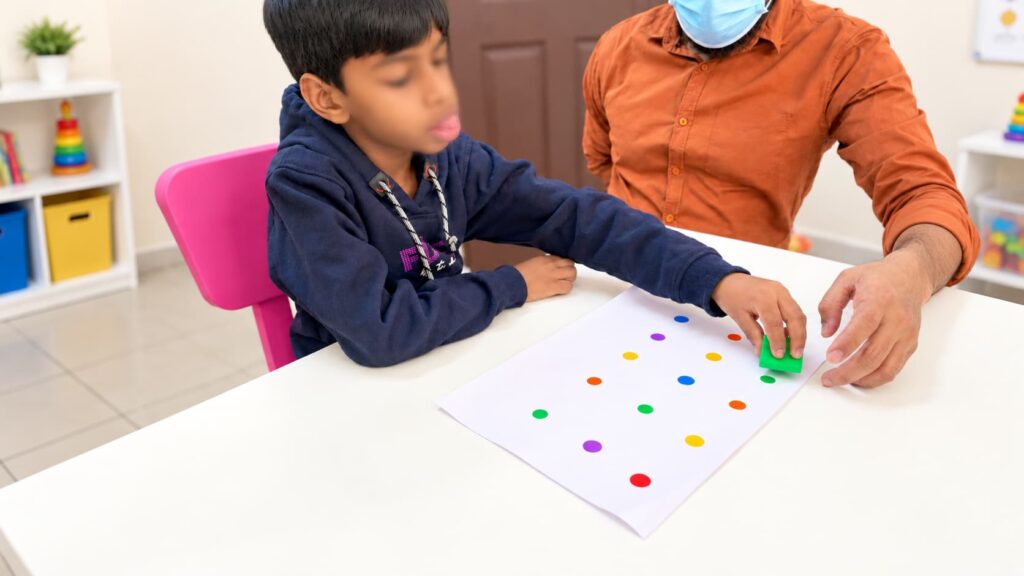
Everyday learning moments can help parents notice how a child focuses, responds to tasks, and engages with activities.
Social Communication and Connection
1. Your Child Often Does Not Respond to Their Name
One possible early observation is that a child does not consistently turn, look or otherwise respond when their name is called.
The CDC includes lack of response to name among developmental characteristics associated with autism, and NICE also identifies delayed or absent response to name as something professionals may consider.
But context matters.
A child may simply be deeply focused, tired or distracted.
If this happens frequently, especially alongside communication differences, mention it to your pediatrician. Hearing should also be considered when there are concerns about responses to spoken language.
2. Limited Use of Eye Contact for Social Communication
Some children use eye contact less frequently or differently.
The important part is not whether your child can physically look at you.
It is how eye gaze combines with communication.
For example, does your child look from a toy to your face as though saying:
“Look at this!”
Do they look toward you while sharing enjoyment?
Do they combine eye contact, gesture and sound to communicate?
And remember the reverse is also true: good eye contact does not rule out autism. NICE explicitly warns against excluding autism merely because a child makes eye contact, smiles or shows affection
3. Limited Social Smiling or Sharing of Enjoyment
Babies and toddlers often begin sharing enjoyment through smiles, expressions and attention.
Some autistic children may smile less responsively or may share excitement differently.
You might notice that your child enjoys an activity but rarely looks toward you to involve you in that enjoyment.
This is different from whether the child is generally happy.
The question is more about shared social connection.
4. Using Few Gestures
Communication begins long before full sentences.
Young children may:
wave goodbye,
lift their arms to be picked up,
nod,
shake their head,
point,
reach,
or show objects.
The CDC includes limited gesture use among characteristics worth monitoring in early childhood.
Some children communicate in other ways, so gestures alone cannot diagnose autism.
5. Not Pointing to Share Something Interesting
There is a difference between pointing because a child wants something and pointing because they want you to experience something with them.
Imagine your child sees an aeroplane.
They might point toward it, look at you, then look back at the sky.
The message is almost:
“Dad, look at that!”
This shared attention is sometimes called joint attention.
Reduced pointing or showing objects simply to share interest can be one early developmental feature professionals consider.
6. Rarely Showing You Objects Just to Share Them
Your child may bring you a biscuit because they need help opening it.
But do they also bring something simply because they find it interesting?
A leaf.
A car.
A drawing.
A stone.
A favourite toy.
Sharing objects for enjoyment rather than only to obtain help is another part of social communication.
7. Difficulty With Back-and-Forth Interaction
Early conversation does not require words.
It can be:
You smile → baby smiles.
You make a sound → child responds.
You roll a ball → child rolls it back.
You make a silly face → child imitates you.
Some autistic children may participate less consistently in these back-and-forth exchanges.
Later, this can show up as difficulty maintaining a two-way conversation even when spoken language is strong.
Speech and Communication Signs
8. Speech or Language Developing More Slowly Than Expected
Speech delay is one of the most common reasons parents seek developmental advice.
Some autistic children speak later.
But this deserves a giant asterisk:
Speech delay alone does not mean autism.
Children can have isolated speech or language delays for many reasons.
When professionals evaluate possible autism, they consider how language is being used alongside social communication, gestures, play, repetitive behaviours and other aspects of development.
9. Loss of Words or Communication Skills Previously Used
This is different from being a late talker.
A child may previously have used words, gestures or social communication and then stop using some of those skills.
Regression deserves professional attention.
NICE includes regression or loss of speech among features that should prompt developmental consideration, and loss of previously acquired skills should not simply be watched indefinitely.
If you notice a clear loss of established language, social or motor skills, contact an appropriate healthcare professional promptly.
10. Repeating Words or Phrases Frequently
You may hear your child repeat:
“Do you want water?”
when what they mean is:
“I want water.”
Or they might repeat lines from cartoons, advertisements, songs or conversations.
This is often called echolalia.
Echolalia can occur in autistic children and may serve different functions, including communication or language learning. It should not automatically be treated as meaningless speech. NICE includes frequent repetition of set words or phrases among possible language characteristics.
11. Speech Sounds Unusually Flat, Sing-Song or Scripted
Some children may develop plenty of words yet sound noticeably different in how they use them.
Speech might be:
unusually formal,
very flat,
highly repetitive,
sing-song,
or heavily based on memorised phrases.
This does not mean something is wrong with the child’s voice.
It can simply be one part of their communication profile.
12. Using Words Without Consistently Using Them to Communicate
Knowing words and communicating with words are not necessarily the same thing.
A child may:
recite numbers,
sing complete songs,
name letters,
repeat television dialogue,
yet struggle to say:
“Help me.”
“I am hurt.”
“I don’t want this.”
“I need the toilet.”
This distinction is enormously important.
As parents, sometimes we understandably count vocabulary.
Professionals also look at how communication functions in everyday life.
13. Using Another Person’s Hand Instead of Gesturing or Asking
Some children may take a parent’s hand and physically guide it toward an object they want.
For example, rather than pointing toward a closed box, the child may take your hand and place it on the lid.
NICE specifically notes that some children may use another person’s hand on an object while using fewer conventional gestures.
Again, one behaviour alone tells us very little.
The overall communication pattern matters.
Play and Social Interaction Signs
14. Limited Imitation
Young children often learn by copying.
You clap.
They clap.
You pretend to stir tea.
They try.
You make a funny sound.
They copy it.
Some children who later receive an autism diagnosis show less spontaneous imitation of other people’s actions.
Imitation is worth noticing because it plays a role in play, learning and social development.
15. Limited Pretend Play
Pretend play may include:
pretending to feed a doll,
making a toy car “drive,”
using a block as a phone,
pretending to cook,
making an animal figure sleep.
Some autistic children engage in less varied spontaneous pretend play, although autistic children absolutely can pretend and play imaginatively.
NICE specifically cautions that reported pretend play does not rule out autism.
16. Preferring to Play Alone Most of the Time
Many toddlers enjoy independent play.
That is normal.
What may be more useful to observe is whether your child consistently shows little interest in joining, observing or interacting with other children, particularly as they grow older.
Some autistic children genuinely enjoy being around peers but have difficulty figuring out how to enter or maintain the interaction.
So “playing alone” should never be interpreted as “doesn’t like people.”
17. Difficulty Joining Other Children in Play
A child might stand near a group but not know how to enter the game.
They might take an object without understanding the social exchange around it.
Or they might insist other children play according to one particular rule.
These differences may become more noticeable when preschool or school begins because social expectations suddenly become much more complicated.
Repetition, Interests and Routine
18. Repetitive Body Movements
Some children repeatedly:
flap their hands,
rock,
spin,
pace,
jump,
flick their fingers,
or move in another repeated way.
These movements are sometimes called stimming.
The CDC includes repeated movements such as hand flapping, rocking and spinning among characteristics associated with autism.
But repetitive movement is not automatically something that needs to be stopped.
A more useful question is:
What purpose might this movement be serving, and is it unsafe or interfering significantly with daily life?
19. Playing With Objects in the Same Way Repeatedly
Some children repeatedly:
open and close doors,
spin wheels,
turn lights on and off,
move a toy along the same route,
or repeat exactly the same play sequence.
Repetition itself is not bad.
Young children often repeat activities while learning.
What becomes more informative is the intensity, persistence and broader developmental pattern.
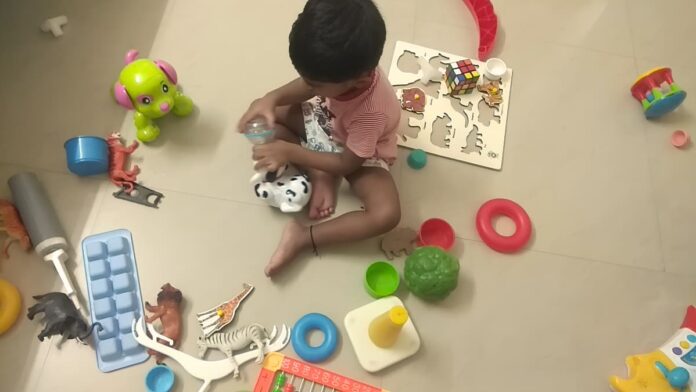
Everyday play can help parents notice how a child focuses, explores objects, and engages with an activity.
20. Lining Up or Arranging Objects and Becoming Upset if the Order Changes
This is probably one of the most photographed “autism signs” on the internet.
Yes, some autistic children line up toys or arrange objects repeatedly.
The CDC includes this as an example of restricted or repetitive behaviour.
But please remember:
A child lining up cars does not equal autism.
The more useful question is whether repetitive patterns occur alongside other social-communication and developmental differences.
21. Becoming Very Distressed by Small Changes
Imagine:
You usually drive one route to school.
Today you take another road.
Or the usual plate is unavailable.
Or bath happens before dinner instead of afterward.
Some children may become much more distressed by these changes than parents expect.
Autism can involve a strong preference for predictability and difficulty moving between activities or coping with unexpected changes. WHO specifically identifies difficulty with transitions among common characteristics.
Visual routines and advance warnings can sometimes make transitions easier, depending on the child.
Some autistic children, however, may become deeply focused on a particular subject, object or activity.
It might be:
vehicles,
numbers,
fans,
maps,
particular characters,
logos,
calendars,
machines,
animals,
or almost anything else.
Having a strong interest is not inherently negative.
Interests can be sources of joy, connection and learning.
What professionals look at is the overall pattern and intensity, not whether a child happens to love dinosaurs.
Sensory and Regulation Signs
23. Strong Reactions to Sounds, Lights, Touch or Textures
Some children may:
cover their ears around mixers or hand dryers,
become distressed in crowded spaces,
dislike certain fabrics,
avoid touching messy materials,
struggle with haircuts,
dislike bright environments,
or react strongly to particular smells.
Autistic people can experience sensory input differently, including heightened or reduced reactions to sound, texture, smell, taste and other sensations.
24. Constantly Seeking Movement or Strong Sensory Input
Sensory differences do not always look like avoidance.
Some children seem to constantly seek input.
Sensory-seeking behaviour by itself is not specific to autism and can also occur in other developmental profiles or in children without an autism diagnosis.
You might see:
jumping,
climbing,
crashing into cushions,
spinning,
rocking,
touching objects repeatedly,
chewing,
or constantly moving.
This is an area that feels familiar to our family. With my son, movement and sensory-seeking behaviours have been something we have had to observe carefully rather than simply treating every instance of movement as “bad behaviour.”
That shift in thinking matters.
Sometimes behaviour is information.
25. Unusually Strong Reactions to Food Texture, Taste, Smell or Appearance
Some children accept only a narrow range of foods because of:
texture,
smell,
temperature,
appearance,
colour,
or how foods are combined.
NICE includes particularly strong responses to food taste, smell, texture or appearance among sensory characteristics that may occur alongside autism.
Selective eating does not automatically indicate autism.
And if eating becomes extremely restricted, affects growth, involves choking or swallowing concerns, or creates nutritional worries, that deserves appropriate professional attention rather than simply being labelled “autism behaviour.”
The 25 Signs at a Glance
Here is the entire list in one place.
Inconsistent response to name
Limited social eye contact
Reduced social smiling or sharing enjoyment
Using few gestures
Limited pointing to share interest
Rarely showing objects simply to share
Difficulty with back-and-forth interaction
Delayed speech or language
Loss of previously used words or skills
Frequent repetition of words or phrases
Unusual speech rhythm or scripted language
Knowing words but struggling to communicate needs
Using another person’s hand to obtain something
Limited spontaneous imitation
Limited or less varied pretend play
Strong preference for playing alone
Difficulty joining peers in play
Repetitive body movements
Repetitive play patterns
Lining up or arranging objects repeatedly
Strong distress around changes
Very intense or narrow interests
Strong sensory reactions
Sensory-seeking or constant movement
Strong reactions to food textures, smells or appearance
None of these individually diagnoses autism.
That sentence deserves repeating.
Look for Patterns, Not a Score
I would discourage parents from doing this:
“My child has 8 out of 25, so it must be autism.”
This article is not a scoring system.
Autism assessment is not based on counting how many internet symptoms apply.
Professionals consider:
developmental history,
communication,
interaction,
repetitive and restricted patterns,
sensory responses,
functioning in different environments,
observations from caregivers,
and other possible explanations.
NICE specifically says lists of possible features should be used to recognise a developmental pattern and not as standalone diagnostic tools.
A small example from our home: Sometimes I notice that my son engages with toys or learning materials in his own repeated way. In this short video, he is playing with picture cards while another child is nearby. I am not sharing this as an example of “what autism looks like.” One play pattern by itself tells us very little. I share it because these ordinary moments can help us observe how our child explores, repeats, interacts and responds over time.
A Non-Diagnostic Parent Observation Checklist
If you are concerned, instead of repeatedly searching Google, try recording what you actually observe for a week or two.
Write down:
What happened?
Where did it happen?
Who was present?
What happened immediately beforehand?
How did your child communicate?
How long did it continue?
What seemed to help?
Does it happen at home, school and elsewhere?
Is this a new pattern or something you have seen for months?
Has your child lost any skill they previously used?
You might also record short examples for discussion with a professional when appropriate, while protecting your child’s privacy.
This gives a paediatrician or developmental professional far more useful information than:
“I saw a reel saying hand flapping means autism.”
What Helped Us as a Family
One thing I have learned is that observing the whole child is more useful than obsessing over one behaviour.
With my son, our concerns have involved more than one area over time: speech and communication, attention, movement and sensory seeking, fine-motor abilities, routines and participation in everyday activities.
Looking at those areas together has been much more useful than asking:
“Is this one particular behaviour autism?”
Visual routines have also helped us make parts of the day more predictable.
And when I speak to therapists or other professionals, concrete observations such as:
“He can do this for five minutes but becomes restless after that”
are more useful than simply saying:
“He is hyperactive.”
We are still learning.
That is part of the reason LeapAgo exists.
What Did Not Help Me
Comparing children did not help.
Neither did worrying about every behaviour individually.
And advice such as:
“Boys talk late. Just wait.”
can sometimes delay a useful conversation when a parent has broader developmental concerns.
On the other extreme, social media can convince us that every ordinary toddler behaviour is a warning sign.
Neither extreme is particularly helpful.
The middle path is much more practical:
notice → document → discuss → understand → support
When Should You Speak to a Professional?
You do not need to wait until you are certain something is autism.
In fact, that is not your job as a parent.
Speak with your child’s paediatrician or an appropriate developmental professional when you have persistent concerns about:
communication,
social interaction,
learning,
play,
movement,
behaviour,
sensory responses,
or everyday functioning.
The American Academy of Pediatrics recommends ongoing developmental surveillance and autism-specific screening at 18 and 24 months, with additional screening and evaluation whenever developmental concerns arise.
Screening is not diagnosis. It helps identify children who may benefit from more detailed evaluation.
A developmental evaluation may involve a paediatrician, developmental paediatrician, psychologist, speech-language professional, occupational therapist or other members of a multidisciplinary team depending on the child’s needs.
Do Not Wait on Regression
One situation deserves particular attention.
If your child loses skills they previously had, such as language, social communication or motor abilities, contact an appropriate healthcare professional rather than assuming it is simply a phase.
Regression can have different causes and should be assessed appropriately.
Frequently Asked Questions
Is speech delay the first sign of autism?
It can be one early concern, but speech delay alone does not establish autism. Professionals look at social communication, interaction, repetitive behaviours, sensory patterns and the child’s overall development.
My child talks a lot. Could they still be autistic?
Yes. Some autistic children develop a large vocabulary or speak early. Autism should not be ruled out simply because language milestones appear typical.
My child looks directly into my eyes. Does that rule out autism?
No. NICE specifically advises that good eye contact should not be used to rule out autism.
My toddler lines up toys. Should I worry?
Not because of that behaviour alone. Look at the broader developmental picture.
My child loves hugs. Can autistic children be affectionate?
Yes. Showing affection does not rule out autism. Every child’s preferences around physical affection are different.
Is hand flapping always autism?
No. Repetitive movements can occur for different reasons and in children who are not autistic. It becomes one piece of information when considered with the broader developmental pattern.
Can autism signs become clearer later?
Yes. Some developmental differences become more apparent as communication, social and school expectations increase. Autism is sometimes not recognised until later childhood or beyond.
Can autism and ADHD occur together?
Yes. WHO notes that ADHD can occur alongside autism.
Should I use an online autism test?
Online screening information can help you organise observations, but it cannot diagnose your child. Discuss concerns with an appropriate professional.
What should I do if my family tells me to “wait and see”?
You do not need to argue with anyone or diagnose your child yourself.
If you have persistent developmental concerns, take them to your paediatrician or an appropriate developmental professional. Asking for an evaluation does not mean deciding in advance that your child has autism.
When we notice something different about our child, there is a natural temptation to search for certainty.
We want someone to tell us:
Yes, this is autism.
or:
No, there is absolutely nothing to worry about.
Development rarely gives parents answers that neatly.
What we can do is become careful observers.
We can notice patterns without judging our children.
We can ask questions without panicking.
We can seek professional guidance without treating a diagnosis as a tragedy.
And when support is needed, we can focus less on making our child look like everyone else and more on helping them communicate, participate, stay safe, learn and become increasingly independent in ways that are meaningful for them.
That is a much more useful starting point.
Conclusion: Early Autism Signs Are Clues, Not a Diagnosis
These 25 early autism signs are not a checklist for deciding whether your child is autistic.
They are developmental observations worth understanding.
Your child may show one.
Several.
Many.
Or signs completely different from the examples discussed here.
Children develop differently, and autism itself is diverse.
If something continues to concern you, you do not need to wait until you can name it.
Observe.
Write it down.
Talk to an appropriate professional.
And take the next step based on your child’s actual needs, not fear and not somebody else’s timeline.
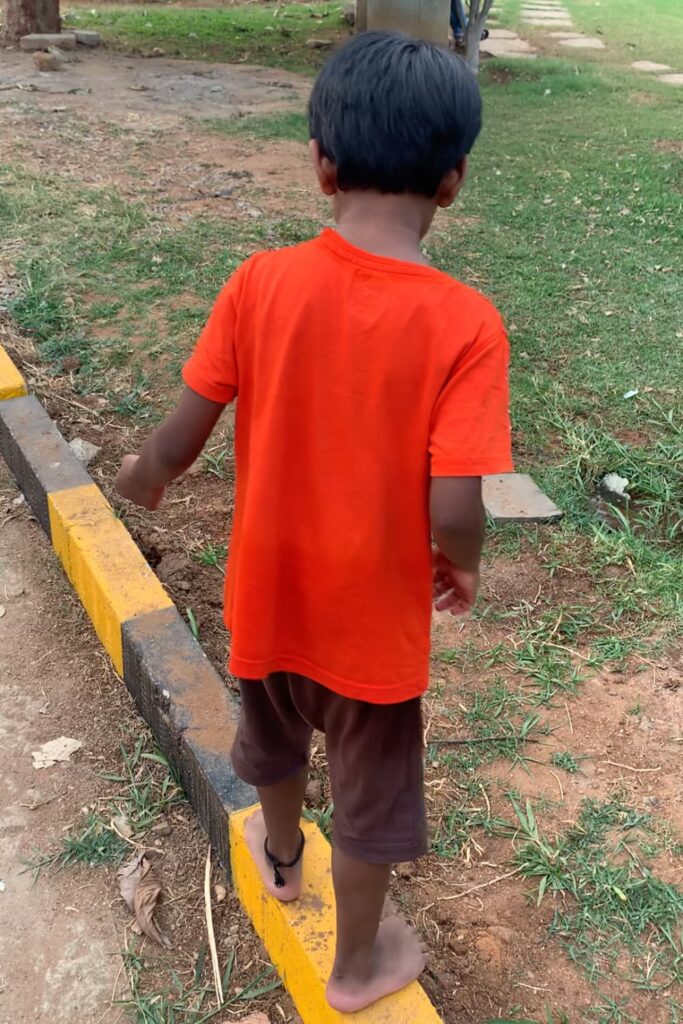
Every child experiences sensory input differently. Activities such as walking through water, feeling different textures, and exploring nature can provide valuable sensory experiences.
Every Behaviour Has a Reason
If there’s one lesson autism has taught me as a father, it’s this:
Behavior is communication.
That sentence completely changed how I looked at parenting Suhas.
In the early days, I reacted the way many parents naturally do.
If Suhas threw something, I thought,
“Why is he doing this?”
If he screamed, I thought,
“How do I stop this?”
If he jumped on the sofa for the hundredth time, I wondered,
“Why won’t he listen?”
Over time, with guidance from therapists, reading trusted research, and simply observing my own son more carefully, I realized something that seems obvious now.
Most autistic behaviors aren’t random.
They’re meaningful.
Sometimes they communicate fear.
Sometimes they communicate excitement.
Sometimes they communicate pain.
Sometimes they communicate sensory overload.
Sometimes they communicate,
“I don’t know how to tell you what I need.”
That realization changed everything.
Instead of asking,
“How do I stop this behavior?”
I began asking,
“What is this behavior trying to tell me?”
That question made me a better parent.
My hope is that it helps you too.
Understanding Sensory Processing
Before we talk about behavior, we need to understand something called sensory processing.
It sounds like a complicated medical term, but it’s actually something we all do every second of every day.
Right now, as you’re reading this, your brain is processing:
the light around you
sounds in your room
the feeling of your clothes
the temperature
where your body is sitting
smells around you
Your brain automatically filters most of that information.
For many autistic children, that filtering process works differently.
Some sensations feel much stronger.
Some barely register at all.
That’s why two children can react completely differently to the same situation.
What Is Sensory Processing?
Sensory processing is simply the way the brain receives, organizes, and responds to information from our senses.
These include:
Sight
Hearing
Touch
Taste
Smell
Balance (vestibular system)
Body awareness (proprioception)
Internal body sensations (interoception)
According to organizations such as the CDC, AAP, and NIEPID, many autistic children experience differences in sensory processing. Some are highly sensitive to certain sensations, while others actively seek more sensory input.
Neither response is “wrong.”
It’s simply how that child’s nervous system experiences the world.
Sensory Seeking vs. Sensory Avoiding
One of the biggest breakthroughs for us as parents was learning that not all sensory behaviors are the same.
Sensory Seeking
These children are looking for more sensory input.
You might notice them:
Jumping constantly
Crashing into cushions
Spinning
Chewing clothes
Running everywhere
Climbing furniture
Looking closely at lights
Touching everything
They’re not trying to misbehave.
Their bodies are looking for sensory input.
Sensory Avoiding
Other children experience the opposite.
They may:
Cover their ears
Avoid loud places
Refuse certain clothes
Hate haircuts
Cry during nail cutting
Refuse some food textures
Become overwhelmed in shopping malls
Avoid crowded places
Their nervous system experiences ordinary sensations as overwhelming.
What This Looked Like in Our Home
One of the biggest turning points for us came when we stopped seeing Suhas’s behaviors as “bad habits.”
For example, there were days when he jumped from one cushion to another over and over again.
Our first instinct was to stop him.
After learning more about sensory processing, we realized he wasn’t simply “being naughty.”
His body was looking for movement.
Instead of constantly saying “Don’t jump,” we started creating safe opportunities for movement.
It didn’t eliminate the behavior overnight, but it changed how we responded.
Instead of conflict, there was understanding.
That one change made our home feel calmer.
Every child is different, and what helped Suhas may not be the right solution for every family, but learning to ask why before reacting made a huge difference for us.
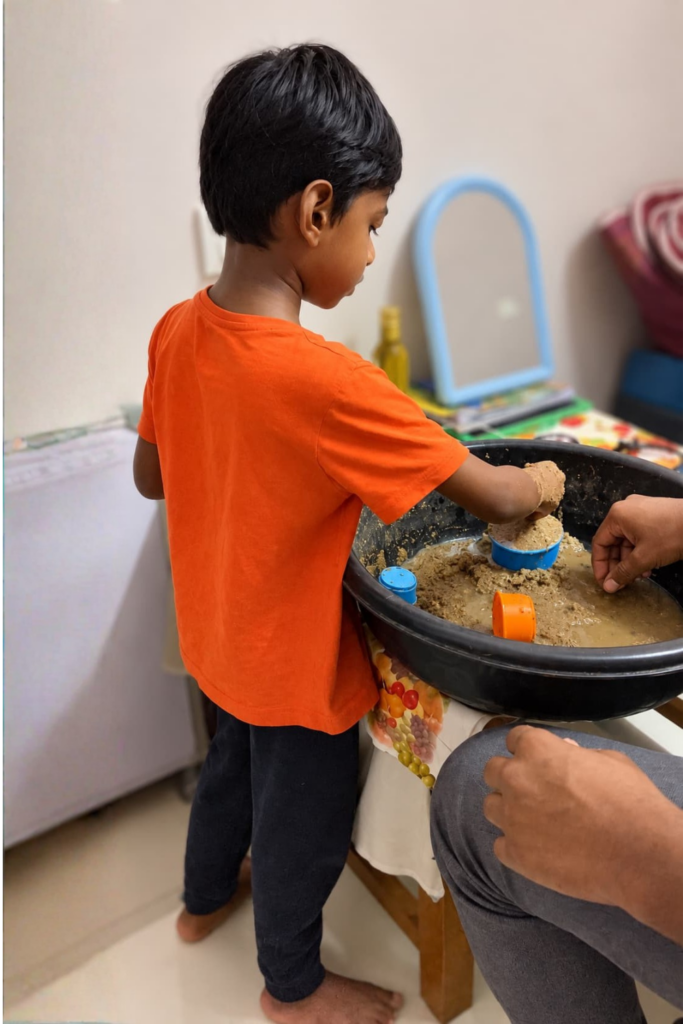
Simple sensory activities using sand, water, and everyday containers can encourage exploration, creativity, and learning through touch and movement.
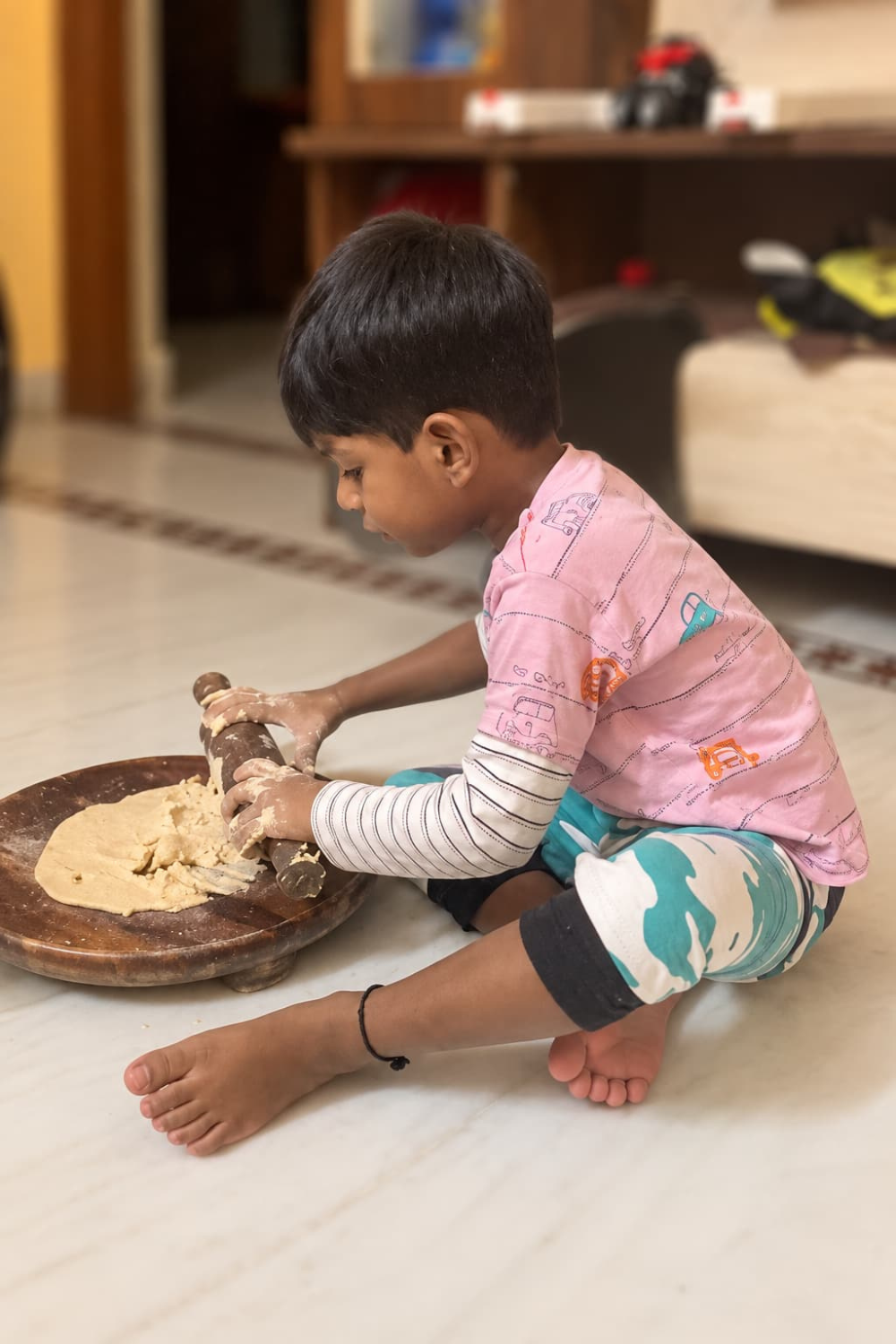
Simple activities like kneading dough, exploring textures, and using both hands can provide rich sensory experiences while encouraging creativity and engagement.
What Is Stimming?
One word parents often hear after an autism diagnosis is stimming.
Stimming is short for self-stimulatory behavior.
It’s simply a way many autistic people regulate their bodies or emotions.
Examples include:
Hand flapping
Rocking
Finger movements
Humming
Repeating sounds
Spinning
Watching objects spin
Pacing
Tapping fingers
Repeating words
Many parents become worried when they first notice these behaviors.
I understand that feeling.
But here’s something important.
Not all stimming is harmful.
Why Do Children Stim?
Stimming can happen for many reasons.
Some children stim because they’re excited.
Some because they’re anxious.
Some because they’re overwhelmed.
Some because the movement simply helps their nervous system feel organized.
Think about what many adults do.
We tap our feet.
We twirl a pen.
We bite our nails.
We pace while talking on the phone.
Those are forms of self-regulation too.
Autistic children may simply regulate themselves differently.
Should Parents Stop Stimming?
This is one of the questions I hear most often.
The answer isn’t always yes or no.
If a stim is:
Safe
Not causing injury
Not interfering significantly with learning or daily life
…it often doesn’t need to be stopped.
Instead, try to understand its purpose.
However, if a behavior causes injury or prevents the child from participating in important activities, it’s worth discussing strategies with your therapy team to provide safer alternatives.
The goal isn’t to make a child look “normal.”
The goal is to help them stay safe and participate in daily life.
Understanding Meltdowns
Meltdowns are probably one of the most misunderstood parts of autism.
Many people confuse meltdowns with tantrums.
They’re not the same.
A tantrum is generally a goal-directed behavior.
A meltdown is an overwhelming response to stress, sensory overload, anxiety, or emotional exhaustion.
During a meltdown, a child often isn’t trying to control anyone.
Instead, they’ve lost the ability to cope with what’s happening around them.
What Can Trigger a Meltdown?
Every child is different, but common triggers include:
Loud noises
Bright lights
Crowded places
Sudden changes in routine
Communication frustration
Hunger
Fatigue
Pain or illness
Too many demands at once
Sometimes several small stressors build up throughout the day before the meltdown happens.
The trigger you see may not be the real cause.
What Parents Can Do During a Meltdown
One of the hardest lessons I learned was that reasoning usually doesn’t work in the middle of a meltdown.
When a child is overwhelmed, their nervous system is focused on survival, not problem-solving.
What often helps more is:
Staying as calm as possible.
Reducing noise and stimulation.
Moving to a quieter place if it’s safe.
Speaking slowly and simply.
Giving the child time to recover.
Keeping them safe without using unnecessary force.
Once the child is calm, that’s the time to reflect—not during the meltdown itself.
Understanding Aggression
Aggression is one of the topics parents often hesitate to talk about because it can feel embarrassing or frightening.
It’s important to remember that aggression is a behavior, not an identity.
Children may hit, bite, push, throw objects, or kick for many different reasons, including:
Difficulty communicating
Sensory overload
Pain
Anxiety
Frustration
Sudden changes in routine
The first question should always be:
“What happened before this behavior?”
Keeping a simple behavior diary can help identify patterns.
You may notice aggression happens:
Before meals
After school
In noisy places
During transitions
When communication becomes difficult
Those patterns can guide more effective support.
Self-Regulation: The Skill We Build Over Time
One of the biggest goals for every child isn’t “perfect behavior.”
It’s learning self-regulation.
Self-regulation means gradually learning to:
Recognize emotions
Calm the body
Manage frustration
Recover from disappointment
Transition between activities
These skills don’t appear overnight.
They develop over years.
Many autistic children need extra support to build them.
Practical Ways to Support Self-Regulation
Some strategies that many families find helpful include:
Predictable daily routines
Visual schedules
Movement breaks
Quiet sensory spaces
Deep breathing (when appropriate)
Heavy work activities such as pushing, pulling, or carrying
Calm-down kits with preferred sensory items
Preparing children before transitions
Not every strategy works for every child.
That’s okay.
Finding the right combination takes time.
What Research Tells Us
Research from organizations including the American Academy of Pediatrics, the CDC, and the National Autistic Society suggests that understanding the reasons behind behaviors—and adjusting the environment, communication, and supports accordingly—can be more effective than focusing only on stopping the behavior.
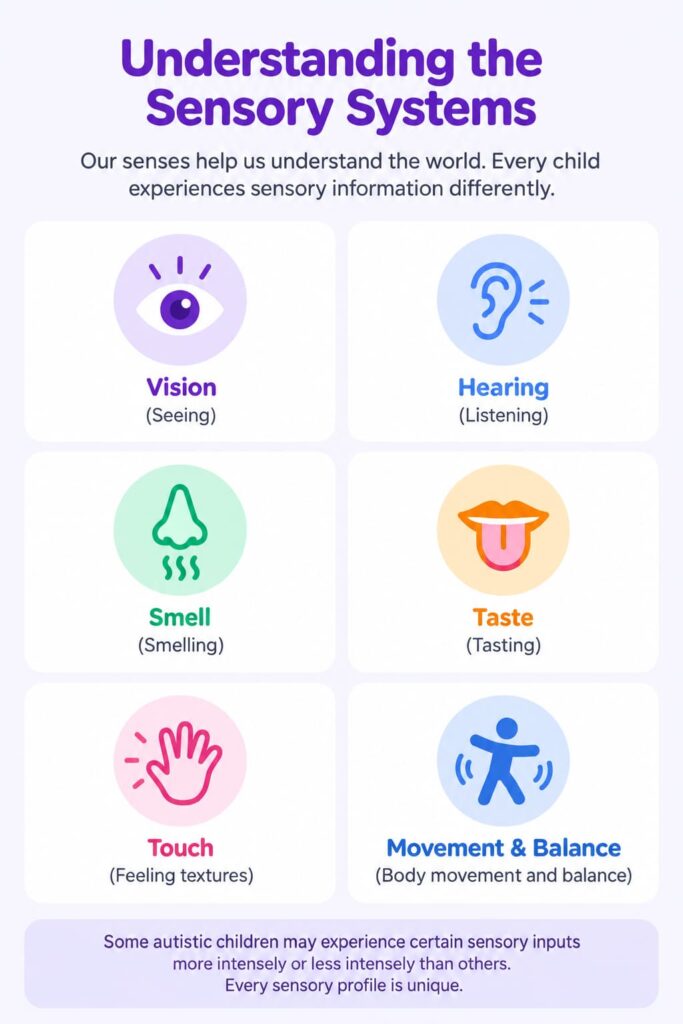
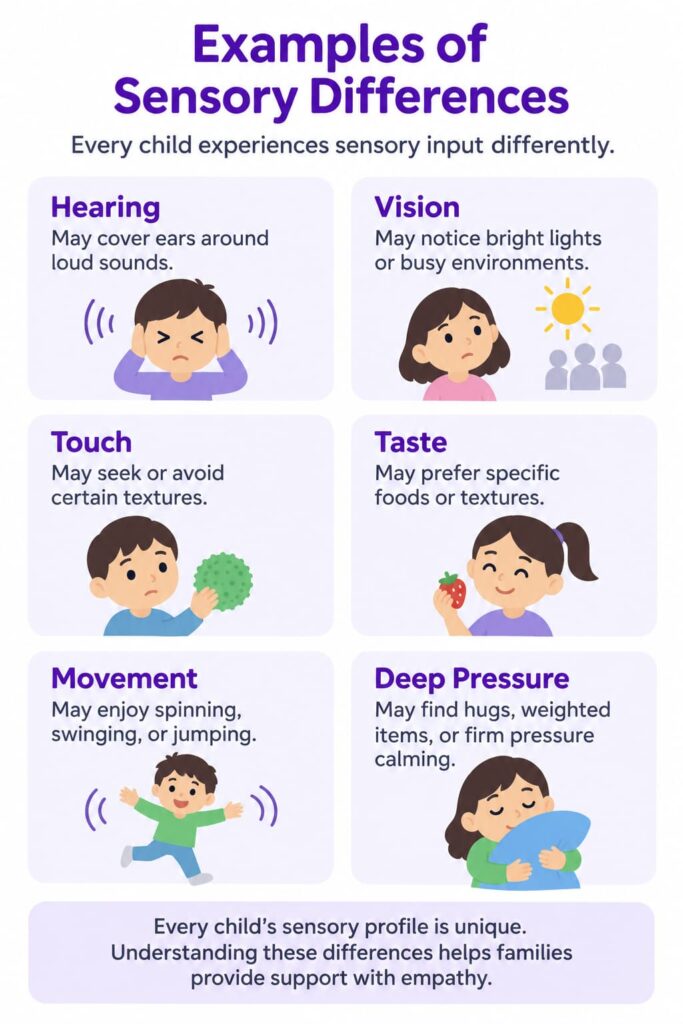
Infographic: Our sensory systems help us experience and understand the world through sight, sound, smell, taste, touch, and movement. Every child processes sensory information in their own unique way.
Infographic: Every child experiences sensory input differently. Some children may be more sensitive to sounds, lights, textures, or movement, while others actively seek these sensory experiences. Every sensory profile is unique.
Rather than asking, “How do I make this behavior disappear?”, professionals often encourage families to ask:
What is my child communicating?
What happened before the behavior?
What happened after it?
Is there a sensory need?
Is my child overwhelmed, tired, hungry, or in pain?
These questions lead to better long-term solutions.
Key Takeaways
If you remember only one thing from this section, let it be this:
Behavior is information.
Every behavior is an opportunity to understand your child better.
Some behaviors tell us:
“I’m overwhelmed.”
“I need movement.”
“I’m scared.”
“I don’t understand.”
“I can’t tell you what I need.”
When we respond with curiosity instead of immediate judgment, we create more opportunities for connection and learning.
💙 A Note From One Parent to Another
There were days when I felt completely exhausted.
Days when I wondered if I was doing something wrong because I couldn’t stop certain behaviors.
Looking back, I realize that the biggest change didn’t happen when Suhas changed.
It happened when I changed the way I understood him.
I stopped seeing behaviors as problems to fix.
I started seeing them as messages to understand.
I’m still learning.
I’m still making mistakes.
But every time I choose understanding before frustration, I become the kind of parent I hope my son remembers.
If you’re reading this after a difficult day, please know this:
Tomorrow is another opportunity to learn your child’s language.
And every small step you take to understand them is a step toward a stronger relationship.
—
Sridhar K Founder, LeapAgo
📖 What’s Included in This Guide
This guide is designed to be read in order. Each part builds on the previous one to help you understand autism and support your child with greater clarity.
Every autistic child learns, plays, and explores the world in their own unique way.
What Autism Really Is
Let’s start with the question almost every parent asks.
What is Autism?
Autism, or Autism Spectrum Disorder (ASD), is a neurodevelopmental condition.
That’s a medical way of saying that a child’s brain develops and processes information differently.
Those differences can affect areas such as:
Communication
Social interaction
Learning
Behaviour
Sensory processing
Daily routines
Emotional regulation
Some children have mild challenges.
Others need significant daily support.
Some speak fluently.
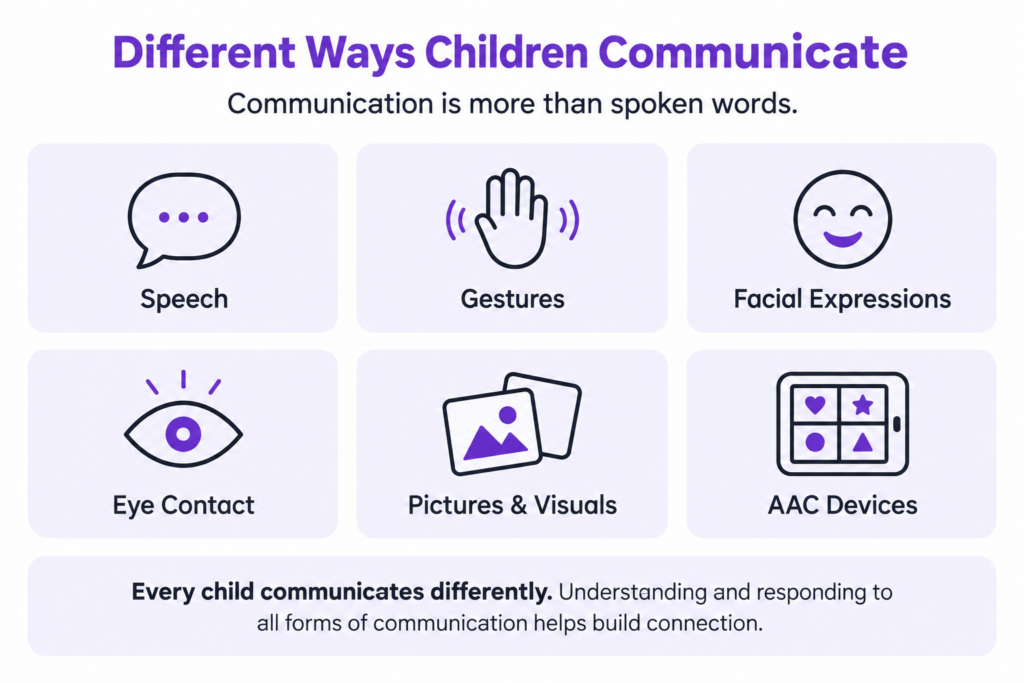
Some communicate using pictures or assistive devices.
Some love social interaction.
Others find it exhausting.
Every autistic child is unique.
That’s why it’s called a spectrum.
Autism is not an illness to be “caught” or “cured.” It is a lifelong neurodevelopmental condition that affects how a person experiences and interacts with the world.
Understanding the Word “Spectrum”
When many people hear the word spectrum, they imagine a straight line.
They think…
“Mild autism on one end.”
“Severe autism on the other.”
In reality, autism doesn’t work like that.
Think of it more like a sound mixing board.
One child may have:
strong language
significant sensory challenges
excellent memory
difficulty making friends
Another child may have:
limited speech
fewer sensory issues
strong visual learning
difficulty with daily routines
Both are autistic.
Both have different strengths.
Both have different challenges.
Neither child’s experience is more “real” than the other.
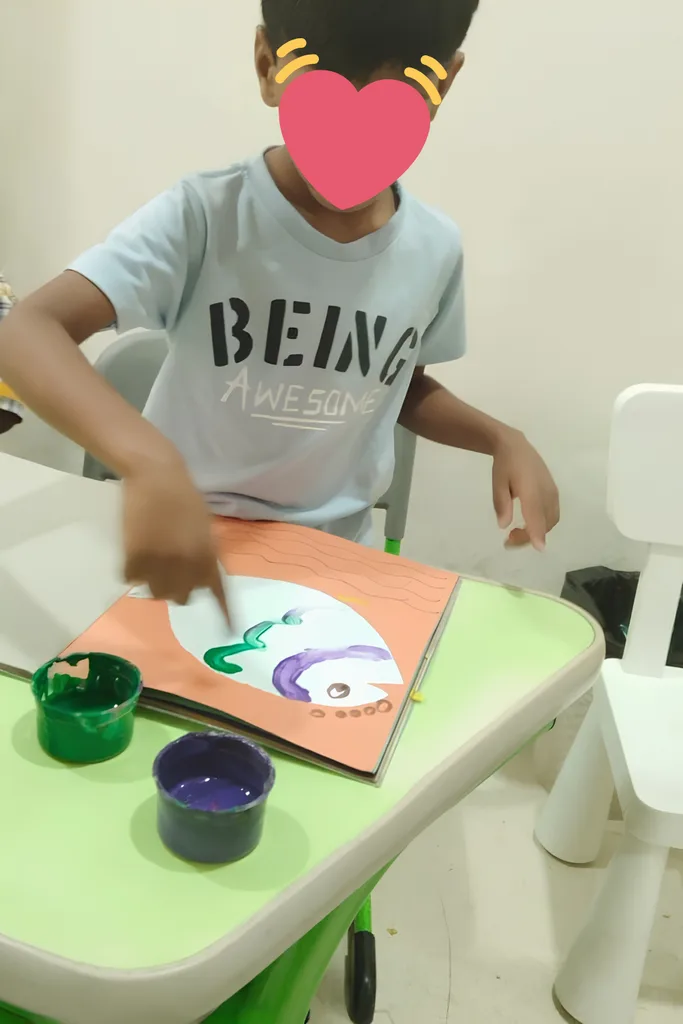
Child painting during a creative learning activity.
Autism Is Different—Not Less
One of the most important things I’ve learned is this.
Our children are not broken.
They don’t need to become someone else.
They need understanding.
Support.
Opportunities.
And people who see their strengths as well as their challenges.
Autism changes how a child experiences the world.
It doesn’t define their worth.
The day we stopped asking, “Why is my son doing this?” and started asking, “What is he trying to tell us?” our parenting changed.
What Research Tells Us
Researchers around the world have spent decades studying autism.
Organizations such as the World Health Organization (WHO), the Centers for Disease Control and Prevention (CDC), the National Institutes of Health (NIH), the American Academy of Pediatrics (AAP), and India’s NIEPID all describe autism as a neurodevelopmental condition that affects communication, behaviour, and social interaction in different ways.
They also emphasize something important:
Early identification and appropriate support can help children develop communication, daily living, and social skills.
That doesn’t mean every child will develop in the same way.
But it does mean that early support matters.
We’ll talk much more about that later in this guide.
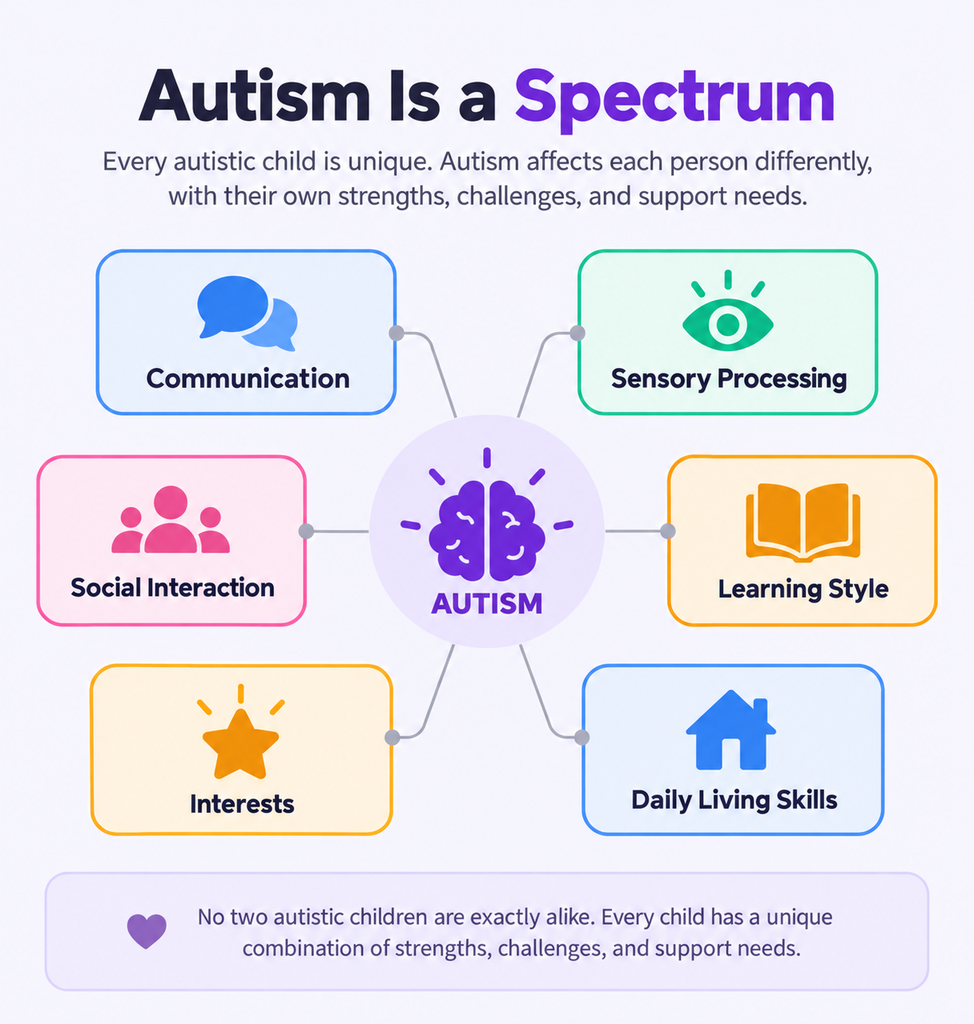
Autism is a spectrum, which means every autistic child has a unique combination of strengths, challenges, and support needs.
What Autism Is NOT
Sometimes understanding what autism isn’t is just as important.
Let’s clear up some common misconceptions.
Autism is NOT caused by bad parenting.
Parents do not cause autism.
Loving your child differently would not have prevented autism.
Being stricter would not have prevented autism.
This is one of the biggest myths parents still hear.
It simply isn’t supported by scientific evidence.
“Autism is NOT an illness you catch.
Autism is not contagious.
It cannot spread from one child to another.”
Autism is NOT something children “grow out of.”
Autism is lifelong.
However…
Children absolutely can learn.
They can develop.
They can become more independent.
Many children make tremendous progress with appropriate support.
Autism is NOT the same for every child.
This is probably the biggest misunderstanding.
Two autistic children can look completely different.
One child may speak in full sentences.
Another may communicate using pictures.
One may enjoy school.
Another may struggle with classrooms.
Both are autistic.
Autism is NOT defined only by challenges.
This is something I want LeapAgo to remember in every article.
Our children also have strengths.
Some have incredible memories.
Some notice details others miss.
Some are deeply honest.
Some are wonderfully creative.
Some develop remarkable interests and talents.
Our job isn’t just to help them overcome challenges.
It’s also to help those strengths grow.
What This Looked Like in Our Home
When I look back at our own journey with Suhas, I realise that we didn’t recognise autism overnight.
It wasn’t one dramatic moment.
It was many small observations.
There were things that seemed unusual.
There were things we explained away.
There were things relatives told us not to worry about.
Like many parents, we wondered if he was simply developing at his own pace.
Over time, though, we realised we needed answers instead of assumptions.
Looking back now, I don’t wish we had worried more.
I wish we had understood more.
That’s one of the biggest reasons I’m writing this guide.
If our experiences can help another family recognise patterns earlier, ask better questions, or simply feel less alone, then sharing our journey is worthwhile.
I also want to be honest about something.
We’re still on this journey.
There isn’t a chapter where everything suddenly becomes perfect.
We’re still learning.
We’re still adapting.
We’re still celebrating small victories.
And that’s okay.
Why This Guide Exists
The internet has millions of pages about autism.
Some are excellent.
Some are outdated.
Some are frightening.
Some promise unrealistic results.
My goal isn’t to replace your doctor.
It’s not to replace your therapist.
Instead, I want this guide to become something you return to whenever you have a question.
A place that combines:
Current evidence from trusted organizations.
Practical ideas that parents can actually use.
Honest stories from our own journey.
Hope without making unrealistic promises.
As LeapAgo grows, every article on this website will connect back to this guide.
Think of this page as the foundation.
We’ll explore speech, sensory processing, behaviour, therapies, school, daily routines, and family life in much greater detail throughout this series.
What You’ll Learn in the Rest of This Guide
Over the next sections, we’ll cover:
How to recognise early signs of autism.
How autism is diagnosed.
Understanding the autism spectrum.
Speech and communication.
Sensory processing.
Behaviour and emotional regulation.
Therapies available for children.
School and education.
Daily life at home.
Looking after yourself as a parent.
Trusted resources in India and around the world.
My hope is that by the time you finish this guide, you’ll feel less overwhelmed and more prepared for the journey ahead.
💙 A Note From One Parent to Another
If you’ve read this far, thank you for trusting me with your time.
I know this journey can feel uncertain.
I know there are days when you wonder if you’re doing enough.
I still have those days too.
But here’s something I’ve learned.
Our children don’t need perfect parents.
They need parents who keep showing up.
Who keep learning.
Who keep loving them exactly as they are while helping them grow into who they can become.
That’s what I’m trying to do with Suhas.
And if you’re reading this, I have a feeling that’s exactly what you’re trying to do for your child too.
So let’s continue this journey together.
Welcome to LeapAgo.
—
Sridhar K Founder, LeapAgo
📖 What’s Included in This Guide
This guide is designed to be read in order. Each part builds on the previous one to help you understand autism and support your child with greater clarity.
Caring for yourself and staying connected as a family can help you support your child with patience, resilience, and confidence.
Before We Begin…
Can I tell you something that I wish another father had told me years ago?
You matter too.
When a child is diagnosed with autism, the entire family’s attention naturally shifts toward helping that child.
Therapies.
Doctor appointments.
School meetings.
Progress reports.
Financial planning.
Daily routines.
Slowly, something begins to happen.
Parents stop asking,
“How am I doing?”
Everything becomes about,
“How is my child doing?”
I understand why.
I’ve lived it.
But here’s something I’ve learned.
Your child needs healthy parents more than perfect parents.
That means taking care of yourself isn’t selfish.
It’s part of taking care of your child.
The Emotional Journey Nobody Talks About
People often think receiving a diagnosis is the hardest day.
For some families it is.
For others…
it’s everything that comes afterward.
The endless questions.
The uncertainty.
The appointments.
The opinions from relatives.
The financial pressure.
The comparison with other children.
The fear of the future.
These emotions don’t mean you’re weak.
They mean you’re human.
Many parents experience feelings such as:
Shock
Sadness
Relief after finally getting answers
Guilt
Anger
Fear
Hope
Exhaustion
Sometimes all in the same day.
One important thing I’ve learned is this:
There is no “correct” way to feel after an autism diagnosis.
Give yourself permission to experience your emotions without judging yourself.
Looking After Yourself Isn’t Selfish
When was the last time you asked yourself,
“How am I doing?”
Not,
“How is therapy going?”
Not,
“How is school going?”
But genuinely…
How are you?
Parents often put themselves at the bottom of every priority list.
I know I did.
Sleep became optional.
Exercise disappeared.
Meeting friends became rare.
Even hobbies slowly faded away.
I told myself,
“I’ll look after myself later.”
The problem is…
“Later” never arrives unless we intentionally make space for it.
Small Ways to Care for Yourself
You don’t need a week-long holiday.
Sometimes small habits matter most.
Maybe it’s:
A quiet cup of tea before everyone wakes up.
A 20-minute walk.
Reading a few pages of a book.
Talking honestly with a trusted friend.
Praying or meditating if that’s meaningful to you.
Taking an evening off while another family member helps.
Self-care isn’t about escaping your responsibilities.
It’s about making sure you have enough emotional energy to keep showing up for your child.
Marriage After an Autism Diagnosis
One thing that surprised me was how differently parents can experience the same journey.
One parent may immediately start researching therapies.
The other may still be processing the diagnosis emotionally.
One may become optimistic.
The other may become anxious.
Neither response is wrong.
They’re simply different.
The challenge is making sure those differences don’t become distance.
Remember That You’re on the Same Team
When life becomes busy with therapy schedules, school meetings, and everyday responsibilities, it’s easy to start talking only about logistics.
Who’s taking our child to therapy?
Did you pay the school fees?
What time is tomorrow’s appointment?
Before you know it, your marriage starts feeling more like a project management meeting than a relationship.
That’s why I think it’s important to protect small moments together.
Sometimes that might simply mean having tea together after your child goes to bed.
Sometimes it’s sitting quietly without talking about autism for a little while.
Sometimes it’s reminding each other:
“We’re doing the best we can.”
Don’t Keep Score
There may be seasons when one parent carries more of the emotional load.
Another season, the roles may reverse.
Instead of keeping score,
“Yesterday I did more.”
“This week you didn’t help enough.”
Try remembering that both of you are carrying invisible burdens.
Choose appreciation over comparison whenever possible.
Supporting Siblings
Brothers and sisters are on this journey too.
Sometimes they become wonderfully patient.
Sometimes they become protective.
Sometimes they become frustrated.
Sometimes they quietly miss having their parents’ attention.
All of those feelings are normal.
One of the greatest gifts we can give siblings is making sure they know they matter too.
Simple Ways to Include Siblings
Spend one-on-one time together whenever possible.
Encourage them to ask questions.
Explain autism in age-appropriate ways.
Celebrate their achievements too.
Avoid giving them the role of “another parent.”
Most importantly…
Let them simply be children.
Grandparents and Extended Family
Grandparents often love their grandchildren deeply.
Sometimes, though, they grew up in a time when autism wasn’t well understood.
You may hear comments like:
“He’ll grow out of it.”
“You just need to be stricter.”
“In our days, children didn’t have autism.”
These comments can be painful.
But they often come from misunderstanding rather than unkindness.
Helping Grandparents Understand
Instead of arguing, try sharing information gently.
Explain:
What autism is.
How your child communicates.
Why routines matter.
Why sensory sensitivities are real.
How they can support their grandchild.
When grandparents feel included rather than criticized, many become wonderful partners in the journey.
Financial Planning
Let’s talk about something many parents worry about but don’t always discuss openly.
Money.
Therapies.
School fees.
Travel.
Medical appointments.
Special equipment.
Books.
Learning materials.
The costs can add up quickly.
It’s understandable to feel overwhelmed.
Planning Instead of Panicking
One thing that helped our family was focusing on planning rather than worrying.
Some practical ideas include:
Create a monthly therapy budget.
Keep records of expenses.
Learn about government schemes and benefits available in your state.
Prioritize therapies based on current goals rather than trying everything at once.
Build an emergency fund gradually, even if it’s only a small amount each month.
Financial planning isn’t about predicting the future perfectly.
It’s about reducing uncertainty where we can.
Building a Support Network
One lesson I’ve learned is that you don’t have to carry this journey alone.
Support can come from many places:
Your spouse.
Trusted relatives.
Close friends.
Parent support groups.
Therapists.
Teachers.
Faith communities.
Other parents walking a similar path.
Sometimes the most comforting conversation is simply hearing another parent say,
“We’ve experienced that too.”
That feeling of being understood is incredibly powerful.
Hope Looks Different Than I Expected
When we first began this journey with Suhas, I thought hope meant hearing someone say,
“Everything will be fine.”
Today, hope means something different.
Hope isn’t pretending the journey is easy.
Hope is believing that progress is possible, even when it comes slowly.
Hope is celebrating one new word.
One peaceful bedtime.
One successful school day.
One family outing that went a little better than the last.
Hope grows through ordinary moments.
Our Family’s Journey with Suhas
When I think back to the beginning of our journey, I remember feeling overwhelmed.
There was so much information.
So many opinions.
So many decisions.
Sometimes I felt like I needed to become a therapist, teacher, researcher, and advocate overnight.
I made mistakes.
I worried too much on some days.
I probably worried too little on others.
But one thing never changed.
Our love for Suhas.
As the years passed, I began to notice something beautiful.
Progress wasn’t always dramatic.
Sometimes it was almost invisible.
A new gesture.
A calmer transition.
A little more independence.
A little more confidence.
Those moments reminded me that growth doesn’t always announce itself loudly.
Sometimes it whispers.
We’re still learning.
We’re still facing challenges.
We’re still celebrating small victories.
This isn’t a story with a perfect ending.
Because we’re still writing it.
And perhaps you are too.
That is one of the reasons LeapAgo exists.
Not because we’ve reached the finish line.
But because we’re walking the road together.
If something we’ve learned can make your journey even a little easier, then sharing our story is worth it.
Spending enjoyable time together through everyday activities can strengthen the parent-child relationship and create meaningful family memories alongside the challenges of daily life.
Everyday moments spent learning and playing together can strengthen the parent-child relationship while building confidence, communication, and shared understanding.
What Research Tells Us
Organizations such as the American Academy of Pediatrics (AAP), CDC, World Health Organization (WHO), and the National Autistic Society consistently emphasize that family wellbeing is an important part of supporting autistic children.
Research suggests that when parents receive appropriate information, emotional support, and practical guidance, they often feel more confident in navigating daily challenges. Strong family partnerships, realistic expectations, and collaborative care can benefit both children and caregivers.
That message resonates deeply with me.
Supporting a child also means supporting the family around that child.
Key Takeaways
If there is one message I hope stays with you after reading this chapter, it’s this:
Your child needs love more than perfection.
Your marriage deserves attention too.
Siblings need to feel seen.
Grandparents can become wonderful allies.
Financial planning reduces stress over time.
Asking for help is a sign of wisdom, not weakness.
Small moments of progress matter.
Hope grows through consistency, not miracles.
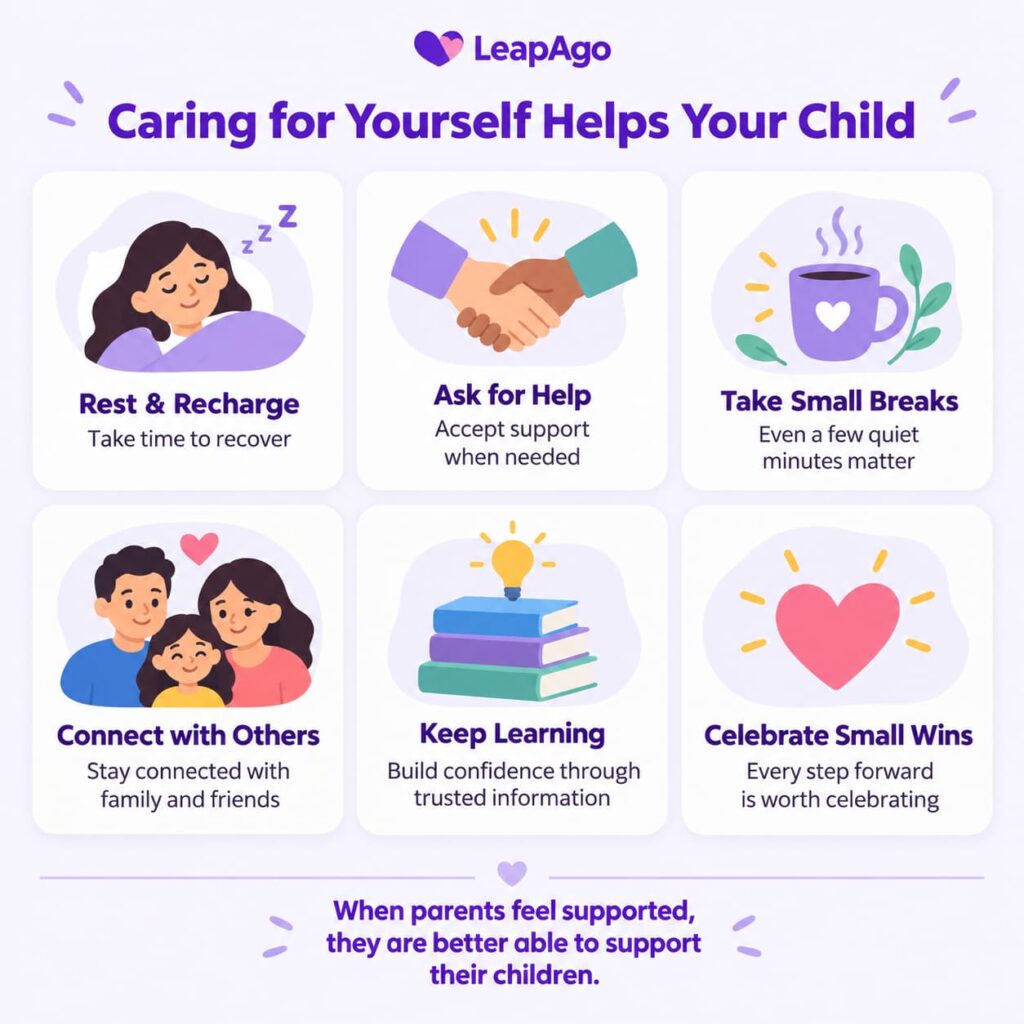
Infographic: Looking after your own wellbeing is an important part of supporting your child. Small acts of self-care can help parents build resilience, reduce stress, and be more present for their families.
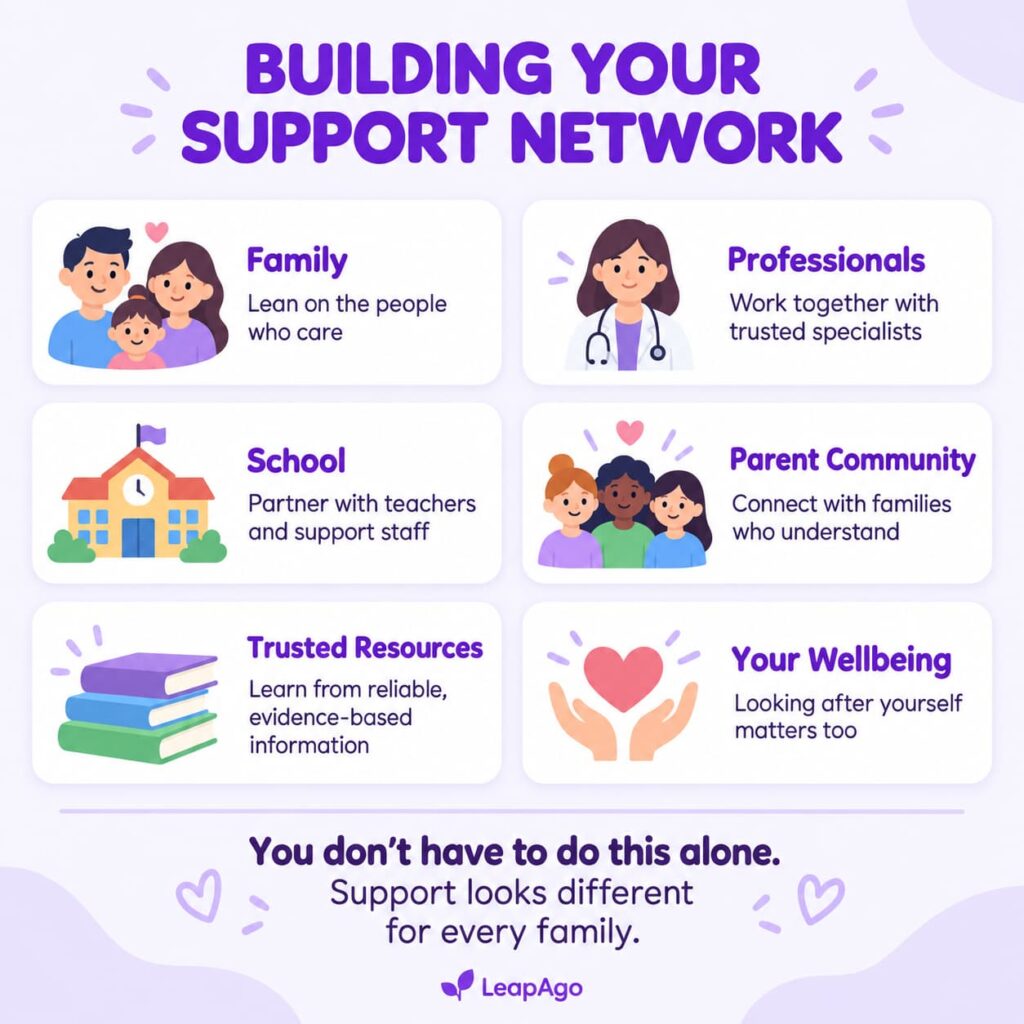
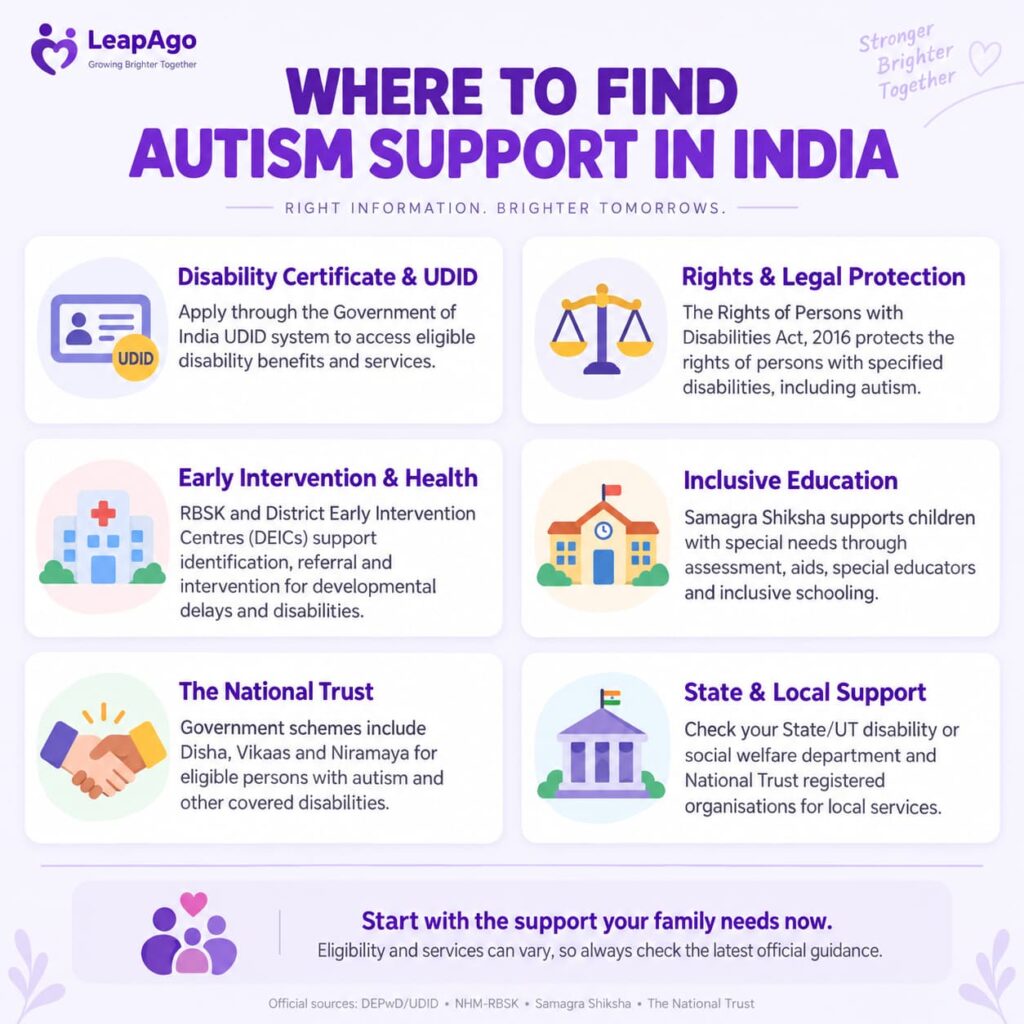
Infographic: Raising an autistic child is easier with a strong support network. Family, professionals, schools, trusted resources, and other parents can all play an important role in supporting both you and your child.
💙 A Note From One Parent to Another
Before I finish this chapter, I want to speak to you not as the founder of LeapAgo, but simply as another father.
If you’re reading this late at night after your child has finally fallen asleep…
If today was one of those difficult days…
If you’re wondering whether you’re doing enough…
Please hear this.
You don’t have to have all the answers.
Your child isn’t looking for a perfect parent.
They’re looking for you.
The parent who keeps showing up.
Who keeps learning.
Who keeps loving them, even on the hard days.
When I look at Suhas today, I don’t only see the challenges we still face.
I also see how much he has taught me.
He has taught me patience.
He has taught me to celebrate small victories.
He has taught me that progress isn’t measured by comparing our journey with someone else’s.
Most of all, he has taught me that love is often expressed in ordinary moments—reading the same book again, waiting through a difficult transition, celebrating one new skill, or simply sitting quietly together.
If LeapAgo can become a place where you feel understood, encouraged, and a little less alone, then this journey of writing these articles will have been worthwhile.
Thank you for trusting me with your time and your family’s story.
Let’s keep walking this road together—one day, one step, and one small victory at a time.
—
Sridhar K Founder, LeapAgo
📖 What’s Included in This Guide
This guide is designed to be read in order. Each part builds on the previous one to help you understand autism and support your child with greater clarity.
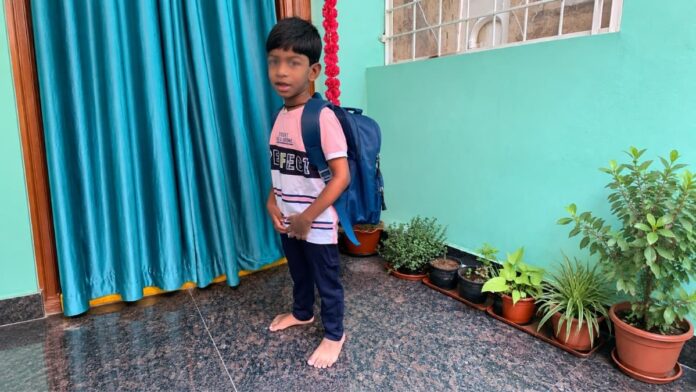
Getting ready for school is an important part of many children's daily routines. Predictable routines can help build confidence, independence, and a smoother start to the day.
Autism Doesn’t Only Affect Therapy Sessions
If you’ve been following this guide from the beginning, we’ve talked about understanding autism, communication, sensory processing, behaviour, and therapies.
But here’s something I wish someone had told me much earlier.
Most of your child’s progress doesn’t happen during therapy sessions.
It happens during everyday life.
It happens during breakfast.
During bedtime.
During shopping trips.
During family gatherings.
During school mornings.
During car rides.
Those ordinary moments slowly become the biggest opportunities to help our children learn.
As parents, we often think,
“If only we could have one more therapy session each week.”
But over time, I realized something much more powerful.
Even if Suhas had several therapy sessions every week, he still spent far more time with us than with any therapist.
That means our home became his biggest learning environment.
Not because we were experts.
But because we were present.
Daily Life Is Where Real Learning Happens
When I first started this journey, I thought learning happened inside therapy rooms.
Now I see it differently.
Autism school support – Everyday routines teach children:
Communication
Independence
Flexibility
Problem-solving
Self-care
Emotional regulation
Social skills
That’s why I no longer see daily life as “time between therapies.”
Daily life is therapy.
Not in a formal way.
But in a meaningful way.
Sleep and Autism
One of the topics parents ask about most is sleep.
If your child struggles to fall asleep…
Wakes several times during the night…
Gets up very early…
Or seems to have endless energy when everyone else is exhausted…
Please know you’re not alone.
Sleep challenges are common in autistic children.
According to research from organizations such as the American Academy of Pediatrics (AAP) and the National Institutes of Health (NIH), autistic children are more likely than their peers to experience sleep difficulties. These may include trouble falling asleep, staying asleep, or maintaining a consistent sleep schedule.
Poor sleep doesn’t just affect children.
It affects the whole family.
Parents become exhausted.
Siblings are disturbed.
Daily routines become harder.
Why Sleep Can Be Difficult
There isn’t one single reason.
Sometimes it’s sensory sensitivity.
Sometimes anxiety.
Sometimes difficulty switching from an active body to a calm body.
Sometimes medical issues such as reflux, constipation, or sleep disorders may also play a role.
If sleep problems are persistent, it’s worth discussing them with your child’s healthcare provider.
What Helped in Our Home
One thing we gradually learned with Suhas was the importance of predictability.
Instead of expecting him to suddenly know that bedtime had arrived, we created a simple routine.
Dinner.
Quiet play.
Bath.
Story.
Lights dimmed.
Bed.
The routine didn’t solve everything overnight.
But repeating the same pattern each evening helped him understand what was coming next.
That predictability reduced stress for all of us.
Every child is different, but consistent bedtime routines are supported by sleep experts because they help signal to the brain that it’s time to wind down.
Gentle Sleep Tips
Some ideas that many families find helpful include:
Keeping bedtime consistent.
Reducing bright screens before sleep.
Creating a calm bedroom environment.
Using visual bedtime routines.
Offering calming activities such as reading together.
Avoiding highly stimulating play just before bedtime.
Small changes often work better than trying everything at once.
Feeding Challenges
Meal times can become one of the most stressful parts of parenting.
Some autistic children eat only a few foods.
Others refuse foods because of texture.
Some avoid certain colours.
Some dislike mixed foods.
Some prefer foods arranged in a particular way.
When this first happened with Suhas, I worried he was simply becoming “too picky.”
Later I learned that food preferences are often connected to sensory processing.
For some children, the texture of mashed potatoes may feel overwhelming.
Crunchy foods may feel safer.
Others may prefer soft foods.
The important thing is understanding that many feeding challenges are not about being stubborn.
They’re about how food is experienced.
Should Parents Force New Foods?
This is a question I hear often.
It’s natural to want children to eat a wider variety of foods.
But forcing food can sometimes increase anxiety around eating.
Instead, many feeding specialists recommend gradual exposure.
For example:
Let the child see the food.
Then touch it.
Then smell it.
Then lick it.
Eventually taste it.
Progress may happen in very small steps.
And that’s okay.
If feeding difficulties are affecting nutrition, growth, or hydration, it’s important to seek advice from your pediatrician or a qualified feeding specialist.
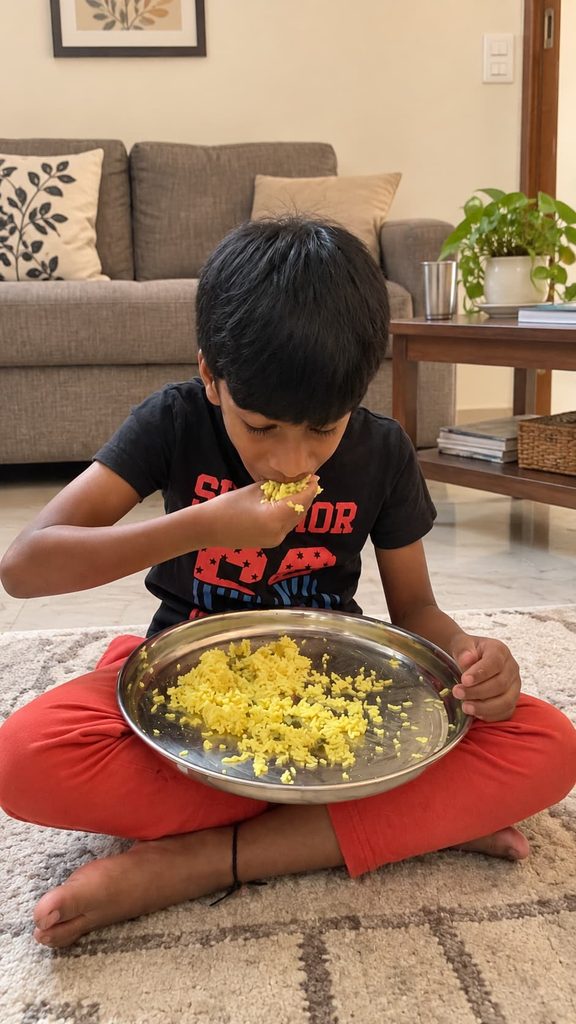
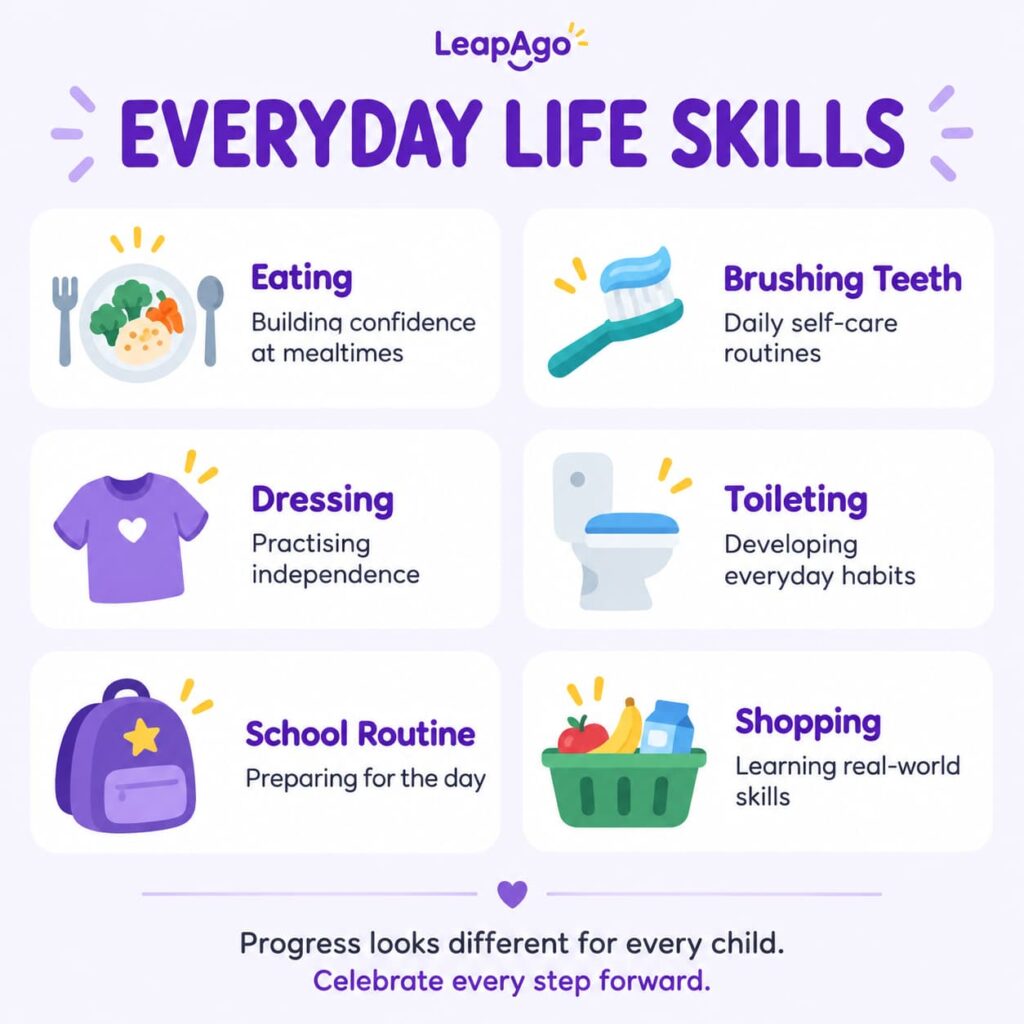
Mealtimes are an important part of everyday life. Consistent routines and opportunities to practise self-feeding can help children build independence and confidence over time.
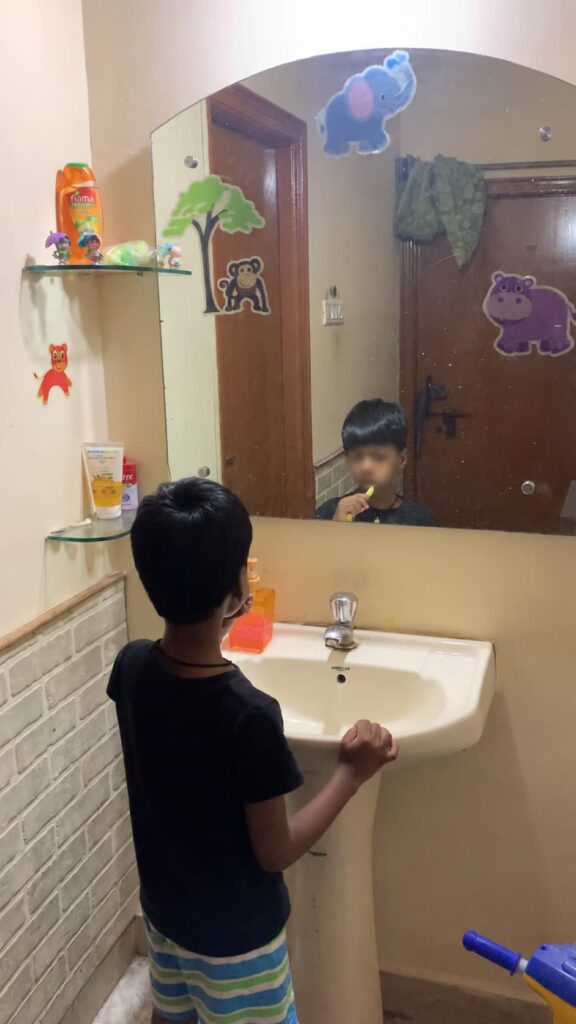
Daily self-care routines, such as brushing teeth, help children develop independence, confidence, and healthy habits through consistent practice.
Toilet Training
Toilet training can feel overwhelming for many families.
Some autistic children learn quickly.
Others need much more time and repetition.
One of the biggest lessons we learned is that toilet training isn’t just about age.
It’s about readiness.
Children benefit from understanding routines, recognizing body signals, communicating needs, and feeling comfortable in the bathroom environment.
Some children may also have sensory sensitivities related to toilets, flushing sounds, or different bathroom environments.
Practical Toilet Training Tips
Many families find these ideas helpful:
Use a consistent schedule.
Keep the routine simple.
Use visual supports if helpful.
Celebrate success without pressure.
Expect accidents as part of learning.
Be patient.
Progress may take weeks or months.
That doesn’t mean you’re failing.
School
Choosing a school may become one of the biggest decisions your family makes.
Parents often ask me,
“Should my child go to a mainstream school or a special school?”
There isn’t one answer that fits every child.
The right choice depends on many factors, including:
Your child’s communication skills.
Learning style.
Support needs.
Availability of services.
Teacher understanding.
School environment.
The goal isn’t finding the “perfect” school.
It’s finding a place where your child can learn, participate, and feel accepted.
Working Together with Teachers
One thing that helped us was remembering that teachers want children to succeed too.
Sharing information about your child’s strengths, interests, sensory needs, and communication style can make a big difference.
Simple updates between parents and teachers help everyone work toward the same goals.
When home and school support each other, children often benefit.
Why Routines Matter
If I had to choose one strategy that helped our family the most, it would probably be building predictable routines.
Many autistic children feel more comfortable when they know what to expect.
Imagine waking up every day without knowing what will happen next.
That uncertainty would be stressful for anyone.
Predictable routines reduce that uncertainty.
They don’t remove flexibility from life.
They simply create a stable foundation.
Infographic: Predictable daily routines can help many autistic children feel more secure, prepared, and confident throughout everyday activities.
A Simple Daily Routine
Every family is different, but a routine might include:
Morning
Wake up
Toilet
Brush teeth
Breakfast
Get dressed
School
After School
Snack
Movement break
Homework or therapy
Free play
Evening
Dinner
Family time
Bath
Story
Bed
The routine doesn’t need to be perfect.
It just needs to be predictable.
Visual Schedules
Many autistic children understand visual information more easily than spoken instructions.
Simple picture schedules can help children know:
What’s happening now.
What’s happening next.
When an activity is finished.
This often reduces anxiety and makes transitions easier.
Travelling with an Autistic Child
If you’ve ever cancelled a family outing because you were worried about how your child might react, I understand.
We’ve been there too.
Travel doesn’t have to mean international holidays.
Sometimes even going to the grocery store can feel like a major event.
The good news is that preparation often helps.
Travel Tips
Before leaving home:
Tell your child where you’re going.
Use pictures if helpful.
Pack favourite comfort items.
Carry snacks and water.
Bring sensory tools if your child uses them.
Allow extra time.
During the trip:
Look for quiet spaces if your child becomes overwhelmed.
Take movement breaks.
Keep expectations realistic.
Remember:
A successful trip doesn’t have to be a perfect trip.
Sometimes success simply means everyone made it home feeling supported.
Family Gatherings and Social Events
Many parents feel pressure during weddings, birthdays, festivals, or family functions.
People may not understand why your child behaves differently.
Some may offer advice you didn’t ask for.
Others may make comparisons.
One thing I’ve learned is that our job isn’t to meet other people’s expectations.
Our job is to support our child.
Sometimes that means leaving early.
Sometimes it means taking breaks.
Sometimes it means saying “no” to an invitation.
That’s okay.
Protecting your child’s wellbeing isn’t rude.
It’s responsible parenting.
What Research Tells Us
Organizations such as the American Academy of Pediatrics, CDC, WHO, and NIEPID consistently highlight that structured routines, supportive environments, responsive communication, and active family involvement can improve participation in daily life.
Rather than focusing only on therapy hours, these organizations encourage families to build learning opportunities into everyday routines.
That approach aligns with what we’ve experienced at home too.
The little moments matter.
Key Takeaways
If you remember one thing from this chapter, let it be this:
You don’t have to turn your home into a therapy center.
Your child doesn’t need every minute scheduled.
They need a home where they feel safe.
Loved.
Understood.
Where everyday moments become opportunities to learn.
Breakfast can teach communication.
Bath time can teach routines.
Shopping can teach flexibility.
Playing together can teach social skills.
Daily life is where many of the most meaningful lessons happen.
💙 A Note From One Parent to Another
Some days you’ll feel like nothing is going according to plan.
Bedtime will be difficult.
Breakfast will be refused.
The school bag will still be unpacked at dinner.
The outing you planned won’t happen.
I’ve had those days too.
When that happens, I remind myself of something simple.
Our goal isn’t to create perfect days.
It’s to create a childhood filled with love, patience, and opportunities to grow.
Progress doesn’t happen because every day is easy.
Progress happens because we keep showing up, even on the difficult days.
If you’re reading this after a challenging day, I hope you remember one thing:
Tomorrow is another chance.
And sometimes one ordinary day can become an extraordinary step forward.
—
Sridhar K Founder, LeapAgo
📖 What’s Included in This Guide
This guide is designed to be read in order. Each part builds on the previous one to help you understand autism and support your child with greater clarity.
Communication grows through everyday moments of learning, patience, and connection—not just spoken words.
Communication Is Much More Than Talking
If you’re like most parents, one of the biggest dreams you probably have is hearing your child call you “Mom” or “Dad.”
I understand that feeling.
When a child isn’t talking yet, it can feel heartbreaking.
You begin comparing your child with others.
You start counting every new word.
You celebrate sounds that other parents might never even notice.
But over time, I learned something that completely changed how I looked at communication.
Communication is much bigger than speech.
Before children ever say their first words, they’re already communicating.
A baby cries because they’re hungry.
A toddler reaches for a toy because they want it.
A child pulls your hand toward the refrigerator because they’re asking for food.
Those are all forms of communication.
Speech is one way to communicate—but it isn’t the only way.
This was one of the biggest mindset shifts for me as a parent.
Instead of asking,
“Why isn’t my child talking?”
I slowly began asking,
“How is my child trying to communicate with me today?”
That question opened my eyes.
Understanding Communication in Autism
Children on the autism spectrum communicate in many different ways.
Some speak in full sentences.
Some use only a few words.
Some communicate using pictures.
Some type on tablets.
Some point.
Some use gestures.
Some lead their parents to what they need.
Some communicate mostly through behaviour.
Every one of those methods deserves respect.
The goal isn’t simply getting children to speak.
The goal is helping them communicate their thoughts, needs, emotions, and choices in the best way they can.
Organizations such as the American Speech-Language-Hearing Association (ASHA) and the National Institute on Deafness and Other Communication Disorders (NIDCD) emphasize that communication includes spoken language, gestures, facial expressions, body language, and alternative communication methods. Helping a child communicate effectively—regardless of the method—can reduce frustration and increase participation in daily life.
Speech Delay in Autism
One of the first questions parents usually ask is:
“My child isn’t talking yet. Does that automatically mean autism?”
The answer is no.
Speech delay and autism are related, but they are not the same thing.
Some children have a speech delay without autism.
Some autistic children begin speaking later.
Some speak on time but struggle with conversations.
Some become highly verbal.
Others continue to use alternative forms of communication throughout life.
Every child follows a different developmental path.
What Is Speech Delay?
Speech delay simply means a child’s spoken language is developing more slowly than expected for their age.
A child with speech delay may:
Understand much more than they can say.
Try to communicate through gestures.
Enjoy interacting with others.
Respond well to their name.
Point to things they want.
These children may simply need additional speech and language support.
Speech Delay in Autism
When speech delay is part of autism, parents often notice additional differences, such as:
Reduced response to their name.
Limited eye contact.
Less pointing or showing objects to others.
Difficulty with back-and-forth interaction.
Repetitive use of words or phrases.
Strong sensory interests or repetitive behaviours.
It’s the combination of communication, social interaction, and behavioural patterns that helps professionals determine whether autism might be present.
What This Looked Like in Our Home
One of the hardest parts of our journey with Suhas was waiting for words.
Every new sound filled us with excitement.
Every silence filled us with questions.
Like many parents, we wondered if we were doing enough.
Should we read more books?
Should we spend more time talking?
Should we change therapies?
Looking back, I realise there wasn’t one magical activity that suddenly changed everything.
Progress came through many small moments—daily interaction, consistent routines, therapy sessions, and celebrating every attempt to communicate, whether it was a sound, a gesture, or a look.
That experience taught me not to measure success only by the number of words spoken.
Communication grows in many different ways.
Everyday activities like puzzles, books, games, and play create meaningful opportunities for communication, connection, and learning.
Many communication opportunities happen naturally during everyday activities such as puzzles, building, sorting, and problem-solving together.
Practical Ways Parents Can Encourage Communication
While every child is different, many therapists encourage parents to create communication opportunities throughout the day rather than limiting practice to “therapy time.”
Some simple ideas include:
Pause before giving your child a favourite toy, giving them an opportunity to communicate in their own way.
Offer two choices (“Apple or banana?”) instead of asking open-ended questions.
Narrate everyday activities using simple language.
Read picture books together and point to objects.
Sing familiar songs with pauses, allowing your child to fill in a sound or word if they’re ready.
Celebrate every attempt to communicate, even if it’s not perfect.
These small interactions, repeated consistently, often become more meaningful than one long practice session.
Understanding Echolalia
One of the words that frightened me early in our journey was echolalia.
It sounded like something serious.
In reality, it’s much easier to understand than the name suggests.
Echolalia simply means repeating words, phrases, or sentences that a child has heard before.
For example, a child might:
Repeat a line from a favourite cartoon.
Repeat your question instead of answering it.
Say the same phrase many times during the day.
Many parents worry that this means their child isn’t learning language.
But research suggests echolalia can actually be part of language development for some autistic children.
Sometimes children repeat language because they’re processing it, practising it, or using it to communicate before they can generate original sentences consistently.
Immediate and Delayed Echolalia
Professionals often describe two common patterns.
Immediate echolalia
The child repeats something immediately after hearing it.
Parent:
“Do you want juice?”
Child:
“Do you want juice?”
Delayed echolalia
The child repeats something they heard earlier, sometimes hours, days, or even weeks later.
For example, a child might suddenly quote a line from a television programme because that phrase expresses how they’re feeling.
Instead of seeing echolalia as “meaningless repetition,” many speech-language professionals encourage parents to look for the purpose behind it.
What Is AAC?
One of the biggest misconceptions I hear is:
“If my child starts using AAC, they’ll never learn to speak.”
Current research does not support that fear.
AAC stands for Augmentative and Alternative Communication.
It’s a broad term for tools that help people communicate.
AAC may include:
Picture cards.
Communication boards.
Visual symbols.
Sign language.
Tablet-based communication apps.
Speech-generating devices.
These tools don’t replace communication.
They support it.
Many children use AAC while continuing to develop spoken language.
For others, AAC becomes their primary way of expressing themselves.
Either outcome is valuable because every child deserves a reliable way to communicate.
Why AAC Matters
Imagine knowing exactly what you want but having no reliable way to tell anyone.
That frustration can lead to tears, meltdowns, or behaviours that are often misunderstood.
Giving a child a way to communicate can reduce frustration and increase independence.
The goal isn’t choosing between speech and AAC.
The goal is communication.
Eye Contact
Eye contact is one of the topics that creates the most confusion for parents.
Many people assume that if a child doesn’t make eye contact, they’re ignoring others.
In reality, eye contact can be uncomfortable or overwhelming for some autistic children.
Rather than forcing eye contact, many professionals recommend encouraging shared interaction.
A child doesn’t always have to look directly into your eyes to connect with you.
They may look at your face briefly.
They may glance while playing.
They may show connection in other ways.
The quality of the interaction is often more important than the length of eye contact.
Gentle Ways to Encourage Connection
Instead of saying,
“Look at me!”
Try:
Holding a favourite toy near your face.
Playing face-to-face games.
Singing action songs together.
Waiting for natural moments when your child looks toward you.
Smiling and responding warmly whenever they initiate interaction.
The goal is connection—not compliance.
Joint Attention
Joint attention is a phrase many parents hear during therapy sessions.
It simply means sharing attention with another person toward the same object or activity.
For example:
Your child points to an airplane.
You both look at it together.
You’re sharing attention.
Another example:
You’re reading a picture book together.
Your child looks at the picture.
Then looks at you.
Then back at the picture.
That’s joint attention.
This skill becomes an important foundation for language, learning, and social interaction.
Why Joint Attention Matters
Children learn a tremendous amount by sharing experiences with other people.
When they look where you point…
When they show you something exciting…
When they smile because you’re both watching the same bubbles…
They’re building communication long before full conversations begin.
Easy Joint Attention Activities at Home
You don’t need expensive materials.
Simple activities work beautifully.
Try:
Blowing bubbles.
Rolling a ball back and forth.
Reading picture books.
Playing with toy cars together.
Building towers.
Looking out the window together.
Pointing to birds, dogs, or buses during walks.
The goal isn’t teaching perfectly.
The goal is sharing moments.
What Research Tells Us
Research from organizations such as the American Academy of Pediatrics (AAP), ASHA, NIDCD, and the CDC consistently shows that early support for communication can improve a child’s ability to participate in everyday life.
That support doesn’t look exactly the same for every child.
Some benefit most from speech-language therapy.
Others benefit from AAC.
Others need parent coaching alongside therapy.
There is no one-size-fits-all approach.
The most effective support is individualized, built around the child’s strengths, needs, and goals.
Key Takeaways
If there’s one message I hope you remember from this section, it’s this:
Communication is not measured only by words.
It’s measured by connection.
Every gesture…
Every point…
Every picture exchanged…
Every shared smile…
Every sound…
Every attempt to communicate matters.
Celebrate those moments.
They are the building blocks of language.
Infographic: Communication is more than spoken words. Children can express themselves through speech, gestures, facial expressions, eye contact, pictures, and AAC. Every form of communication is meaningful.
💙 A Note From One Parent to Another
If your child isn’t talking yet, I know how heavy that can feel.
I’ve sat in that uncertainty too.
Please don’t measure your child’s future by today’s vocabulary.
Children develop at different rates.
Some make steady progress over time.
Some communicate in ways we never expected.
Our responsibility isn’t to compare our children with anyone else.
It’s to keep giving them opportunities to connect with us.
Every meaningful interaction is a step forward.
And sometimes those small steps become the biggest victories.
—
Sridhar K Founder, LeapAgo
📖 What’s Included in This Guide
This guide is designed to be read in order. Each part builds on the previous one to help you understand autism and support your child with greater clarity.
Finding the right support is about more than accessing services—it's about helping families move forward together with confidence, understanding, and hope.
A Practical Guide for Parents Looking for the Right Doors to Knock On
Last fact-checked: September 2026
When we begin our autism journey as parents, a surprising amount of our energy goes into simply figuring out where to go.
Which hospital can issue a certificate?
Is a diagnosis the same as a disability certificate?
What exactly is a UDID card?
Does my child have a right to attend school?
Are there government schemes for autism?
Who checks whether a special educator or rehabilitation professional is properly qualified?
What happens when our children become adults?
And perhaps the most confusing question of all:
Which websites and organizations can I actually trust?
I have felt that confusion myself.
When we are already trying to manage therapies, school, behaviour, communication, work, finances and family life, government terminology can feel like another language altogether.
So for the final part of our Autism Complete Guide Series, I wanted to create the resource guide I would want another parent to hand me.
Not a directory containing hundreds of links.
Not legal jargon.
Just the important systems parents in India should know about, explained one step at a time.
I am a parent sharing personal experiences and educational information, not a doctor, therapist or lawyer. This article is not intended to diagnose any child, provide legal advice, or replace advice from a qualified healthcare, developmental or legal professional. Government schemes, eligibility criteria, benefits and procedures can change, so always verify current information through the official source before applying.
First, Understand the Four Things Parents Often Mix Up
Before we look at government resources, I want to clear up something that confused me too.
These four things are related, but they are not the same:
1. Autism diagnosis
A clinical or developmental professional assesses the child and determines whether the child’s developmental profile meets criteria for autism.
2. Disability certificate
A disability certificate is an official government document issued through an authorised medical authority under India’s disability-certification system.
3. UDID card
UDID stands for Unique Disability ID. It creates a nationally recognised identity record for a person with disability and is linked with the disability certificate.
4. Benchmark disability
Under the Rights of Persons with Disabilities Act, a person with benchmark disability generally means a person certified with not less than 40% of a specified disability, subject to how that disability is assessed under official guidelines.
Why does this distinction matter?
Because not every right or benefit requires exactly the same documentation or disability percentage.
For example, some provisions in the RPwD Act apply broadly to persons with disabilities, while particular benefits are specifically for people with benchmark disabilities.
That small legal distinction can make a big difference when we are talking about school rights, reservations, scholarships or government schemes.
Autism Is Recognised Under Indian Disability Law
Autism spectrum disorder is included within the disability framework of the Rights of Persons with Disabilities Act, 2016, commonly called the RPwD Act.
The Department of Empowerment of Persons with Disabilities currently administers three especially important laws for families like ours:
The Rights of Persons with Disabilities Act, 2016
The National Trust Act, 1999
The Rehabilitation Council of India Act, 1992
We do not need to become lawyers to understand every section.
But as parents, knowing that these laws exist is important.
Our children are not asking society for charity.
They have rights.
The Rights of Persons With Disabilities Act, 2016: What Parents Should Know
The RPwD Act is the main national disability-rights legislation parents will encounter.
One of its central ideas is that disability rights are not only about medical treatment.
They also involve:
equality,
dignity,
non-discrimination,
accessibility,
reasonable accommodation,
education,
employment,
social participation,
rehabilitation,
and access to services.
The Act defines discrimination broadly and includes denial of reasonable accommodation within that concept.
For us as parents, one of the most important areas is education.
Everyday outdoor activities help children build balance, confidence, and independence while encouraging participation in their community.
Every child explores the world in their own way. With the right support, encouragement, and opportunities, children can continue learning, growing, and reaching their potential.
What Educational Rights Does My Autistic Child Have?
This is an area where I want to be precise because parents often hear statements such as:
“Every private school must admit every autistic child.”
or:
“Schools can refuse any child they feel they cannot handle.”
Indian disability law is more nuanced than either statement.
Section 16: Inclusive Education
Section 16 of the RPwD Act says that governments and local authorities should endeavour to ensure that educational institutions funded or recognised by them provide inclusive education.
Among other things, these institutions are expected to:
admit children with disabilities without discrimination,
make facilities accessible,
provide reasonable accommodation according to individual requirements,
provide necessary individualised support,
monitor participation and progress,
and provide transportation in certain circumstances involving high support needs.
The phrase reasonable accommodation is particularly important.
For one child, that might mean additional transition support.
For another, visual instructions.
For another, modified teaching methods.
For someone else, communication support.
It does not mean that every accommodation requested is automatically guaranteed exactly as requested. The child’s individual needs, the institution and applicable rules matter.
But a disability should not simply be treated as a reason to exclude a child without considering appropriate support.
Section 17: Measures Supporting Inclusion
Section 17 goes further and calls for measures such as trained teachers, resource centres, alternative and augmentative communication, learning materials, assistive devices, scholarships in appropriate cases, and modifications to curriculum and examinations according to the needs of students with disabilities.
Free Education From 6 to 18 for Benchmark Disability
Section 31 gives a child with benchmark disability between ages 6 and 18 the right to free education in a neighbourhood school or special school of their choice, subject to the Act’s provisions.
Notice that this particular section specifically refers to benchmark disability.
That is exactly why understanding the difference between a diagnosis, disability certificate and benchmark disability is important.
What If a School Refuses Admission or Support?
If a school tells you:
“We don’t take autistic children.”
I would not recommend starting with an angry confrontation.
Start with documentation.
Ask politely for the school’s decision or policy in writing.
Keep copies of:
admission applications,
emails,
WhatsApp communication,
assessment reports,
disability certificate or UDID where relevant,
requests for accommodation,
and the school’s written response.
You may then need to approach the appropriate school authority, education department or disability-rights authority depending on the school and the nature of the issue.
For complaints involving authorities controlled or aided by the Central Government, the Office of the Chief Commissioner for Persons with Disabilities provides a formal complaint process.
For matters relating to State Government departments and State-controlled entities, the CCPD directs complainants to the State Commissioner for Persons with Disabilities of the relevant State or Union Territory.
[Internal link opportunity: What to Do When a School Refuses Admission to Your Special-Needs Child]
Samagra Shiksha: Inclusive Education Support in Schools
Parents may also hear the name Samagra Shiksha.
This is a Government of India school-education programme that includes an Inclusive Education component.
Its stated goals include improving access, enrolment, retention and achievement of children with disabilities and providing support and services so they can participate in school education.
Depending on State implementation and the individual child, support may involve areas such as:
identification and assessment,
special educators,
teaching and learning materials,
resource support,
aids and assistive devices,
accessibility,
transport-related support,
and educational accommodations.
Actual implementation can vary considerably from State to State and even district to district.
So rather than asking only:
“Does Samagra Shiksha help autistic children?”
ask your local school or education department:
“What inclusive-education support is currently available in our district for my child’s assessed needs?”
That question usually gets you much closer to useful information.
Disability Certificate and UDID Card for Autism
For many parents, the UDID process becomes the gateway into the government disability system.
The Government’s UDID portal explains that the project creates a national database of persons with disabilities and allows authorised medical authorities to issue disability certificates and UDID cards.
The Government has also continued updating the system. The current portal lists recent procedures for renewals, appeals, rejected applications and reassessment, as well as the notified disability-assessment guidelines.
Do You Need 40% Disability to Receive a UDID?
This is another area where older internet articles can mislead parents.
The DEPwD currently publishes specific guidance concerning issuance of disability certificates and UDID cards even to people assessed below 40% disability.
But remember:
Getting a disability certificate or UDID does not automatically mean someone qualifies for every benefit reserved for benchmark disability.
Different schemes can have different eligibility criteria.
Why Can a UDID Be Useful?
Depending on eligibility, a disability certificate and UDID may be relevant when applying for certain:
government schemes,
education provisions,
scholarships,
concessions,
disability benefits,
reservations,
or other Central and State programmes.
A 2025 DEPwD advisory describes the disability certificate and UDID as primary documents used for accessing various disability-related benefits notified by governments.
Do not assume that possessing the card automatically provides every listed benefit.
Each programme has its own rules.
[Internal link opportunity: UDID Card for Autism in India: A Step-by-Step Guide for Parents]
Where Is Autism Disability Assessment Done?
Autism disability certification must be performed through an authorised certifying medical authority under the government system.
The DEPwD maintains current disability-assessment guidelines, including notified guidelines for assessing specified disabilities.
The Indian Scale for Assessment of Autism, or ISAA, has historically been used in India’s autism disability-certification framework, and government materials describe its role in certification.
As parents, however, we do not need to learn the scoring system ourselves.
The useful questions are:
Is this hospital an authorised disability-certification centre?
Who will perform the assessment?
What reports should I carry?
Will the certificate be temporary or permanent?
Do I need reassessment later?
How will the UDID application be processed?
The current rules also provide procedures when certificates require reassessment or when an application is rejected.
The National Trust: One of the Most Important Autism Resources in India
If your child is autistic, The National Trust is one government body worth knowing.
The National Trust is a statutory body established under the National Trust Act for persons with:
autism,
cerebral palsy,
intellectual disability,
and multiple disabilities.
Its work includes welfare schemes and legal-guardianship mechanisms.
As of September 2026, its website continues to list several major schemes.
Disha: Early Intervention and School Readiness
Disha is intended for eligible children aged 0 to 10 years with disabilities covered by the National Trust Act.
Its centres are designed around early intervention, school readiness, family support and day-care services.
Availability depends on registered organisations operating Disha centres in your area.
Vikaas: Day Care
Vikaas is designed for eligible persons aged 10 years and above.
Its goals include day care, interpersonal skills, vocational development and caregiver support.
For parents thinking beyond childhood, this is worth knowing exists.
Samarth: Residential and Respite Support
Samarth is a National Trust residential-care scheme for eligible persons covered by the National Trust Act.
It is particularly relevant when families need structured residential or respite support.
Gharaunda: Residential Support for Adults
Gharaunda is aimed at eligible persons over 18 years of age with disabilities covered by the National Trust Act and focuses on group-home/residential support.
For parents who constantly worry,
“What will happen after us?”
it is useful to know these programmes exist even if your child is still young.
You do not need to make that decision today.
Just keep the information in your long-term planning folder.
Niramaya Health Insurance Scheme
The National Trust also operates Niramaya, a health-insurance scheme for eligible people with disabilities covered under the National Trust Act.
As of September 2026, the National Trust states that Niramaya provides coverage up to ₹1 lakh on a reimbursement basis and includes specified categories such as hospitalisation, OPD expenses and ongoing therapies within defined limits. Eligibility includes persons covered under the National Trust Act who hold the required disability certificate and UDID or eligible UDID enrolment documentation.
The National Trust itself warns that sub-limits may change annually.
So please do not save a screenshot of this article and rely on the amount three years later.
Check the current Niramaya page when you actually apply or renew.
How Do I Find a Genuine National Trust Centre?
This is one of the most useful practical steps in this article.
The National Trust website provides links to:
registered organisations, and
scheme centres.
When someone tells you:
“Our centre is government approved.”
ask:
Approved by whom?
If they say National Trust, verify it through the National Trust’s official registered-organisation directory.
Government registration does not automatically prove that a centre is perfect.
But verification is still much safer than relying only on an advertisement.
Rehabilitation Council of India: Check Professional Qualifications
Parents spend enormous amounts of money and trust on therapists, educators and rehabilitation professionals.
So we should know what RCI is.
The Rehabilitation Council of India is the statutory body responsible for regulating and standardising several categories of rehabilitation and special-education professionals and maintaining the Central Rehabilitation Register, or CRR.
RCI-regulated categories include professionals such as:
clinical psychologists,
audiologists and speech professionals,
rehabilitation psychologists,
special educators,
and several other rehabilitation categories.
RCI states that professionals in the categories it regulates should hold recognised qualifications and valid registration in the Central Rehabilitation Register.
So when appropriate, one simple parent question can be:
“Could you please share your qualification and active RCI/CRR registration number?”
That is not being rude.
That is being an informed parent.
Also remember that not every healthcare or therapy profession falls under RCI in exactly the same way, so do not assume that every professional you meet should necessarily have an RCI number.
Government National Institutes Parents Should Know About
The Department of Empowerment of Persons with Disabilities operates a network of National Institutes across India.
These institutes provide combinations of:
disability assessment,
rehabilitation services,
early intervention,
training,
special education,
professional education,
research,
and vocational support.
The DEPwD currently lists nine National Institutes.
One especially relevant example for families in Telangana is:
NIEPID, Secunderabad
The National Institute for the Empowerment of Persons with Intellectual Disabilities, located in Secunderabad, is an autonomous national institute under DEPwD.
Its official government description includes cross-disability early-intervention and assessment services, special education, psychology and vocational services.
Parents in other States can use the DEPwD National Institutes directory to identify the national institute or regional centre most relevant to their child’s needs.
Legal Guardianship After Age 18: Understand It Early, But Don’t Panic
Many parents of autistic children worry about adulthood years before adulthood arrives.
One term you may eventually encounter is legal guardianship.
Under the National Trust framework, Local Level Committees can appoint guardians for eligible persons with autism, cerebral palsy, intellectual disability and multiple disabilities in circumstances where guardianship is required.
But I want to emphasise something.
Turning 18 and being autistic does not mean we should automatically assume a person cannot make decisions.
Autistic adults vary enormously in decision-making abilities and support needs.
The National Trust process itself considers whether guardianship is genuinely needed and includes mechanisms for oversight.
For parents of younger children, you do not need to rush into this topic.
But as your child approaches adulthood, learn about:
supported decision-making,
financial planning,
guardianship where genuinely necessary,
wills and trusts,
nominees,
legal documentation,
and long-term care planning.
Future planning feels less frightening when we break it into separate folders instead of imagining one giant dark cloud.
Where Can Parents Complain About Disability-Rights Violations?
For Central Government-controlled or aided authorities, the Office of the Chief Commissioner for Persons with Disabilities provides a complaint mechanism.
Complaints can currently be filed through several methods, including an online complaint portal, registered post, email or representation. Supporting documentation and a disability certificate are part of the process described by the CCPD.
For issues connected with a State Government or State-controlled body, parents should approach their State Commissioner for Persons with Disabilities rather than the Central Commissioner.
For a school issue, the correct route may also include the relevant education authority.
If a dispute becomes complicated or serious, consider getting advice from a lawyer or disability-rights organisation familiar with the RPwD Act.
Trusted Autism and Disability Organizations in India
I prefer dividing this into two groups.
Government and Statutory Sources
These should usually be our first stop for rules, eligibility and legal information:
Department of Empowerment of Persons with Disabilities
Best for:
disability laws,
assessment guidelines,
UDID information,
government notifications,
national institutes,
disability schemes.
UDID Portal
Best for:
disability-certificate applications,
UDID applications,
renewals,
reassessment,
status tracking,
current procedures.
The National Trust
Best for:
autism-specific government welfare schemes,
Niramaya,
Disha,
Vikaas,
Samarth,
Gharaunda,
registered organisations,
legal guardianship.
Rehabilitation Council of India
Best for:
recognised rehabilitation qualifications,
CRR registration,
verifying professionals in RCI-regulated categories.
Chief/State Commissioners for Persons with Disabilities
Best for:
disability-rights complaints and grievance mechanisms.
Samagra Shiksha
Best for:
government information on inclusive school education and support for children with disabilities.
Non-Government Organizations Worth Knowing About
India also has established autism organisations that can provide parent education, community support, advocacy and services.
These are examples for parents to investigate, not LeapAgo endorsements of every programme they offer.
Action For Autism
Action For Autism is a long-running not-for-profit autism organisation in India.
Its current services include assessment, educational programmes, family support, work and employment programmes, assisted living and parent training.
It also publishes India-focused autism resources for families and professionals.
Autism Society of India
The Autism Society of India describes itself as a national parent-and-professional organisation established in 2006.
Its activities include parent networking, awareness, advocacy, education-related rights and community resources.
Its directory also lists autism services in different cities, but parents should independently verify whether each listed centre’s details, qualifications and current services remain up to date before enrolling.
A Simple Parent Verification Checklist Before Choosing Any Centre
When a therapy centre, special school, consultant or NGO promises help, I would ask:
What are the qualifications of the person who will actually work with my child?
Is the relevant professional registered with the appropriate statutory body where required?
Is the organisation registered with the National Trust if it claims to offer a National Trust scheme?
What exact goal are you proposing for my child?
How will progress be measured?
Can parents observe or understand what is being done?
Are fees and policies written clearly?
Do you promise cures, recovery percentages or guaranteed speech?
Do you pressure parents to purchase supplements, tests or expensive packages immediately?
Can I take time to review the information before paying?
If someone says:
“Pay today. Your child’s golden window is closing.”
that pressure itself should make us slow down.
Urgency can be appropriate when a child has a medical or safety problem.
Marketing pressure is something else.
A Practical Autism Resources Roadmap for Indian Parents
If I were starting again from the beginning, I would organise the paperwork roughly like this:
Step 1: Understand the developmental concern
Speak with an appropriate developmental or healthcare professional.
Step 2: Keep copies of assessments
Create one folder containing medical, developmental, therapy and school records.
Step 3: Ask whether disability certification is appropriate
Use an authorised medical authority.
Step 4: Apply for the disability certificate and UDID where appropriate
Use the official UDID system.
Step 5: Check your child’s eligibility for programmes
Look at National Trust schemes, State benefits, education programmes and other official resources.
Step 6: Understand educational rights
Learn the relevant provisions of the RPwD Act and your State’s education system.
Step 7: Verify professionals and organisations
Use RCI and National Trust directories where relevant.
Step 8: Keep adulthood planning in a separate folder
Do not solve adulthood today.
Just keep learning about legal, financial, vocational and residential options as your child grows.
Frequently Asked Questions About Autism Resources in India
1. Is an autism diagnosis enough to receive all government benefits?
No.
Different schemes may require a disability certificate, UDID, a particular disability percentage, income criteria, age criteria or other documents.
Always check the rules for the specific scheme.
2. Does my child need 40% autism disability to get a UDID?
Current DEPwD guidance provides for disability certificates and UDID cards for people assessed below 40% as well. However, benefits specifically reserved for benchmark disability generally involve the 40% threshold defined under the RPwD Act.
3. Does having a UDID mean my child automatically receives money from the government?
No.
UDID is an identification and certification system.
Benefits depend on the rules of each Central or State scheme.
4. Is Niramaya free medical insurance?
Niramaya is a National Trust health-insurance scheme for eligible persons covered under the National Trust Act. It currently provides coverage up to ₹1 lakh on a reimbursement basis, subject to scheme rules, enrolment requirements and sub-limits.
Check the National Trust website for current enrolment costs and terms before applying.
5. Does every autistic adult require legal guardianship?
No.
Support needs vary enormously.
Legal guardianship should relate to the individual’s actual decision-making and support requirements and the applicable legal process, not merely the existence of an autism diagnosis.
6. How do I know whether an autism centre is government recognised?
Ask exactly what registration they claim.
If they claim to be registered with the National Trust, verify them in the National Trust’s official organisation directory.
For regulated rehabilitation professionals, check appropriate professional registration such as the RCI Central Rehabilitation Register where applicable.
7. Can I complain if my child’s disability rights are ignored?
Yes, grievance mechanisms exist.
The appropriate route depends on whether the matter concerns a Central Government-controlled body, State authority, school, employer or another institution. The CCPD handles matters within its jurisdiction, while State-level matters generally go to the respective State Commissioner for Persons with Disabilities.
8. Are benefits the same throughout India?
No.
Central laws and schemes apply nationally, but State Governments may operate additional disability pensions, scholarships, concessions, education support and welfare programmes.
Eligibility and implementation can therefore differ by State.
This is why LeapAgo should eventually create separate guides for states such as Telangana, Karnataka, Maharashtra, Tamil Nadu, Delhi and others.
Infographic: Families in India can access support through government services, healthcare providers, schools, parent communities, and trusted organisations. Knowing where to begin can make the journey more manageable.
Infographic: Every family’s autism journey is unique. Taking one step at a time can help parents build confidence while accessing the right support for their child.
Before You Leave This Page, Save These Seven Names
You do not need to memorise every scheme in this article.
If you remember only seven resources, remember:
DEPwD
For India’s disability laws and official policy.
UDID
For disability certification and Unique Disability ID.
The National Trust
For autism-related welfare schemes, Niramaya and guardianship.
RCI
For regulated rehabilitation-professional qualifications and registration.
Samagra Shiksha
For inclusive school-education support.
NIEPID and other National Institutes
For government disability assessment, rehabilitation and professional services.
Chief/State Commissioner for Persons with Disabilities
For disability-rights grievance mechanisms.
That little list can save a parent hours of wandering through Google.
A Father-to-Parent Note Before We Close This Series
When I started trying to understand my son’s developmental needs, I did not imagine that parenting would involve learning words like developmental assessment, sensory regulation, occupational therapy, disability percentage, UDID, inclusive education and legal guardianship.
Most parents don’t.
We learn because our children need us to.
And sometimes the hardest part is not the diagnosis itself.
It is navigating the maze around it.
A therapy centre says one thing.
A relative says another.
A school tells us something else.
WhatsApp tells us there is a miraculous new programme.
Google gives us 40 tabs.
Government websites use language we have never heard before.
It can become exhausting.
That is why I want this final chapter to leave you with one simple habit:
When the information affects your child’s health, education, rights, money or future, go back to the original source.
For medical questions, ask an appropriate healthcare or developmental professional.
For disability benefits, check the Government source.
For legal rights, read the official law or speak with someone qualified to interpret it.
For professional qualifications, verify them.
For another parent’s experience, listen respectfully, but remember that their child is not your child.
And when you do not know something yet, that is okay.
We are parents.
We are learning too.
We do not have to know every answer today.
We simply need to keep asking better questions, protecting our children from false promises, finding the right support, and helping them build the greatest possible communication, independence, dignity and participation in life.
That is where I would like to end our Autism Complete Guide Series.
Not with a promise that everything will become easy.
But with something more useful:
You now know where to begin looking for reliable answers.
Continue Reading the Autism Complete Guide Series
📖 What’s Included in This Guide
This guide is designed to be read in order. Each part builds on the previous one to help you understand autism and support your child with greater clarity.
Congratulations! You’ve completed the Complete Autism Guide for Indian Parents. I hope this guide has helped you better understand autism and feel more confident about supporting your child.
Learning doesn’t end here. As your child grows, you’ll have new questions, and LeapAgo will continue to grow with you.
If you’d like to learn more, you may also find these guides helpful:
Autism Therapies Explained
Sensory Activities for Kids
Speech Delay vs Autism
School Readiness
Parent Stories
Sources Consulted and Verified
Information in this article was checked against current material from:
Department of Empowerment of Persons with Disabilities, Government of India
India Code and the Rights of Persons with Disabilities Act, 2016
Unique Disability ID / Swavlamban Card portal
The National Trust
Rehabilitation Council of India
Office of the Chief Commissioner for Persons with Disabilities
Samagra Shiksha
Government National Institutes including NIEPID
Action For Autism
Autism Society of India
Government scheme details were checked against sources available in September 2026. Parents should recheck the official pages before applying because programme rules, benefit limits, contact information and eligibility criteria can change.
Affiliate Disclosure
This article does not recommend affiliate products because its purpose is to help parents understand public rights, government schemes and reliable support resources.
Other LeapAgo articles may contain affiliate links to relevant books, visual-support materials or practical parenting resources. Where such links appear, they will be clearly disclosed. Affiliate relationships do not change the educational information we provide.
Every Child Develops Differently… But Parents Notice the Little Things
One of the most beautiful things about being a parent is that we notice tiny changes in our children.
We know the smile that’s just a little different.
We know when they suddenly stop doing something they used to enjoy.
We know when they aren’t reaching a milestone that children around them seem to reach naturally.
Sometimes we notice these things long before anyone else does.
Sometimes relatives say,
“Don’t worry.”
“Boys talk late.”
“Your uncle didn’t speak until he was four.”
“He’s just stubborn.”
And sometimes…
they’re right.
Children really do develop at different speeds.
But sometimes our instincts are trying to tell us something important.
One of the biggest lessons I’ve learned is this:
Never ignore your instincts—but don’t panic because of them either.
Instead…
Observe.
Learn.
Ask questions.
Seek professional guidance.
That balanced approach is what helped our family move forward.
What Were the First Signs We Noticed?
Every autistic child is different.
There isn’t one symptom that confirms autism.
Instead, professionals look at patterns of development, particularly in communication, social interaction, and behaviour.
Looking back at our own journey with Suhas, there wasn’t one dramatic moment where we suddenly thought,
“This is autism.”
Instead, there were many little moments.
Some didn’t seem important individually.
But together…
they started telling a story.
That’s exactly why this section exists.
Early Signs of Autism
One thing I want every parent reading this guide to remember is:
Seeing one of these signs does not automatically mean your child is autistic.
Many children who are not autistic may show one or two of these behaviours.
Autism is identified by looking at a combination of signs, how long they’ve been present, and how they affect daily life.
Let’s look at some of the common early signs.
Taking cues from your newborn as to whether they are willing to play is also key. “Babies have different states of alertness and in most alert states, play can be fun,” says O’Brien. “But a tired [or] hungry baby will fight play activities that they adored when they were more relaxed.” Paying attention to how your baby responds to the tone of your voice and how quickly or slowly you handle each toy will also help you determine how to play.
Communication Signs
Communication isn’t just about speaking.
Long before children say their first words, they communicate through eye contact, gestures, smiles, pointing, and responding to people around them.
Some early communication differences parents notice include:
Delayed speech development
Not responding consistently to their name
Limited pointing to show interest
Not waving “bye-bye”
Less imitation of adults
Limited use of gestures
Repeating words without using them meaningfully (echolalia)
Some children may understand far more than they can express.
Others may communicate well using gestures but have delayed speech.
Every child is unique.
Sweet Daughter with Lovely Mommy
Social Interaction Signs
Parents often expect babies and toddlers to naturally enjoy interaction.
Autistic children may interact differently.
Some possible signs include:
Limited eye contact
Preferring to play alone most of the time
Not bringing toys to share excitement
Less interest in interactive games
Difficulty understanding facial expressions
Not noticing when someone enters the room
Difficulty joining other children in play
This doesn’t mean autistic children don’t enjoy relationships.
Many absolutely do.
They may simply show it differently.
Timeline infographic showing common developmental milestones for children between 6 and 24 months, including smiling, babbling, pointing, pretend play, and two-word phrases.
Behavioural Signs
Many behaviours that parents notice first are actually ways children regulate themselves or communicate.
Examples include:
Hand flapping
Rocking
Spinning objects
Lining up toys
Repeating the same activity
Becoming upset when routines change
Strong interests in specific topics
These behaviours often have a purpose.
We’ll explore that much more in later sections.
Sensory Signs
This is one area many parents haven’t heard much about until autism enters the conversation.
Some children experience the world much more intensely.
Others may seem to seek strong sensory experiences.
Some common examples include:
Covering ears during loud sounds
Walking on tiptoes
Constant jumping
Spinning
Looking closely at lights
Smelling objects
Chewing clothes or toys
Strong reactions to clothing textures
Refusing certain foods because of texture
Fear of haircuts or nail cutting
When I first noticed some of these behaviours with Suhas, I honestly thought they were simply habits.
I didn’t realise they were his way of processing the world differently.
Learning about sensory processing completely changed how we responded as parents.
Instead of asking,
“How do we stop this?”
We started asking,
“Why is this happening?”
That single question changed everything.
Development Doesn’t Follow One Timeline
One of the biggest mistakes parents make is comparing their child with another child.
I’ve done it too.
But comparison often creates unnecessary anxiety.
Some children:
walk early but speak late.
Some:
speak early but struggle socially.
Some:
communicate beautifully but have significant sensory challenges.
Development isn’t a race.
The important question isn’t,
“Is my child exactly like other children?”
It’s,
“Is my child continuing to develop, and do we need additional support?”
When Should Parents Seek an Evaluation?
If you consistently notice several developmental differences—not just one—it is worth discussing them with your child’s pediatrician or another qualified healthcare professional.
Early evaluation doesn’t automatically mean your child will receive an autism diagnosis.
Sometimes the outcome may be:
Speech delay
Developmental delay
ADHD
Hearing difficulties
Language disorder
Autism
Or another developmental condition
The purpose of an evaluation is understanding—not labeling.
How Is Autism Diagnosed?
One of the biggest misconceptions is that autism can be diagnosed through a blood test or brain scan.
It cannot.
Autism is diagnosed through careful observation of a child’s development and behaviour over time.
Professionals consider areas such as:
Communication
Social interaction
Play
Behaviour
Sensory responses
Developmental history
Parents play an incredibly important role because they know their child better than anyone else.
You’ll often be asked questions like:
When did your child start speaking?
Do they respond to their name?
How do they play?
How do they communicate their needs?
How do they react to change?
The more honest and detailed your answers are, the more helpful they are for the assessment.
Who Can Diagnose Autism in India?
Depending on where you live, assessments may involve one or more professionals, such as:
Developmental pediatricians
Child neurologists
Child psychiatrists
Clinical psychologists
Multidisciplinary developmental teams
In many cases, speech-language pathologists and occupational therapists also contribute valuable information about a child’s strengths and support needs, although they may not make the formal diagnosis themselves.
If you are unsure where to start, your child’s pediatrician is often the best first point of contact for a referral.
Why Early Diagnosis Matters
One question parents often ask me is,
“Should I wait and see?”
Of course, every child develops differently.
But one thing that many experts agree on is this:
If support is needed, starting earlier generally gives children more opportunities to build communication, learning, and daily living skills.
Seeking an evaluation doesn’t commit you to anything.
It simply gives you more information.
And good decisions are always based on good information.
Understanding the Autism Spectrum
This is probably one of the most misunderstood ideas about autism.
People often imagine autism like this:
Mild ———————- Severe
But autism isn’t a straight line.
Imagine instead a group of sliders.
One child might have:
Communication ★★★☆☆
Sensory ★★★★★
Social Interaction ★★☆☆☆
Daily Living ★★★★☆
Another child might look completely different.
Communication ★★★★★
Sensory ★☆☆☆☆
Social Interaction ★★★★☆
Routine Flexibility ★☆☆☆☆
Both children are autistic.
Both have different support needs.
This is why comparing autistic children rarely makes sense.
Strengths Are Part of the Spectrum Too
When people hear the word autism, they often focus only on challenges.
But many autistic children also have remarkable strengths.
Some have incredible memories.
Some notice tiny details others miss.
Some are highly honest.
Some have deep interests that become lifelong skills.
Some think visually in ways that amaze the people around them.
Our role as parents isn’t only to support challenges.
It’s also to help those strengths grow.
Common Myths About Autism
Let’s clear up some myths I hear frequently.
Myth 1: Autism is caused by bad parenting.
No.
Research has consistently shown that parenting style does not cause autism.
Myth 2: Vaccines cause autism.
This claim has been extensively studied, and large, well-conducted research has not found evidence that routine childhood vaccines cause autism.
Protecting children from preventable diseases remains important.
Myth 3: Every autistic child is a genius.
Some autistic people have exceptional talents.
Many do not.
Autistic children are individuals with different strengths, interests, and support needs.
Myth 4: Children with autism don’t want friends.
Many autistic children absolutely enjoy relationships.
They may simply communicate and interact differently.
Myth 5: Autism can be cured.
Autism is not something to “cure.”
It is a lifelong neurodevelopmental difference.
Support focuses on helping children communicate, learn, participate, and live fulfilling lives—not changing who they are.
Myth 6: Therapy works exactly the same for every child.
One of the biggest lessons our family has learned is that there is no single therapy that works for every child in the same way.
Progress depends on many factors, including the child’s strengths, challenges, goals, family involvement, and the quality of support.
That’s why you’ll never see LeapAgo promise miracle results.
What This Looked Like in Our Home
When we first began noticing differences with Suhas, we didn’t have all the answers.
Some days we thought,
“Maybe he’s just developing at his own pace.”
Other days we wondered whether we were worrying too much.
Getting professional guidance didn’t suddenly solve everything.
But it gave us clarity.
Instead of guessing, we started understanding.
And understanding helped us make better decisions for him.
Looking back, I’m grateful that we chose to seek answers rather than continue wondering.
Looking Ahead
Now that we’ve talked about recognising the signs and understanding the diagnosis, the next question many parents ask is:
“How can I help my child communicate better?”
That’s exactly where we’re going next.
In the next part of this guide, we’ll explore communication, speech development, eye contact, echolalia, joint attention, and practical ways parents can support communication at home.
💙 A Note From One Parent to Another
If today’s section made you realise that your child shows some of these signs, please don’t let fear take over.
Take one step at a time.
Observe.
Ask questions.
Speak with qualified professionals.
And remember this:
An autism diagnosis doesn’t tell you everything about your child’s future.
It simply helps you understand how your child experiences the world today.
Understanding is not the end of the journey.
It’s the beginning of making more informed decisions for your child.
—
Sridhar K Founder, LeapAgo
📖 What’s Included in This Guide
This guide is designed to be read in order. Each part builds on the previous one to help you understand autism and support your child with greater clarity.
Therapy is about building skills, confidence, and independence through meaningful, child-centred activities. Every child's therapy journey is unique.
💡 Ready for the next step?
Now that we’ve explored why behaviors happen, let’s look at the therapies and supports that can help children build communication, independence, and everyday life skills. In Part 5, we’ll explore Occupational Therapy, Speech Therapy, ABA, Special Education, Parent Coaching, and how to make informed decisions without chasing miracle solutions.
There Isn’t One “Best” Therapy
One of the first things that happened after we began seeking support for Suhas was this.
Everyone had advice.
Friends.
Relatives.
Teachers.
Therapists.
Even people who had never met our son.
One person would say,
“Occupational Therapy is the answer.”
Another would say,
“Speech Therapy should come first.”
Someone else would insist,
“ABA is the only thing that works.”
If I’m being honest, it became overwhelming.
As parents, we naturally want to do everything possible for our children.
But when every person gives different advice, it’s easy to feel confused and even guilty.
Over time, I learned something that completely changed how I looked at therapy.
The question isn’t:
“Which therapy is the best?”
The better question is:
“Which skills does my child need the most support with right now?”
That shift helped us make calmer, more informed decisions.
What Is the Purpose of Therapy?
Before we talk about specific therapies, I want us to remember something important.
Therapy is not about changing who a child is.
It is about helping a child:
Communicate more effectively.
Participate in family life.
Become more independent.
Develop everyday skills.
Learn in ways that suit them.
Reduce frustration.
Improve quality of life.
Different therapies focus on different goals.
That’s why many children receive more than one type of support.
Occupational Therapy (OT)
If there’s one therapy that completely changed how I understood autism, it was Occupational Therapy.
Before we started, I honestly thought OT helped children learn jobs.
The name is confusing.
In reality, Occupational Therapy for children focuses on the “occupations” of childhood—the everyday activities children need to participate in.
That includes:
Playing
Eating
Dressing
Writing
Sitting
Climbing
Using hands
Paying attention
Managing sensory experiences
Becoming more independent
What Does an Occupational Therapist Do?
An Occupational Therapist (OT) looks at how a child functions in daily life.
Rather than asking,
“Can this child complete the task?”
They ask,
“What’s making this task difficult?”
For example:
If a child refuses to wear shoes…
An OT might explore whether the child is experiencing sensory discomfort.
If a child struggles to sit for five minutes…
The therapist may look at posture, body awareness, movement needs, or sensory regulation.
The goal is to understand the underlying reason—not simply the behaviour.
Common Areas OT Can Help With
Occupational Therapy may support children with:
Sensory processing differences
Fine motor skills
Gross motor coordination
Handwriting readiness
Self-care skills
Dressing
Feeding skills
Emotional regulation
Attention
Play skills
Every therapy plan should be individualized.
What This Looked Like in Our Home
One of the biggest changes we noticed with Suhas wasn’t that a difficult behaviour suddenly disappeared.
Instead, we started understanding why certain behaviours happened.
For example, when he constantly sought movement, OT helped us see that his body was asking for sensory input.
Instead of saying,
“Stop jumping.”
We learned to provide safe, structured movement opportunities throughout the day.
The progress wasn’t instant.
It happened gradually.
But our understanding changed much faster than the behaviours themselves.
And that made us respond very differently as parents.
Speech Therapy
For many parents, speech is one of the first concerns after a diagnosis.
Questions like:
“Will my child ever speak?”
“How can I help?”
are completely natural.
Speech Therapy is about much more than producing words.
A Speech-Language Pathologist (SLP) helps children develop functional communication.
That may include:
Understanding language
Expressing needs
Using gestures
Conversation skills
Play-based communication
Social communication
Feeding and oral-motor skills (for some children)
Communication Before Words
One of the biggest lessons I learned is that communication starts long before speech.
A child who points…
Looks at you…
Brings you a toy…
Uses pictures…
Or signs…
Is already communicating.
Speech therapy often builds on those early communication skills rather than focusing only on spoken words.
How Parents Can Support Speech at Home
The therapy session is only one part of the week.
Real learning happens during everyday life.
Simple things like:
Reading picture books.
Singing songs.
Offering choices.
Waiting for communication.
Playing together.
Narrating daily routines.
can create hundreds of communication opportunities every week.
Parents become part of the therapy team.
Applied Behavior Analysis (ABA)
Few therapies create as much discussion among parents as Applied Behavior Analysis (ABA).
You’ll hear very different opinions.
Some families report positive experiences.
Others have concerns based on how ABA was delivered or on its goals.
Because of this, it’s important to understand that ABA is not one single program. Different providers may use different approaches.
Modern, evidence-based ABA often focuses on:
Teaching communication skills.
Daily living skills.
Play skills.
Social interaction.
Learning readiness.
Reducing behaviours that interfere with safety or participation.
Many contemporary practitioners also emphasize child engagement, positive reinforcement, and individualized goals.
Questions Parents Can Ask
If you’re considering ABA, you might ask:
What goals will you work on?
How are goals chosen?
How do you involve parents?
How do you measure progress?
How do you respect my child’s preferences and communication?
How do you respond when my child is distressed?
Good therapy should feel like a partnership—not something done to your child without your involvement.
Special Education
Not every child learns in the same way.
Some children benefit from extra support with:
Academic skills.
Attention.
Following instructions.
Classroom participation.
Daily routines.
Social learning.
Special educators adapt teaching methods to match a child’s learning style.
Sometimes learning looks very different from a traditional classroom—and that’s okay.
The goal isn’t simply to finish a curriculum.
The goal is meaningful learning.
Skills Often Taught
Special education may include:
Pre-academic skills.
Reading readiness.
Writing readiness.
Number concepts.
Functional communication.
Daily living skills.
Classroom routines.
Independence.
Therapy sessions often use simple, engaging activities to help children develop attention, communication, problem-solving, and learning skills at their own pace.
Many of these skills become the foundation for later learning.
Parent Coaching
If I could go back and change one thing about our own journey, it would be this.
I would have asked for more parent coaching earlier.
Because here’s something I eventually realized.
Even if Suhas had five therapy sessions every week…
He still spent far more time with us than with any therapist.
Parents become the child’s most consistent teachers.
Not because we’re professionals.
But because we’re present.
What Is Parent Coaching?
Parent coaching isn’t about judging parents.
It’s about helping families:
Understand their child’s needs.
Use strategies during everyday routines.
Build confidence.
Reduce stress.
Create realistic goals.
The best coaching empowers parents rather than making them feel dependent on professionals.
How to Build the Right Therapy Team
Instead of asking,
“Which therapy should we choose?”
Try asking:
What are our child’s biggest strengths?
What skills would improve daily life the most?
Which professional can help us work toward those goals?
How can we continue these strategies at home?
Therapies should work together.
Not compete with each other.
Infographic: Different therapies support different areas of development, such as communication, daily living skills, movement, learning, and behaviour. Every child’s therapy journey is unique, and the right combination depends on their individual strengths and needs.
Infographic: There is no one-size-fits-all autism therapy. The best therapy plan is personalised to each child’s strengths, developmental needs, interests, and goals, with guidance from qualified professionals.
What Research Tells Us
Organizations such as the American Academy of Pediatrics (AAP), the CDC, NIEPID, and other developmental experts consistently emphasize:
Early support can help children develop communication, participation, and everyday skills.
Interventions should be individualized.
Families should be actively involved.
Goals should focus on meaningful participation and quality of life.
Progress looks different for every child.
No single therapy is right for every autistic child.
The best plan is one built around the individual child.
Key Takeaways
If there’s one message I hope you remember, it’s this:
Therapy is not a race.
You don’t need to chase every new program.
You don’t need to compare your child’s therapy schedule with another family’s.
Choose support based on your child’s current needs.
Review progress regularly.
Stay involved.
And remember that the hours you spend playing, talking, reading, eating, and living life together are just as important as the hours spent in a therapy room.
💙 A Note From One Parent to Another
When we first started this journey, I thought therapy would provide all the answers.
Today, I see it differently.
Therapists have given us knowledge, guidance, and practical strategies.
But they’ve also helped us become better parents.
The biggest progress didn’t happen because someone worked with Suhas for an hour.
It happened because we slowly learned how to support him during the other twenty-three hours of the day.
Don’t underestimate your role.
Your love.
Your patience.
Your willingness to keep learning.
Those may become some of the most powerful “therapies” your child ever receives.
—
Sridhar K Founder, LeapAgo
📖 What’s Included in This Guide
This guide is designed to be read in order. Each part builds on the previous one to help you understand autism and support your child with greater clarity.
Parents often have many questions after an autism diagnosis, but moments of love, connection, and celebration remain an important part of every family's journey.
We’ve Come a Long Way Together
If you’ve read this guide from beginning to end, I first want to say…
Thank you.
Thank you for trusting me with your time.
I know how precious your time is.
As parents, we don’t usually sit down and read thousands of words unless we’re searching for something important.
Maybe you’ve been looking for answers.
Maybe reassurance.
Maybe practical ideas.
Maybe simply someone who understands.
I sincerely hope you’ve found at least one of those things here.
OK. Now let’s talk about the FAQs (Frequently Asked Questions).
Honest, Simple Answers to the Questions Parents Ask Most
When parents first begin learning about autism, the questions rarely arrive neatly one at a time.
They come all together.
“Is speech delay autism?”
“My child looks into my eyes. Can he still be autistic?”
“Will my child ever talk?”
“Did we do something wrong?”
“Should I start therapy immediately?”
“Can my child go to a regular school?”
“What will happen when my child grows up?”
I understand why we search for clear answers. When something concerns our child, uncertainty can feel heavier than the answer itself.
But autism is one of those subjects where simple yes-or-no answers can sometimes mislead parents.
Children develop differently. Autism also presents differently from one person to another. One behaviour does not diagnose autism, and the absence of one commonly discussed behaviour does not rule it out either.
So in this part of our Complete Guide to Autism, I want to answer the questions parents commonly ask in the simplest, most practical way I can.
Not as a doctor.
Not as someone claiming to have every answer.
But parent to parent.
I am a parent sharing personal experiences and educational information, not a doctor or therapist. This article is not intended to diagnose any child or replace advice from a qualified healthcare or developmental professional.
Understanding Autism
1. What exactly is autism?
Autism, or autism spectrum disorder, is a neurodevelopmental condition related to how the brain develops.
It can affect areas such as social communication, interaction, behaviour, sensory experiences, routines, learning, attention and everyday functioning.
The word spectrum matters because autistic people are not all the same.
One child may communicate using sentences but struggle with social situations and sensory overload.
Another may use only a few spoken words and need substantial help with everyday activities.
Another may have strong academic abilities but find change, friendships or communication extremely difficult.
WHO describes autism as a diverse group of conditions associated with differences in social interaction and communication, along with patterns of behaviour, activities or interests that may differ from what is typically expected.
Autism tells us something about a person’s development.
It does not tell us everything about that person.
2. What does “autism spectrum” actually mean?
Sometimes parents imagine the autism spectrum as a straight line:
Mild autism ←————→ Severe autism
It is much more complicated than that.
A child can need very little assistance in one area and significant assistance in another.
For example, a child might:
communicate verbally but need help with daily living,
have excellent memory but struggle with flexible thinking,
enjoy people but not understand how to join a conversation,
manage beautifully at home but become overwhelmed at school,
or need considerable communication support while being very capable in other areas.
WHO notes that the abilities and support needs of autistic people vary considerably and can also change over time.
That is why I prefer thinking about a child’s individual strengths and support needs rather than trying to squeeze the child into one simple label.
3. Is autism a disease?
Autism is generally described as a neurodevelopmental condition or developmental disability, not an infection or illness that a child catches.
An autistic child is not “sick with autism.”
That distinction matters because it changes the question from:
“How do we remove autism?”
to:
“What support does this child need to communicate, learn, participate and live as independently as possible?”
4. Can autism be cured?
There is currently no recognised “cure” for autism, and parents should be cautious about anyone promising one.
Autism is considered lifelong.
That does not mean a child’s abilities remain frozen.
Children can learn.
Communication can develop.
Daily living abilities can improve.
Behaviour can change.
A child may become better able to regulate emotions, participate in school, communicate needs or perform everyday activities.
WHO notes that appropriate psychosocial interventions can support communication, social abilities and quality of life, but outcomes and support needs vary considerably between individuals.
I would be particularly careful with advertisements promising things such as:
“Reverse autism.”
“Recover your child completely.”
“Guaranteed speech.”
“Cure autism naturally.”
Parents are especially vulnerable to these promises because we naturally want to help our children.
Hope is important.
But hope should come with honesty.
Every autistic child develops at their own pace. Everyday activities that encourage movement, confidence, and participation can support overall wellbeing and skill development.
Simple activities at home can help children practise balance, coordination, and confidence while making learning enjoyable.
Causes and Common Worries
5. Did something we did as parents cause autism?
This is one question I wish parents did not have to carry.
Autism is not caused by bad parenting.
It is not because you did not speak enough to your child.
It is not because you worked outside the home.
It is not because you were too strict.
It is not because you were too lenient.
It is not because you did not play perfectly.
Current scientific evidence suggests that autism develops through a complex combination of genetic and biological factors influencing early brain development. There is no single cause that explains every autistic person’s development.
Parents already have enough practical work ahead of them.
We do not need unnecessary guilt sitting beside us.
6. Do vaccines cause autism?
No.
Extensive research has found no causal relationship between vaccines and autism.
WHO reviewed the evidence again in 2025, including research published between 2010 and 2025, and reaffirmed that high-quality evidence does not show that childhood vaccines cause autism.
This myth has survived far longer than the evidence supporting it, which is unfortunate because it can create fear around both autism and vaccination.
If you have specific concerns about vaccines or your child’s medical history, discuss them with your paediatrician rather than relying on social-media claims.
7. Is autism caused by screen time or mobile phones?
Parents frequently worry about this.
Current medical understanding does not identify ordinary screen exposure as a proven cause of autism.
Heavy screen use can affect how children spend their time. For example, excessive screen use may replace opportunities for sleep, physical activity, interaction and play.
But that is different from saying:
“Screens caused my child’s autism.”
We should avoid confusing an association, behaviour or lifestyle factor with a proven cause.
If screen use is affecting your child’s sleep, play, interaction or family routine, you can certainly discuss healthy limits with your paediatrician.
But parents should not blame themselves for “causing autism” because a child watched cartoons.
Signs and Development
8. What are some early signs parents may notice?
Possible autism-related differences can appear in communication, social interaction, play, repetitive behaviour, sensory responses or flexibility.
Parents might notice things such as limited use of gestures, inconsistent response to name, difficulty with back-and-forth interaction, repetitive movements, unusually intense interests, difficulty with changes or unusual sensory responses.
But this is extremely important:
Children without autism can show some of these behaviours too.
CDC explicitly notes that some non-autistic people can show characteristics also associated with autism. Diagnosis depends on the broader developmental pattern and how characteristics affect everyday functioning.
This is why internet checklists are useful for organising questions, but not for diagnosing a child.
9. Is speech delay always autism?
No.
A child can have speech or language delay without being autistic.
Speech delay may occur for many reasons.
Autism involves more than how many words a child can say.
Professionals also consider social communication, gestures, shared attention, interaction, play, repetitive behaviour, sensory patterns and the child’s overall developmental history.
Similarly, an autistic child does not necessarily have obvious speech delay.
NICE specifically warns that autism should not be ruled out simply because a child has achieved apparently typical language milestones.
So instead of asking only:
“How many words does my child know?”
it may also help to ask:
“How does my child use communication with other people?”
10. My child makes good eye contact. Does that mean it is not autism?
No.
Good eye contact does not automatically rule out autism.
This is one of the most common misunderstandings parents encounter.
NICE specifically advises professionals not to rule out autism because a child makes good eye contact, smiles or shows affection to family members.
Some autistic children make limited eye contact.
Some make brief eye contact.
Some make frequent eye contact.
Some may have learned to use eye contact socially even when it feels uncomfortable.
Eye contact is only one small piece of a much larger developmental picture.
11. My child responds to their name sometimes. Can autism still be possible?
Yes.
Development is rarely as simple as “always” or “never.”
A child may respond in one environment but not another.
They may respond when the room is quiet but not when deeply focused on an activity.
They may respond to a familiar parent more consistently than to another person.
Inconsistent response to name can be one observation worth discussing, but it cannot diagnose autism by itself.
Hearing should also be considered when a child frequently does not respond to spoken communication.
12. My child lines up toys. Does that mean autism?
No.
One repetitive behaviour cannot diagnose autism.
Some children enjoy arranging toys.
Some love routines.
Some flap their hands when excited.
Some spin objects.
Some repeat favourite songs.
The question is not whether one behaviour exists.
Professionals consider the overall pattern, how persistent it is, whether other developmental differences are present, and whether the behaviours meaningfully affect everyday functioning.
I would never want a parent to see one behaviour on Instagram and suddenly become convinced that their child has autism.
Observe patterns, not isolated moments.
13. Can an autistic child be affectionate?
Absolutely.
Autism does not mean a child cannot love their parents or enjoy affection.
Some autistic children seek hugs constantly.
Some prefer affection only from familiar people.
Some dislike unexpected touch.
Some may want closeness but express it differently.
A child’s way of showing affection is not a test for autism.
NICE specifically warns against ruling out autism simply because a child smiles or shows affection toward family members.
14. Can children lose skills they previously had?
Some children may experience regression, such as losing previously used language or social abilities.
Loss of skills deserves professional attention.
NICE recommends referral when young children show regression in language or social abilities, and recommends medical evaluation when motor skills are lost.
If your child suddenly loses previously established skills, I would not simply wait several months hoping they return.
Bring the change to a paediatrician or appropriate developmental professional.
Screening and Diagnosis
15. At what age can autism be diagnosed?
Characteristics of autism can sometimes be noticed during toddlerhood.
The CDC states that autism can sometimes be detected by around 18 months or earlier and that, by age two, an assessment performed by an experienced professional can be considered reliable in many cases.
But many autistic children are identified later.
Some characteristics become clearer only when social, communication and school demands increase.
So there is no rule saying:
“If autism was not diagnosed by age three, it cannot be autism.”
16. When is autism screening recommended?
The American Academy of Pediatrics recommends developmental surveillance throughout childhood, general developmental screening at particular well-child visits, and autism-specific screening at around 18 and 24 months.
Additional screening may be appropriate whenever parents or professionals have developmental concerns.
Screening, however, is not the same as diagnosis.
17. What is the difference between autism screening and diagnosis?
Think of screening as asking:
“Should we look more carefully?”
Diagnosis asks:
“After a detailed evaluation, does this child’s developmental profile meet the criteria for autism?”
Screening tools can identify children who may need further assessment.
A positive screening result does not automatically mean autism.
Likewise, a screening questionnaire alone should not be used by parents to diagnose their child.
CDC explains that diagnosis relies on developmental history and behaviour rather than one medical test.
18. Is there a blood test, MRI or brain scan that diagnoses autism?
No single blood test, MRI or other medical test can currently diagnose autism.
Autism assessment is primarily based on developmental history and observation of behaviour and communication.
A doctor may sometimes recommend additional medical investigations when there are other concerns, but those investigations are not the autism diagnosis itself.
19. Who can diagnose autism?
This can vary depending on the healthcare system and country.
An autism evaluation may involve professionals such as developmental paediatricians, paediatricians experienced in development, child psychiatrists, clinical psychologists, speech-language professionals and other members of a multidisciplinary developmental team.
In India, parents may encounter many different job titles, which can become confusing.
One practical step is to ask:
“What are your qualifications?”
“Who is responsible for the formal diagnosis?”
“What assessment is being conducted?”
“Will I receive a written report?”
For rehabilitation and special-education professionals in India, parents can also check whether relevant professionals hold recognised qualifications and valid registration where required through the Rehabilitation Council of India. RCI maintains a Central Rehabilitation Register for recognised categories of rehabilitation professionals.
20. Should I get a second opinion?
If you remain unsure about an assessment, the findings do not seem to reflect what you observe across different settings, or the recommendations are unclear, seeking another qualified opinion can be reasonable.
A second opinion does not mean disrespecting the first professional.
Sometimes parents simply need better understanding.
Bring previous reports, school observations, therapy notes and relevant developmental history so the next professional has useful context rather than starting completely from zero.
Autism, Speech and Communication
21. Will my autistic child eventually speak?
No one can responsibly promise this for an individual child.
Some autistic children develop fluent spoken language.
Some develop a smaller amount of speech.
Some communicate primarily through alternative or augmentative methods.
Some use a combination.
The more useful goal is often not simply:
“Make my child talk.”
It is:
“Help my child communicate effectively.”
That communication may include speech, gestures, pictures, signs, communication boards or speech-generating technology depending on the individual’s needs.
22. What is echolalia?
Echolalia means repeating words or phrases that another person has said or that the child has heard elsewhere.
For example, a child may repeat part of a cartoon, a familiar question or a sentence heard earlier.
NICE includes repeated words and phrases among language characteristics that may occur in autistic children.
Rather than automatically trying to stop all repetition, it may be useful to work with a qualified speech-language professional to understand whether the child is communicating, practising language, regulating themselves or using repeated phrases for another purpose.
23. Will using AAC stop my child from learning to speak?
Parents sometimes worry that giving a child another communication method will make them “lazy” about speech.
Research does not support the idea that AAC prevents speech development.
Systematic reviews published through the American Speech-Language-Hearing Association have found that AAC does not appear to suppress speech production; some studies found increases in speech, although speech gains vary widely and should not be promised.
AAC should be considered communication, not failure.
A child being able to say “water,” “pain,” “break,” “toilet” or “I don’t want this” through any reliable communication method can be enormously important.
Behaviour, Sensory Needs and Regulation
24. What is stimming?
“Stimming” is a common informal term for repetitive movements, sounds or actions.
Examples may include rocking, hand movements, pacing, repeating sounds or interacting with objects repetitively.
Not every repetitive action needs to be eliminated.
Instead I would ask:
Is it dangerous?
Is the child hurting themselves?
Is it stopping them from completing something genuinely important?
Or is it simply a harmless way of regulating, expressing excitement or processing sensory input?
The answer matters.
A behaviour that looks unusual to us is not automatically a behaviour that needs to disappear.
25. Are sensory difficulties part of autism?
Sensory differences are common among autistic people.
Some children may be highly sensitive to sound, touch, light, textures, tastes or smells.
Others may actively seek movement, pressure or particular sensory experiences.
WHO includes unusual reactions to sensations among characteristics that may occur with autism.
But sensory differences alone do not diagnose autism.
They can occur in people with other developmental conditions and in people who are not autistic.
26. Is every meltdown a tantrum?
No.
A child may cry, scream, drop to the floor or become physically distressed for very different reasons.
Sometimes behaviour may be related to wanting access to something.
At other times a child may be overwhelmed by noise, communication difficulty, unexpected change, frustration, tiredness, sensory overload or demands they cannot manage.
Instead of focusing only on:
“How do I stop this behaviour?”
it can be helpful to ask:
“What happened before it?”
“What might my child be trying to communicate?”
“What support might prevent the same situation next time?”
Safety still matters.
Understanding the reason does not mean ignoring dangerous behaviour.
It means trying to respond more intelligently rather than assuming every difficult moment is deliberate disobedience.
27. Can autism and ADHD occur together?
Yes.
Autism and ADHD are different neurodevelopmental conditions, but they can occur in the same person.
WHO lists ADHD among conditions that can co-occur with autism.
This is important because hyperactivity, impulsivity or difficulty sustaining attention should not automatically be assumed to be “just autism.”
If those difficulties significantly affect everyday functioning, discuss them with an appropriate professional.
28. Are sleep or eating difficulties common in autistic children?
Some autistic children experience significant sleep or feeding difficulties.
The American Academy of Pediatrics notes that autistic children can also have co-occurring concerns involving sleep, feeding, gastrointestinal symptoms, ADHD, anxiety, seizures and other areas.
But parents should not automatically assume every sleep or eating problem is caused by autism.
Pain, gastrointestinal problems, allergies, sleep disorders, dental problems and other medical issues still deserve normal medical attention.
Autism should never become a reason to ignore a child’s physical health.
Learning and Intelligence
29. Does autism mean intellectual disability?
No.
Autism and intellectual disability are different.
They can occur together, but not every autistic person has intellectual disability.
WHO notes that intellectual ability among autistic people ranges widely, from significant impairment to superior intellectual functioning.
A child’s ability should therefore be assessed individually.
We should also be careful not to underestimate someone simply because spoken communication is limited.
Communication ability and intelligence are not the same thing.
30. Can an autistic child learn academics?
Yes, many autistic children learn academic skills.
But children vary enormously in how, what and how quickly they learn.
Some may follow an age-level academic curriculum.
Some may need adapted teaching.
Some may have uneven abilities, such as being strong in reading or memory but struggling with comprehension, handwriting, attention or classroom participation.
For another child, communication, safety and independence may currently be more meaningful priorities than academic performance.
The right question is not:
“Can autistic children learn?”
It is:
“How does this child learn best, and what support allows meaningful participation?”
School Questions
31. Can an autistic child attend a mainstream school?
Many autistic children attend mainstream or inclusive schools.
Others may benefit from specialised settings or combinations of supports.
There is no single educational setting that is automatically best for every autistic child.
Consider the child’s communication, safety, sensory needs, learning profile, independence, classroom size and available support.
In India, Samagra Shiksha includes provisions intended to support inclusive education for children with special needs, including assessment, assistive support, teaching materials, special educators and reasonable accommodation according to individual requirements.
A school name or label matters less than whether the environment can genuinely support the individual child.
32. Should I tell my child’s teacher about autism?
In most situations, giving the school relevant information can make support easier.
The teacher may need to understand things such as:
how your child communicates,
what situations are overwhelming,
how transitions are managed,
how the child asks for a break,
safety concerns,
sensory needs,
toileting support,
attention difficulties,
and strategies that already work at home.
The goal is not to hand the school a diagnosis and say, “You handle everything.”
It is to build a shared understanding of the child.
Therapy and Intervention
33. What is the best therapy for autism?
There is no single therapy that is automatically best for every autistic child.
Support should be selected according to the child’s actual needs.
One child may need substantial communication support.
Another may need occupational therapy for everyday participation.
Another may need educational support.
Another may need help with behaviour, anxiety, feeding or daily living.
The important questions are:
What skill are we working on?
Why is this goal important?
How will progress be measured?
Is the approach respectful and safe?
Can the child use the skill outside the therapy room?
And does the provider have appropriate qualifications?
Autism support should not become a competition to collect as many therapies as possible.
Infographic: Parents often have many questions after an autism diagnosis. Honest, evidence-based answers can help families make informed decisions with confidence.
Infographic: Separating myths from facts helps parents make informed decisions, reduce misunderstandings, and better support autistic children.
34. How many hours of therapy does my child need?
There is no universal number that suits every child.
More hours are not automatically better.
A child’s age, needs, health, school schedule, tolerance, family situation, goals and professional recommendations all matter.
Children also need time for:
sleep,
family,
play,
movement,
school,
relationships,
ordinary childhood experiences,
and simply doing nothing sometimes.
Instead of asking only:
“How many therapy hours are we doing?”
ask:
“Are these hours helping with meaningful goals?”
35. How do I know whether therapy is actually helping?
Before beginning a service, understand the goal.
“Improve autism” is too vague.
“Improve behaviour” is too vague.
A clearer goal might be:
communicate when a break is needed,
participate in toothbrushing,
follow a short classroom routine,
wait safely near a road,
put on a shirt with less assistance,
or communicate the need to use the toilet.
Then ask periodically:
What was the starting point?
What has changed?
Does the skill occur outside therapy?
Can the family see the change?
Is the goal still meaningful?
Progress does not have to be dramatic to matter.
But parents deserve more than “therapy is going well.”
36. Should I change therapies if progress is slow?
Not automatically.
Development can be gradual.
But you should understand what is being worked on and how progress is being reviewed.
If months pass and you cannot understand the goals, the provider cannot explain what they are measuring, or your child’s distress is consistently being ignored, it is reasonable to ask questions.
Changing therapists constantly can also make it difficult to judge what is helping.
Try to make decisions based on clear goals and evidence rather than panic.
Home and Family
37. What can parents do at home?
You do not have to turn your home into a therapy centre.
Home is still home.
You can support development through ordinary daily routines.
Getting dressed can practise independence.
Snack time can create communication opportunities.
A trip downstairs can practise waiting.
Play can support interaction.
Visual routines can make transitions easier.
Household activities can build practical skills.
The aim is not to spend every waking hour correcting your child.
Often the most useful skills are the ones that make everyday family life easier and give the child greater independence.
38. Should we stop repetitive interests or favourite topics?
Not simply because they look unusual.
A strong interest can sometimes become a bridge for learning, interaction and motivation.
If a child loves trains, animals, numbers, maps or a particular character, that interest may sometimes be incorporated into reading, communication or play.
Intervention becomes more important when an activity is unsafe, severely restricts daily functioning or prevents the child from participating in essential activities.
Difference does not automatically equal problem.
Future Questions
39. Will autism become worse as my child grows?
Autism is lifelong, but abilities and support needs can change.
A child may gain communication and independence.
At the same time, new challenges may appear as social, academic and daily-life expectations increase.
WHO specifically notes that autistic people’s abilities and support needs can evolve over time.
So development is not necessarily a straight line.
There can be progress, plateaus, new difficulties and new strengths.
Instead of trying to predict your child’s entire adulthood from what you see at age three, five or eight, focus on the next meaningful skills.
40. Can an autistic person live independently as an adult?
Some autistic adults live independently.
Some live with varying amounts of support.
Others require substantial lifelong assistance.
There is no honest way to predict every young child’s adult independence with certainty.
WHO acknowledges this wide variation in support needs.
For parents, the most productive response to future anxiety is often to slowly build practical skills:
communication,
personal safety,
self-care,
decision-making,
money awareness when appropriate,
community participation,
household skills,
and the ability to ask for help.
Independence does not have to mean doing everything without another human being.
We all depend on people.
The real goal is often maximum possible autonomy, dignity and participation for that individual.
India-Specific Questions
41. Is autism officially recognised as a disability in India?
Yes.
India has formal guidelines for the assessment and certification of autism, and autism is included within the country’s disability framework.
The Department of Empowerment of Persons with Disabilities publishes official guidelines for autism assessment and certification.
A clinical diagnosis, disability assessment and disability certificate are related but not necessarily identical processes.
Parents should check the current official requirements applicable to their child and location.
42. What is a UDID card, and does every autistic child need one?
UDID stands for Unique Disability ID.
It is part of India’s system for disability identification and access to certain government schemes and services.
Whether your child qualifies, what disability percentage is certified and what specific benefits apply depend on formal assessment and current rules.
A parent should not think of a UDID card as another “label.”
It is an administrative document that may become useful for accessing eligible disability-related provisions.
For this reason, we will cover the entire process separately in our LeapAgo UDID Guide for Parents, rather than trying to squeeze a government procedure into one FAQ answer.
43. Are there government schemes for autistic children in India?
Yes, although eligibility, availability and implementation vary.
The National Trust is a statutory body covering autism and several other disabilities and operates schemes related to early intervention, school readiness, day care, health insurance, residential support and other areas.
For example, the Disha scheme covers early-intervention and school-readiness services for eligible children aged 0–10 through registered organisations.
Parents should always verify current eligibility and participating centres through official government sources rather than relying only on old blog posts or forwarded WhatsApp messages.
The Question Behind All the Other Questions
44. What should I do first if I think my child might be autistic?
You do not need to solve your child’s entire future this week.
Start smaller.
Observe what concerns you.
Write down examples.
Notice communication, play, sensory responses, behaviour and everyday skills.
Speak with your paediatrician or an appropriate developmental professional.
Ask whether developmental screening or a more detailed evaluation is appropriate.
If a delay or support need has already been identified, ask what help can begin for that need.
The AAP recommends acting on developmental concerns and referring children with concerning screening results for appropriate evaluation and early support rather than simply waiting indefinitely.
You are not trying to collect a label.
You are trying to understand your child.
Those are two very different things.
One Final Question Parents Rarely Say Out Loud
45. Is my child’s future ruined because of autism?
No one can promise what any child’s future will look like.
That is true for autistic children and non-autistic children.
A diagnosis can tell us something important about development.
It cannot tell us the full story of a person’s life.
Your child may need more support than you expected.
Your family’s path may look different from the one you imagined.
There may be difficult days.
There may be decisions that other families never have to think about.
But autism does not erase personality, affection, humour, curiosity, interests, strengths, relationships or the ability to learn.
I think one of the hardest things for us as parents is that we want to see twenty years ahead.
We want someone to tell us:
“Will my child speak?”
“Will my child go to school?”
“Will my child work?”
“Will my child have friends?”
“Who will take care of my child when I am gone?”
Those questions are real.
But sometimes they become so large that they hide the child standing in front of us today.
Today the goal may simply be learning to ask for water.
Or wearing shoes independently.
Or waiting for two minutes.
Or tolerating a haircut.
Or walking safely beside us.
Or telling us when something hurts.
Small skills are not small when they increase a person’s ability to participate in their own life.
So when the future feels overwhelming, I try to bring the question back to something more manageable:
What is one meaningful thing we can help our child understand, communicate or do next?
That is enough for today.
A Note From One Parent to Another
If you have reached Part 8 of this series, you have probably already spent a lot of time trying to understand autism.
And I want you to remember something.
You do not have to become an autism expert overnight.
You do not need to know every therapy abbreviation.
You do not need to copy another family’s programme.
You do not have to win every argument with relatives.
And you certainly do not need to have your child’s entire future mapped out immediately.
Learn gradually.
Observe your child carefully.
Ask professionals questions.
Keep records.
Celebrate useful progress.
Change course when something genuinely is not helping.
Protect your child’s dignity.
And leave room for your child to simply be a child.
Autism may be one part of your child’s story.
It should never become the only thing we see.
📖 What’s Included in This Guide
This guide is designed to be read in order. Each part builds on the previous one to help you understand autism and support your child with greater clarity.