


Before We Begin…
Can I tell you something that I wish another father had told me years ago?
You matter too.
When a child is diagnosed with autism, the entire family’s attention naturally shifts toward helping that child.
Therapies.
Doctor appointments.
School meetings.
Progress reports.
Financial planning.
Daily routines.
Slowly, something begins to happen.
Parents stop asking,
“How am I doing?”
Everything becomes about,
“How is my child doing?”
I understand why.
I’ve lived it.
But here’s something I’ve learned.
Your child needs healthy parents more than perfect parents.
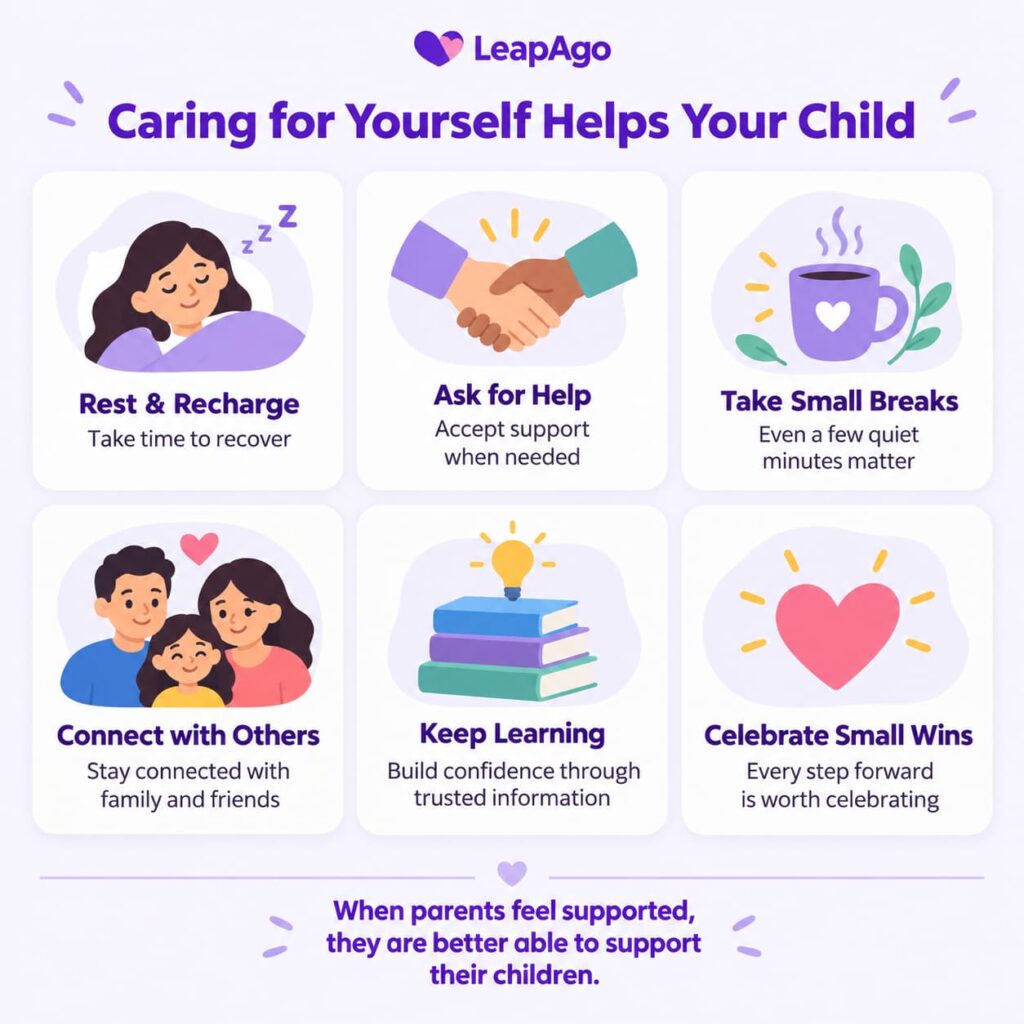
That means taking care of yourself isn’t selfish.
It’s part of taking care of your child.
The Emotional Journey Nobody Talks About
People often think receiving a diagnosis is the hardest day.
For some families it is.
For others…
it’s everything that comes afterward.
The endless questions.
The uncertainty.
The appointments.
The opinions from relatives.
The financial pressure.
The comparison with other children.
The fear of the future.
These emotions don’t mean you’re weak.
They mean you’re human.
Many parents experience feelings such as:
- Shock
- Sadness
- Relief after finally getting answers
- Guilt
- Anger
- Fear
- Hope
- Exhaustion
Sometimes all in the same day.
One important thing I’ve learned is this:
There is no “correct” way to feel after an autism diagnosis.
Give yourself permission to experience your emotions without judging yourself.
Looking After Yourself Isn’t Selfish
When was the last time you asked yourself,
“How am I doing?”
Not,
“How is therapy going?”
Not,
“How is school going?”
But genuinely…
How are you?
Parents often put themselves at the bottom of every priority list.
I know I did.
Sleep became optional.
Exercise disappeared.
Meeting friends became rare.
Even hobbies slowly faded away.
I told myself,
“I’ll look after myself later.”
The problem is…
“Later” never arrives unless we intentionally make space for it.
Small Ways to Care for Yourself
You don’t need a week-long holiday.
Sometimes small habits matter most.
Maybe it’s:
- A quiet cup of tea before everyone wakes up.
- A 20-minute walk.
- Reading a few pages of a book.
- Talking honestly with a trusted friend.
- Praying or meditating if that’s meaningful to you.
- Taking an evening off while another family member helps.
Self-care isn’t about escaping your responsibilities.
It’s about making sure you have enough emotional energy to keep showing up for your child.
Marriage After an Autism Diagnosis
One thing that surprised me was how differently parents can experience the same journey.
One parent may immediately start researching therapies.
The other may still be processing the diagnosis emotionally.
One may become optimistic.
The other may become anxious.
Neither response is wrong.
They’re simply different.
The challenge is making sure those differences don’t become distance.
Remember That You’re on the Same Team
When life becomes busy with therapy schedules, school meetings, and everyday responsibilities, it’s easy to start talking only about logistics.
Who’s taking our child to therapy?
Did you pay the school fees?
What time is tomorrow’s appointment?
Before you know it, your marriage starts feeling more like a project management meeting than a relationship.
That’s why I think it’s important to protect small moments together.
Sometimes that might simply mean having tea together after your child goes to bed.
Sometimes it’s sitting quietly without talking about autism for a little while.
Sometimes it’s reminding each other:
“We’re doing the best we can.”
Don’t Keep Score
There may be seasons when one parent carries more of the emotional load.
Another season, the roles may reverse.
Instead of keeping score,
“Yesterday I did more.”
“This week you didn’t help enough.”
Try remembering that both of you are carrying invisible burdens.
Choose appreciation over comparison whenever possible.
Supporting Siblings
Brothers and sisters are on this journey too.
Sometimes they become wonderfully patient.
Sometimes they become protective.
Sometimes they become frustrated.
Sometimes they quietly miss having their parents’ attention.
All of those feelings are normal.
One of the greatest gifts we can give siblings is making sure they know they matter too.
Simple Ways to Include Siblings
- Spend one-on-one time together whenever possible.
- Encourage them to ask questions.
- Explain autism in age-appropriate ways.
- Celebrate their achievements too.
- Avoid giving them the role of “another parent.”
Most importantly…
Let them simply be children.
Grandparents and Extended Family
Grandparents often love their grandchildren deeply.
Sometimes, though, they grew up in a time when autism wasn’t well understood.
You may hear comments like:
“He’ll grow out of it.”
“You just need to be stricter.”
“In our days, children didn’t have autism.”
These comments can be painful.
But they often come from misunderstanding rather than unkindness.
Helping Grandparents Understand
Instead of arguing, try sharing information gently.
Explain:
- What autism is.
- How your child communicates.
- Why routines matter.
- Why sensory sensitivities are real.
- How they can support their grandchild.
When grandparents feel included rather than criticized, many become wonderful partners in the journey.
Financial Planning
Let’s talk about something many parents worry about but don’t always discuss openly.
Money.
Therapies.
School fees.
Travel.
Medical appointments.
Special equipment.
Books.
Learning materials.
The costs can add up quickly.
It’s understandable to feel overwhelmed.
Planning Instead of Panicking
One thing that helped our family was focusing on planning rather than worrying.
Some practical ideas include:
- Create a monthly therapy budget.
- Keep records of expenses.
- Learn about government schemes and benefits available in your state.
- Prioritize therapies based on current goals rather than trying everything at once.
- Build an emergency fund gradually, even if it’s only a small amount each month.
Financial planning isn’t about predicting the future perfectly.
It’s about reducing uncertainty where we can.
Building a Support Network
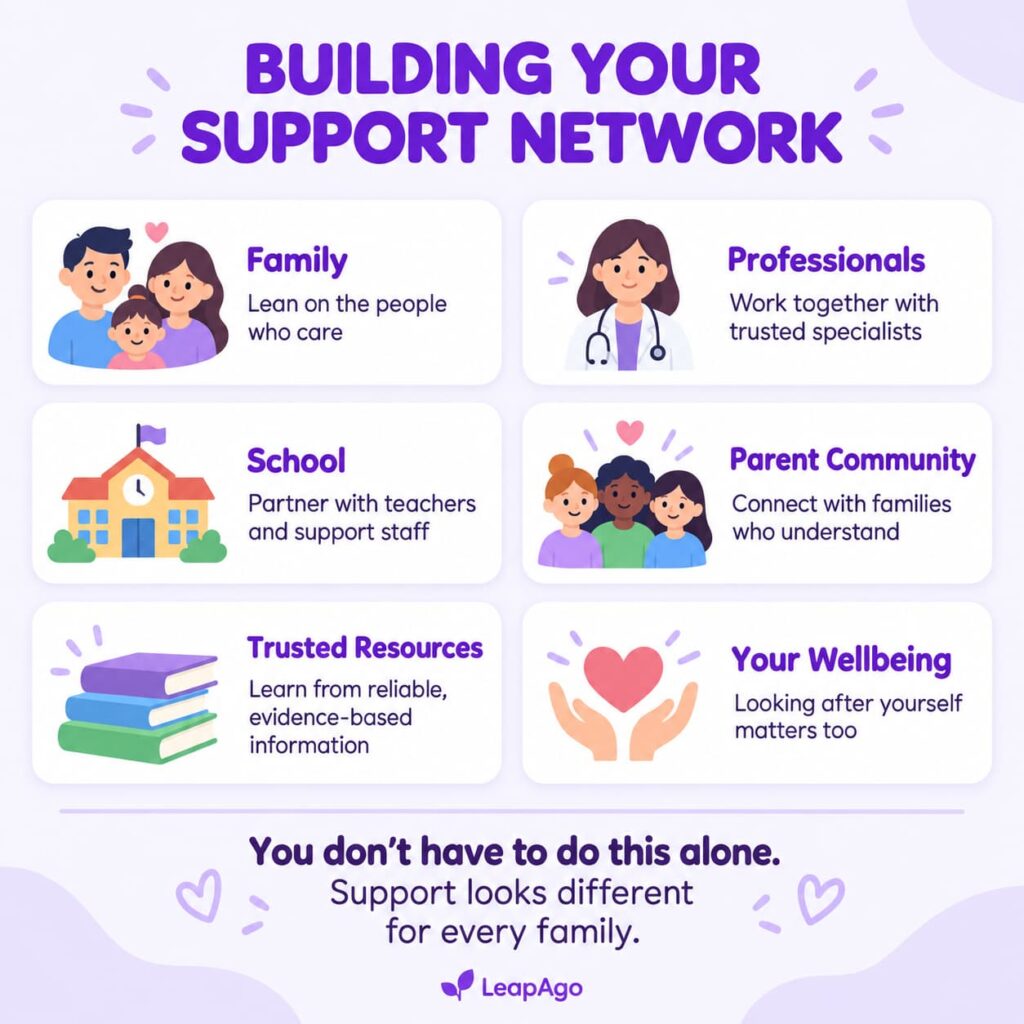
One lesson I’ve learned is that you don’t have to carry this journey alone.
Support can come from many places:
- Your spouse.
- Trusted relatives.
- Close friends.
- Parent support groups.
- Therapists.
- Teachers.
- Faith communities.
- Other parents walking a similar path.
Sometimes the most comforting conversation is simply hearing another parent say,
“We’ve experienced that too.”
That feeling of being understood is incredibly powerful.
Hope Looks Different Than I Expected
When we first began this journey with Suhas, I thought hope meant hearing someone say,
“Everything will be fine.”
Today, hope means something different.
Hope isn’t pretending the journey is easy.
Hope is believing that progress is possible, even when it comes slowly.
Hope is celebrating one new word.
One peaceful bedtime.
One successful school day.
One family outing that went a little better than the last.
Hope grows through ordinary moments.
Our Family’s Journey with Suhas
When I think back to the beginning of our journey, I remember feeling overwhelmed.
There was so much information.
So many opinions.
So many decisions.
Sometimes I felt like I needed to become a therapist, teacher, researcher, and advocate overnight.
I made mistakes.
I worried too much on some days.
I probably worried too little on others.
But one thing never changed.
Our love for Suhas.
As the years passed, I began to notice something beautiful.
Progress wasn’t always dramatic.
Sometimes it was almost invisible.
A new gesture.
A calmer transition.
A little more independence.
A little more confidence.
Those moments reminded me that growth doesn’t always announce itself loudly.
Sometimes it whispers.
We’re still learning.
We’re still facing challenges.
We’re still celebrating small victories.
This isn’t a story with a perfect ending.
Because we’re still writing it.
And perhaps you are too.
That is one of the reasons LeapAgo exists.
Not because we’ve reached the finish line.
But because we’re walking the road together.
If something we’ve learned can make your journey even a little easier, then sharing our story is worth it.

What Research Tells Us
Organizations such as the American Academy of Pediatrics (AAP), CDC, World Health Organization (WHO), and the National Autistic Society consistently emphasize that family wellbeing is an important part of supporting autistic children.
Research suggests that when parents receive appropriate information, emotional support, and practical guidance, they often feel more confident in navigating daily challenges. Strong family partnerships, realistic expectations, and collaborative care can benefit both children and caregivers.
That message resonates deeply with me.
Supporting a child also means supporting the family around that child.
Key Takeaways
If there is one message I hope stays with you after reading this chapter, it’s this:
- Your child needs love more than perfection.
- Your marriage deserves attention too.
- Siblings need to feel seen.
- Grandparents can become wonderful allies.
- Financial planning reduces stress over time.
- Asking for help is a sign of wisdom, not weakness.
- Small moments of progress matter.
- Hope grows through consistency, not miracles.
💙 A Note From One Parent to Another
Before I finish this chapter, I want to speak to you not as the founder of LeapAgo, but simply as another father.
If you’re reading this late at night after your child has finally fallen asleep…
If today was one of those difficult days…
If you’re wondering whether you’re doing enough…
Please hear this.
You don’t have to have all the answers.
Your child isn’t looking for a perfect parent.
They’re looking for you.
The parent who keeps showing up.
Who keeps learning.
Who keeps loving them, even on the hard days.
When I look at Suhas today, I don’t only see the challenges we still face.
I also see how much he has taught me.
He has taught me patience.
He has taught me to celebrate small victories.
He has taught me that progress isn’t measured by comparing our journey with someone else’s.
Most of all, he has taught me that love is often expressed in ordinary moments—reading the same book again, waiting through a difficult transition, celebrating one new skill, or simply sitting quietly together.
If LeapAgo can become a place where you feel understood, encouraged, and a little less alone, then this journey of writing these articles will have been worthwhile.
Thank you for trusting me with your time and your family’s story.
Let’s keep walking this road together—one day, one step, and one small victory at a time.
—
Sridhar K
Founder, LeapAgo
📖 What’s Included in This Guide
This guide is designed to be read in order. Each part builds on the previous one to help you understand autism and support your child with greater clarity.
○ Part 1 – What Is Autism?
○ Part 2 – Early Signs of Autism
○ Part 3 – Communication and Speech
○ Part 4 – Sensory Processing and Behaviour
○ Part 5 – Understanding Therapies
○ Part 6 – Daily Life with Autism
📍YOU ARE HERE
Part 7 – Looking After Yourself as a Parent
Current Article
○ Part 8 – Frequently Asked Questions
○ Part 9 – Autism Resources in India